
When it comes to filmmaking, choosing the right camera can make all the difference. Sony’s mirrorless options offer a range of features tailored for various skill levels and creative needs. From the versatile Alpha 7 IV to the high-resolution Alpha 7R V, there’s something for everyone. But what should you really look for in a camera? Let’s explore the top picks and what sets them apart in the world of filmmaking.
Sony Alpha 7 IV Full-frame Mirrorless Camera with 28-70mm Lens Kit

The Sony Alpha 7 IV Full-frame Mirrorless Camera with the 28-70mm Lens Kit is a game-changer for filmmakers who demand exceptional video quality and versatility. With its 33MP full-frame sensor and BIONZ XR processing engine, you’ll capture stunning 4K 60p video and high-resolution stills. The in-body image stabilization guarantees smooth handheld shots, while the S-Cinetone color profile enhances your creative expression. Its comfortable grip and weather-sealed body make it reliable in tough conditions. You’ll appreciate the dual card slots for professional reliability and solid battery life, making this camera a top choice for hybrid shooters like you.
Best For: The Sony Alpha 7 IV is best for hybrid shooters and filmmakers seeking exceptional video quality and flexibility in a reliable camera.
Pros:
- High-quality 33MP full-frame sensor delivers stunning stills and 4K video with excellent low-light performance.
- In-body image stabilization ensures smooth handheld shooting, reducing blur from camera shake.
- Dual card slots provide professional reliability for storage, accommodating both CF Express Type A and SD cards.
Cons:
- Occasional overheating during extended video shoots may limit recording time.
- Lack of a fully articulating screen can restrict shooting angles for some users.
- Criticism regarding the menu system still persists despite improvements over previous models.
Sony Alpha 7R V Full-Frame Mirrorless Interchangeable Lens Camera

For filmmakers seeking unparalleled resolution and advanced autofocus capabilities, the Sony Alpha 7R V Full-Frame Mirrorless Interchangeable Lens Camera stands out as an exceptional choice. With a stunning 61.0 MP full-frame back-illuminated Exmor R CMOS sensor, your images will be incredibly detailed. The advanced BIONZ XR engine boosts processing speeds by up to 8x, while the new AI processing unit enhances camera intelligence. Its next-generation autofocus utilizes deep learning AI for precise focus. Plus, you can shoot 8K video at 24p/25p and 4K at 60p, making this camera a powerful tool for any serious filmmaker.
Best For: Filmmakers and photographers seeking high-resolution images and advanced autofocus capabilities in a mirrorless camera.
Pros:
- Exceptional image quality with a 61.0 MP full-frame back-illuminated sensor.
- Fast processing speeds thanks to the advanced BIONZ XR engine, enhancing overall performance.
- Advanced video capabilities, supporting both 8K and 4K recording for high-quality filmmaking.
Cons:
- Higher price point compared to entry-level cameras, which may be a barrier for some users.
- Complex features may require a learning curve for beginners.
- Potentially heavy for extended handheld use, especially with larger lenses.
Sony a7 III Full-frame Mirrorless Camera with 28-70mm Lens

Looking for a versatile camera that excels in both photography and videography? The Sony a7 III with its 28-70mm lens offers a 24.2MP full-frame sensor, ensuring stunning image quality and exceptional low-light performance. With a 15-stop dynamic range and reliable autofocus covering 93% of the frame, capturing every moment is effortless. It shoots 4K HDR video, making it ideal for filmmakers. The camera’s lightweight design and customizable controls enhance usability, while the large battery provides up to 4.5 hours of continuous shooting. Despite minor limitations, the a7 III remains a top choice for prosumers seeking quality and performance.
Best For: The Sony a7 III is best for prosumers and enthusiasts looking for a high-performance camera that excels in both photography and videography.
Pros:
- Exceptional low-light performance and color rendition, producing stunning images in various settings.
- Fast and reliable autofocus with 693 phase-detection points, covering nearly the entire frame.
- Lightweight design with customizable controls and a long battery life of up to 4.5 hours.
Cons:
- Limited touchscreen functionality, primarily restricted to focusing.
- Calibration issues with the EVF compared to the rear display.
- Only one UHS-II card slot, which may limit advanced users needing more storage options.
Sony Alpha 1 II Full-Frame Mirrorless Interchangeable Lens Camera

With its impressive 50.1 megapixel Exmor RS image sensor, the Sony Alpha 1 II stands out as a top choice for filmmakers seeking high-resolution imagery without compromise. The BIONZ XR engine processes data in real time, ensuring stunning detail and clarity. Its advanced AI autofocus technology recognizes subjects like people and animals, allowing up to 120 calculations per second. You’ll love the high-speed continuous shooting at 30 fps, with blackout-free viewing for seamless framing. Plus, the 8K video capabilities let you capture and edit with exceptional quality, making this camera perfect for both photography and videography applications.
Best For: Professional photographers and videographers seeking high-resolution imaging and advanced autofocus capabilities.
Pros:
- Exceptional 50.1 megapixel resolution for stunning detail.
- High-speed continuous shooting at 30 fps with blackout-free viewing.
- Advanced AI autofocus technology for precise subject tracking.
Cons:
- Premium price point may not be accessible for hobbyists.
- Large file sizes may require significant storage solutions.
- Complexity of features may have a learning curve for new users.
Sony Alpha a6400 Mirrorless Camera (ILCE-6400L/B)
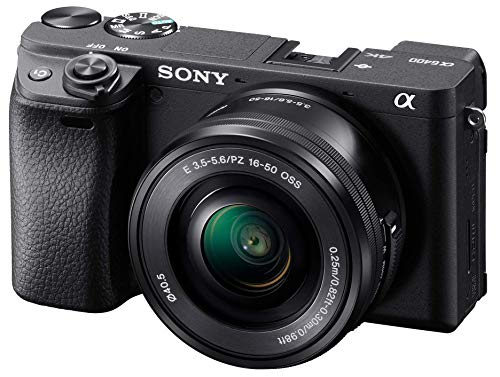
The Sony Alpha a6400 Mirrorless Camera (ILCE-6400L/B) is an ideal choice for aspiring filmmakers and content creators who demand high-quality performance in a compact design. With its 20.1MP stacked back illuminated Exmor RS CMOS sensor and a large aperture 24-70mm F1.8-2.8 ZEISS lens, you’ll capture stunning visuals. Enjoy fast shooting at 11fps and enhanced subject tracking for precise focus. The tiltable LCD screen is perfect for vlogging and professional recordings. Plus, the E Mount compatibility offers lens versatility, making it a fantastic option for all your filmmaking needs. Accessories like a rechargeable battery and AC adaptor are included too!
Best For: Aspiring filmmakers and content creators seeking high-quality performance in a compact camera design.
Pros:
- Fast continuous shooting at 11fps allows for capturing action-packed moments.
- Enhanced subject tracking capabilities ensure precise focus on moving subjects.
- Versatile E Mount compatibility offers a wide range of lens options for different shooting styles.
Cons:
- Limited battery life may require carrying extra batteries for extended shoots.
- The compact design may not accommodate larger lenses comfortably.
- Lack of in-body stabilization may affect handheld shooting in low-light conditions.
Sony Alpha ZV-E10 Mirrorless Vlog Camera Kit

For aspiring vloggers and content creators, the Sony Alpha ZV-E10 Mirrorless Vlog Camera Kit stands out with its impressive 24.2MP APS-C Exmor CMOS sensor, delivering stunning image quality. Powered by the fast BIONZ X processor, this camera captures 4K video oversampled from 6K, ensuring you get crisp details without pixel binning. The Product Showcase Setting effortlessly shifts focus from your face to objects, while the Background Defocus button lets you create a cinematic look with ease. Plus, live streaming is a breeze with just a single USB cable. Available in sleek black, it’s the perfect companion for your creative journey.
Best For: Aspiring vloggers and content creators looking for a high-quality, user-friendly camera to enhance their video production.
Pros:
- High-resolution 24.2MP APS-C sensor for stunning image quality.
- 4K video capability oversampled from 6K, providing exceptional detail.
- Easy live streaming with a single USB cable, simplifying the setup process.
Cons:
- Limited to black color option, which may not appeal to all users.
- No built-in stabilization, potentially requiring additional equipment for smoother video.
- Battery life may be shorter during prolonged video recording sessions.
Sony Alpha 6700 Camera with 26 MP Sensor and 18-135mm Zoom Lens

Ideal for filmmakers and content creators, the Sony Alpha 6700 Camera boasts a 26 MP sensor and an 18-135mm zoom lens, making it a versatile choice for capturing stunning visuals. With its APS-C format and BIONZ XR processing, you’ll enjoy exceptional image quality and vibrant colors. The camera offers impressive 4K video recording at 60p and even 120p for high frame rates. Fast autofocus guarantees sharp focus in low light and fast-moving scenes. While it’s compact and portable, be mindful of potential overheating during extended recordings. Overall, it’s a fantastic option for those seeking a high-performance filmmaking experience.
Best For: Photography and videography enthusiasts looking for a versatile, high-performance camera for capturing stunning visuals.
Pros:
- Excellent image quality with vibrant colors and sharp details.
- Fast and accurate autofocus, effective in various lighting conditions.
- Compact and lightweight design, perfect for travel and everyday use.
Cons:
- Higher price point may not be suitable for beginners.
- Battery life could be improved for longer shooting sessions.
- Overheating issues reported during extended 4K video recording.
Sony NEW Alpha 7S III Full-frame Interchangeable Lens Mirrorless Camera

Designed for filmmakers who demand exceptional image quality, the Sony Alpha 7S III stands out with its 12.1MP Exmor R sensor, optimized specifically for 4K video production. With an impressive ISO sensitivity of up to 409,600 and a dynamic range exceeding 15 stops, you’ll capture stunning footage in various lighting conditions. The new BIONZ XR engine offers 8x more processing power, ensuring smooth performance. Record up to 4K 120p with 10-bit 4:2:2 color depth, and enjoy full pixel readout in all modes. Plus, the S-Cinetone picture profile brings cinematic tones, making this camera a standout choice for serious filmmakers.
Best For: Filmmakers and content creators seeking high-quality 4K video capture with exceptional low-light performance and dynamic range.
Pros:
- Outstanding low-light capabilities with ISO sensitivity up to 409,600.
- High processing power with the BIONZ XR engine, providing smooth performance for demanding video tasks.
- Versatile video recording options including 4K 120p with 10-bit 4:2:2 color depth.
Cons:
- Higher price point compared to entry-level mirrorless cameras.
- Limited megapixels at 12.1MP may not meet the needs of photographers requiring high-resolution stills.
- Operating temperature range may restrict use in extreme conditions outside 32 – 104 degrees F / 0 – 40 degrees C.
Sony Alpha a6000 Mirrorless Digital Camera with 16-50mm Lens

The Sony Alpha a6000 Mirrorless Digital Camera, equipped with a versatile 16-50mm lens, stands out as an excellent choice for aspiring filmmakers seeking high-quality performance in a compact package. With a 24.3MP back-illuminated sensor and an impressive ISO range of 100-25600, it captures stunning details in various lighting conditions. The hybrid autofocus system guarantees sharp focus with 179 phase detection points, and you can shoot up to 11 frames per second. Its 3-inch tilting LCD and electronic viewfinder provide flexibility for composing shots. Plus, you’ll enjoy a battery life of up to 360 shots, making it perfect for long shoots.
Best For: Aspiring filmmakers and photographers looking for a compact camera with high-quality performance and advanced features.
Pros:
- High-resolution 24.3MP sensor delivers exceptional image quality in various lighting conditions.
- Fast hybrid autofocus system with 179 phase detection points ensures sharp focus for dynamic scenes.
- Continuous shooting speed of up to 11 FPS allows for capturing fast-moving subjects with ease.
Cons:
- Limited battery life may require carrying extra batteries for extended shooting sessions.
- No 4K video recording capability may be a drawback for those seeking advanced video features.
- Small electronic viewfinder may not be comfortable for all users during prolonged use.
Sony a7 III Mirrorless Camera Bundle (Renewed)

For filmmakers and photographers looking for a reliable entry into full-frame mirrorless technology, the Sony a7 III Mirrorless Camera Bundle (Renewed) stands out with its impressive 24MP Full-Frame Exmor R BSI CMOS Sensor. It features a BIONZ X Image Processor, a 693-point hybrid AF system, and can shoot continuous frames at 10 fps. You’ll appreciate its UHD 4K video capabilities and robust low-light performance. The bundle includes a versatile 28-70mm lens, essential filters, and accessories like a tripod and memory cards, making it perfect for both beginners and experienced users. Enjoy the fantastic quality and performance this camera offers!
Best For: Filmmakers and photographers seeking an affordable entry into full-frame mirrorless technology with a comprehensive accessory bundle.
Pros:
- Offers impressive 24MP Full-Frame Exmor R BSI CMOS Sensor and robust low-light performance.
- Includes a versatile 28-70mm lens and essential accessories for various shooting situations.
- Positive user feedback highlights the camera’s quality and performance for both beginners and experienced photographers.
Cons:
- Some included accessories may be of lower quality or deemed cheap by users.
- Limited user feedback on long-term durability of the renewed condition products.
- Price competitiveness may not be favorable for budget-conscious buyers compared to other options.
Factors to Consider When Choosing a Sony Mirrorless Camera for Filmmaking
When you’re choosing a Sony mirrorless camera for filmmaking, you’ll want to take into account several key factors. Think about video resolution capabilities, autofocus performance, and how well the camera performs in low light. Also, don’t forget to evaluate ergonomics, usability, and lens compatibility options to guarantee it fits your needs.
Video Resolution Capabilities
Choosing the right video resolution capabilities in a Sony mirrorless camera can greatly impact your filmmaking experience. Look for cameras that support 4K video recording, as this is essential for high-quality filmmaking and widely preferred by professionals. Higher frame rates, such as 60p or 120p, are also important for achieving stunning slow-motion effects, enhancing your footage’s cinematic quality. Evaluate the bit depth of the video output—aim for 10-bit color depth for a broader color range and better post-production flexibility. Advanced features like S-Cinetone color profiles can provide a cinematic look right out of the camera. Additionally, consider models with 8K video capabilities for greater detail and cropping flexibility, ensuring your projects are future-proofed.
Autofocus Performance
Autofocus performance plays a vital role in your filmmaking, especially in dynamic scenes where precision is key. Many Sony mirrorless cameras boast fast and accurate autofocus systems, with models featuring up to 693 phase-detection points, ensuring extensive coverage across the frame. Advanced technologies like Real-time Eye AF enhance subject tracking, allowing you to maintain focus on moving subjects effortlessly. Next-generation AI processing improves focus accuracy and subject recognition, making it easier to capture those fast-paced moments. Plus, continuous shooting modes, reaching up to 30 fps, help you seize action sequences while keeping your subject in sharp focus. Overall, a camera with effective autofocus capabilities can elevate your filmmaking, ensuring you never miss a significant shot.
Low-Light Performance
Low-light performance is essential for filmmakers who want to capture stunning visuals in challenging lighting conditions. When choosing a Sony mirrorless camera, consider larger sensor sizes, like full-frame sensors, which excel in low light by capturing more detail. Look for cameras with high ISO ranges, some reaching up to 409,600, allowing you to shoot without excessive noise. A dynamic range of over 15 stops is vital for retaining detail in shadows and highlights, enhancing your overall footage. Additionally, advanced image processing engines can reduce noise at higher ISO settings, ensuring clearer images. Features like in-body image stabilization further improve low-light performance by minimizing camera shake during handheld shooting, making your filmmaking experience smoother and more professional.
Ergonomics and Usability
When capturing stunning visuals, having a camera that feels comfortable in your hands can make all the difference, especially during long shoots. Ergonomics plays an important role in your filmmaking experience. A camera with a comfortable grip and intuitive controls enhances usability, allowing you to focus on your craft. Look for models with fully articulating touchscreens so you can frame shots from various angles without hassle. Weather-sealed bodies are essential for outdoor shoots, protecting your gear against the elements. Additionally, improved menu systems and customizable buttons let you access critical settings quickly. Finally, lightweight and compact designs make it easier to carry your gear during dynamic shoots, ensuring you’re always ready to capture the moment.
Lens Compatibility Options
Choosing the right lens is essential for filmmakers looking to maximize the potential of their Sony mirrorless cameras. Sony’s E-mount system offers compatibility with a wide array of lenses, including both full-frame and APS-C options, giving you the flexibility to meet diverse filmmaking needs. You’ll find that many Sony models support third-party lenses, allowing you to explore a variety of brands and focal lengths. Fast lenses, like those with wide apertures (e.g., f/1.8 or f/2.8), enhance low-light performance and depth of field control, vital for cinematic shots. Plus, adapters let you use legacy lenses, expanding your creative options. With choices in prime, zoom, and specialty lenses, you can achieve various visual styles for every shooting scenario.