
If you want cleaner digital playback, better upgrade flexibility, and fewer boxes in your hi-fi chain, a standalone DAC for network streamer use can make a real difference. The best models balance sound quality, streaming support, and the right outputs for your system.
Below, we’ve focused on ten options that suit a range of budgets and setups, from compact streamers to more advanced DAC-equipped units and digital transports.
Best 10 Standalone Dac for Network Streamer Picks for 2026
Flagship Digital Transport
Eversolo T8 Streamer Transport

- Transport-only design for external DAC systems
- Dual femtosecond clocks and isolated outputs
- Spotify Connect Lossless, Roon Ready, TIDAL and Qobuz support
Best For: External-DAC listeners who want a premium network transport
All-in-One Streaming Hub

- Built-in ESS DAC with 24-bit/192 kHz support
- HDMI eARC, Dolby Digital, and BluOS multi-room
- Acts as streamer, preamp, and headphone amp
Best For: People who want one compact streamer-DAC for music and TV
Feature-Rich Streamer DAC
Eversolo DMP-A6 Master Edition

- Built-in DAC with DSD512 and MQA support
- Wide range of digital, analog, and Bluetooth connections
- 6-inch touchscreen with EOS audio engine
Best For: Hi-fi users who want an all-in-one streamer with serious connectivity
Budget-Friendly Network Bridge

- AirPlay 2, Google Cast, Spotify Connect, and more
- 24-bit/192 kHz playback with bit-perfect digital out
- Works with Alexa, Google, Siri, and multiroom setups
Best For: Value shoppers who need an affordable streaming bridge
Flagship Balanced Desktop Choice
Gustard X26III full balanced DAC preamp

- Dual ES9039SPRO chips for left/right conversion
- FPGA processing with GCLK-02 clock control
- USB supports PCM768k, DSD512, and MQA
Best For: systems needing a balanced DAC/preamp with extensive digital inputs
All-in-One Streaming Desktop Player
FiiO S15 streamer and desktop DAC

- Android 12 with major streaming app support
- AK4191+AK4499EX DAC with separated architecture
- 7.84-inch touchscreen plus broad digital I/O
Best For: buyers wanting an all-in-one streamer/DAC with touchscreen control
Compact Streamer With Natural Tonality
iFi NEO Stream 3 network streamer DAC

- PCM up to 768kHz and DSD512 support
- Custom Burr Brown DAC with separate PCM/DSD paths
- Femto clock and noise reduction upgrades
Best For: listeners wanting a compact streamer/DAC with a natural tonal balance
Pure Digital Transport
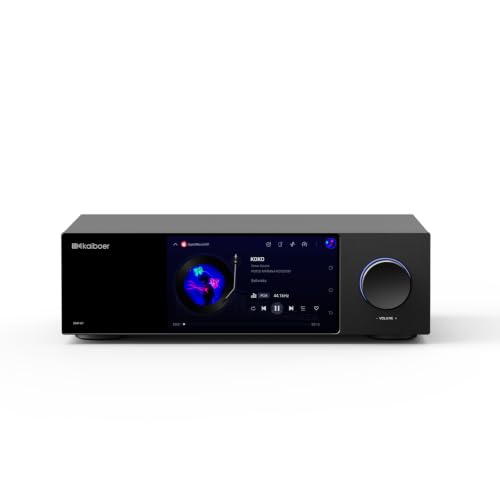
- Pure digital audio transport for external DACs
- AirPlay and DLNA over dual-band Wi-Fi
- USB, HDMI, and optical output options
Best For: Users building a DAC-first streaming system
Versatile Network Hub

- Works with Volumio, Tidal, Qobuz, Roon, AirPlay, and DLNA
- USB, AES/EBU, coaxial, and optical outputs
- Includes USB CD ripping and network input options
Best For: Listeners who want a flexible streamer feeding an external DAC
AirPlay Bridge

- AirPlay and Roon Ready streaming support
- USB, optical, coaxial, USB-A, and USB-C outputs
- Gigabit Ethernet and dual-band Wi-Fi
Best For: Apple-focused users who want a compact digital bridge
Flagship Digital Transport – Eversolo T8 Streamer Transport
If you want a standalone dac for network streamer setup, the Eversolo T8 is built to hand off clean digital audio to an external DAC rather than do the conversion itself. It focuses on transport duties with dual femtosecond clocks, full electrical isolation on all outputs, and broad output options like IIS, coaxial, AES/EBU, USB Audio, and optical.
Best For: Audiophiles using an external DAC who want a high-spec network streamer transport with flexible digital outputs.
Pros:
- Dual ultra-precise femtosecond clocks are designed to reduce jitter at the source.
- Fully isolated IIS, coaxial, AES/EBU, USB Audio, and optical outputs help limit ground-loop noise.
- Supports major streaming platforms including Spotify Connect Lossless, Roon Ready, TIDAL Connect, and Qobuz Connect.
- Built-in touchscreen, remote, and app control add convenient day-to-day use.
Cons:
- Does not include an internal DAC, so you need an external converter.
- SFP modules are sold separately if you want to use the network module option.
- Advanced features like room calibration and multi-output compatibility may be more than casual users need.
The T8 is a strong fit when your priority is transport quality first and DAC choice second. Its isolation, clocking, and output flexibility make it easy to integrate into a serious two-channel system.
All-in-One Streaming Hub – Bluesound NODE 2024 streamer
The Bluesound NODE is a practical choice if you want a standalone dac for network streamer use with fewer boxes on the rack. It combines streaming, DAC playback, preamp functions, and headphone output in one unit, while adding HDMI eARC, digital and analog inputs, and multi-room BluOS control.
Best For: Listeners who want a versatile streamer-DAC for a stereo, powered speakers, or TV audio setup.
Pros:
- Built-in ESS ES9039Q2M DAC and 24-bit/192 kHz support for hi-res playback.
- Can work as a preamp, headphone amp, and streaming source component.
- Supports HDMI eARC plus Dolby Digital decoding for TV integration.
- BluOS makes multi-room playback and app control straightforward.
Cons:
- Not a transport-only product if you specifically want to bypass internal DAC conversion.
- Some features, like DSD playback, are scheduled for a future update.
- Best results depend on whether you use its built-in DAC or external gear through its outputs.
If you want one compact component to cover streaming, DAC duties, and flexible system use, the NODE is easy to recommend. It is especially compelling for mixed music-and-TV systems.
Feature-Rich Streamer DAC – Eversolo DMP-A6 Master Edition
The Eversolo DMP-A6 Master Edition is a strong pick if you want a standalone dac for network streamer duties with broad format support and flexible connections. It combines streaming, built-in DAC conversion, a large touchscreen, and digital plus analog input and output options, making it easy to slot into a serious hi-fi system.
Best For: Users who want a high-feature network streamer with an internal DAC and extensive connectivity.
Pros:
- Supports high-end formats including DSD512, MQA, FLAC, WAV, and APE.
- EOS Audio Engine helps bypass Android SRC restrictions for direct audio output from third-party apps.
- Offers HDMI, USB, optical, coaxial, XLR, RCA, and Bluetooth connectivity.
- Large 6-inch touchscreen improves browsing and system control.
Cons:
- It is not a transport-only unit, so it may be more than needed if you already own a favorite DAC.
- Its many features can make it feel more complex than simpler streamers.
- Some buyers may not need both balanced and unbalanced outputs plus multiple digital paths.
The DMP-A6 Master Edition stands out for flexibility rather than minimalism. If you want one box that can stream, decode, and connect to almost anything, it is an easy shortlist candidate.
Budget-Friendly Network Bridge – WiiM Pro network streamer
The WiiM Pro is a compact entry point if you are looking for a standalone dac for network streamer setups without spending much. It is primarily a network streaming bridge with digital and analog outputs, so you can pair it with an external DAC or use its built-in conversion path for a simple, flexible system.
Best For: Budget-conscious buyers who want easy streaming, broad app support, and flexible integration with existing audio gear.
Pros:
- Supports AirPlay 2, Google Cast Audio, Spotify Connect, TIDAL Connect, and Qobuz Connect.
- Handles up to 24-bit/192 kHz playback and offers bit-perfect digital output.
- Works with Alexa, Google, and Siri voice control.
- Compact, multiroom-friendly design fits easily into existing systems.
Cons:
- AirPlay is receive-only, so it cannot transmit to other AirPlay speakers.
- It is less feature-rich than higher-end streamers with built-in screens or room correction.
- Best suited to straightforward streaming rather than elaborate hi-fi tuning.
For the price, the WiiM Pro covers the essentials very well and keeps setup simple. It is a sensible choice when you want modern streaming features without moving into premium territory.
Flagship Balanced Desktop Choice – Gustard X26III full balanced DAC preamp
If you want a standalone dac for network streamer use in a serious two-channel setup, the Gustard X26III is built like a high-end hub. It combines dual ES9039SPRO chips, FPGA-based digital processing, and a GCLK-02 clock to focus on clean conversion, stable timing, and balanced output performance for home systems.
Best For: listeners who want a full balanced DAC/preamp with advanced digital inputs and flagship DAC hardware.
Pros:
- Dual ES9039SPRO chips provide separate left/right conversion paths.
- FPGA processing and GCLK-02 clock management are designed for timing stability.
- XMOS XU216 USB supports PCM768k, DSD512, and full MQA decoding.
- Discrete Class-A circuits are tuned for low distortion and natural sound.
Cons:
- More feature-rich than a simple plug-and-play DAC.
- Best suited to systems that can use its balanced and multiple input options.
The X26III is a strong fit if you want a standalone dac for network streamer systems and also need a preamp-style center for the rest of your gear. Its main appeal is the mix of flagship conversion, heavy input support, and an audio-first design approach.
All-in-One Streaming Desktop Player – FiiO S15 streamer and desktop DAC
The FiiO S15 is a practical standalone dac for network streamer setups when you want streaming, playback, and conversion in one desktop component. It runs Android 12, supports major streaming apps, and adds a wide set of digital and analog connections, making it useful as both a streamer and a DAC in a larger system.
Best For: buyers who want an all-in-one streamer/DAC with app support, a touchscreen interface, and broad I/O.
Pros:
- Android 12 with support for major streaming apps and services.
- Roon Ready, AirPlay, DLNA, Bluetooth streaming, plus NAS/cloud playback support.
- AK4191+AK4499EX DAC architecture with separated digital and analog sections.
- Large 7.84-inch touchscreen and multiple inputs/outputs, including HDMI ARC and I2S.
Cons:
- Its full feature set may be more than needed if you only want a basic DAC.
- Large 430mm chassis is better suited to a full desktop rack or shelf.
For users who want one box to handle streaming and conversion, the S15 offers a very complete package. Its strength is flexibility: it can play from services, local storage, or network sources while feeding external amps or DAC chains.
Compact Streamer With Natural Tonality – iFi NEO Stream 3 network streamer DAC
The iFi Audio NEO Stream 3 is a compact standalone dac for network streamer use when you want clean playback and straightforward streaming in one unit. It supports high-resolution PCM and DSD playback, uses a custom Burr Brown DAC architecture, and adds clock and noise-reduction upgrades aimed at keeping the signal pure and musical.
Best For: listeners who want a network streamer with an integrated DAC and a naturally voiced presentation.
Pros:
- Supports PCM up to 768kHz and DSD512 for high-resolution playback.
- Custom Burr Brown chipset uses dedicated PCM and DSD pathways.
- K2HD sound restoration is designed to add warmth, depth, and nuance.
- Femto precision clock and upgraded capacitors help reduce noise.
Cons:
- Less feature-heavy than larger streamer/DAC units with extensive I/O.
- Focused more on sound quality and streaming ease than on desktop component versatility.
The NEO Stream 3 makes sense if you want a simpler network streamer that still pays attention to DAC quality and clocking. It is especially appealing if you prefer a natural, relaxed sound and don’t need the broad connectivity of a full-size digital hub.
Pure Digital Transport – Kaiboer DMP-K7 Streamer
If you want a standalone dac for network streamer setup that stays strictly on the digital side, the Kaiboer DMP-K7 is built as a pure digital audio transport. It focuses on sending bit-perfect audio to an external DAC over USB, HDMI out, or optical, while also supporting AirPlay and DLNA streaming over dual-band Wi-Fi.
Best For: Listeners who already own a quality external DAC and want a quiet, digital-only network streamer.
Pros:
- Pure digital transport design aimed at external DAC use
- AirPlay and DLNA support over dual-band Wi-Fi
- USB, HDMI, and optical outputs for flexible system matching
- Low-noise power architecture and anti-vibration design
Cons:
- Does not include a built-in DAC stage
- Relies on a separate DAC to convert audio to analog
- Large feature set may be more than needed for simple streaming
The DMP-K7 makes sense if your priority is clean digital delivery rather than an all-in-one box. Its app control, front display, and support for high-resolution playback make it a strong transport-focused option for a serious hi-fi rig.
Versatile Network Hub – SMSL N100 Streamer
The SMSL N100 is a strong pick if you’re shopping for a standalone dac for network streamer chains and want broad digital-output flexibility. It works as a network streamer with support for Volumio, Tidal, Qobuz, Roon, AirPlay, and DLNA, while offering optical, coaxial, AES/EBU, and USB outputs to feed your external DAC.
Best For: Buyers who want a feature-rich digital streamer with multiple output formats and wide service support.
Pros:
- Supports Tidal, Qobuz, Roon, AirPlay, DLNA, and Volumio
- Multiple digital outputs including USB, AES/EBU, coaxial, and optical
- USB drive CD ripping adds extra utility
- Ethernet and Wi-Fi inputs for flexible network hookup
Cons:
- Designed to feed an external DAC rather than convert audio itself
- More complex feature set may be overkill for simple use cases
- TV-box form factor may not appeal to every hi-fi setup
Overall, the N100 stands out for users who want one streamer to handle many services and connection types. If your DAC is the star of the system, this unit gives you plenty of digital paths to get there.
AirPlay Bridge – FiiO SR11 Streamer Receiver
The FiiO SR11 is a practical choice if you need a standalone dac for network streamer style playback but already have a decoder or DAC you like. It functions as a lossless streaming bridge with AirPlay and Roon Ready support, and it can send audio out over USB, optical, coaxial, USB-A, or USB-C.
Best For: Apple users and streamers who want a compact bridge with strong digital output support.
Pros:
- AirPlay and Roon Ready support for common streaming setups
- USB output supports up to PCM 768kHz/32Bit and DSD256 with Roon Ready playback
- Dual-band Wi-Fi plus gigabit Ethernet for stable networking
- LCD display and control knob make local setup easier
Cons:
- SPDIF outputs are limited to PCM 192kHz/24Bit and DSD64
- Requires an external DAC or decoder for analog playback
- Focused on receiver duties rather than full all-in-one functionality
In a compact hi-fi stack, the SR11 is easiest to recommend for users who value AirPlay convenience and wired-network stability. Its mix of digital outputs makes it easy to match with different DACs and amps.
How We Picked These Standalone Dac for Network Streamer Options
We prioritized products that make sense in real systems: stable network playback, broad streaming service support, useful digital outputs, and DAC sections that are easy to integrate with external amps or active speakers. We also weighed format support, control apps, connection flexibility, and whether each model works best as a true transport, a full streamer-DAC, or a more modular upgrade path.
Quick Comparison
For buyers who want the simplest setup, all-in-one streamer-DAC units are the easiest choice. If you already own a DAC or plan to upgrade later, a digital transport gives you more flexibility. Budget-focused users can often get strong streaming performance without paying for premium conversion stages, while higher-end systems may benefit from balanced outputs, better clocking, and more robust isolation.
Key Buying Factors for Standalone Dac for Network Streamer
Output Type
Decide whether you need analog RCA/XLR outputs from an internal DAC or digital-only outputs to feed an external converter. This is the most important choice because it determines whether the device replaces your DAC or simply acts as a streamer front end.
Streaming Support
Check compatibility with the services and control ecosystem you actually use, such as Tidal, Qobuz, AirPlay, Chromecast, Roon, or proprietary apps. A great Standalone Dac for Network Streamer use should fit your daily listening habits without workarounds.
Connectivity and Inputs
Look for Ethernet, Wi-Fi, USB, coaxial, optical, and AES/EBU if you want flexibility with future components. More inputs and outputs can make the unit easier to integrate into a desktop or full-size hi-fi system.
Noise Control and Clocking
Features like isolation, dual clocks, and quality power design can help reduce jitter and interference, especially in systems with revealing speakers or headphones. These details matter more as your rest of the chain improves.
Who Should Buy Which Standalone Dac for Network Streamer?
Buy an all-in-one streamer-DAC if you want the simplest upgrade from basic streaming gear and prefer fewer cables. Choose a digital transport if you already own a favorite DAC and want to keep conversion separate. Pick a higher-end network streamer with balanced DAC outputs if your system is resolving enough to expose upstream differences and you want more control over sound and connectivity. For secondary systems or multiroom setups, a compact, app-friendly model is often the smartest value.
In short, the best Standalone Dac for Network Streamer shoppers should match your sources, outputs, and control preferences first, then your budget. That keeps you from overbuying features you won’t use while still leaving room to grow.