
Choosing a studio monitor controller for three speaker pairs can make A/B checking faster, help you manage volume safely, and keep your desk layout clean. The right unit should let you switch speakers quickly without color or confusion.
Below, we focus on practical controls, connection flexibility, and workflow value so you can match the controller to your room, interface, and mixing habits.
Best 10 Studio Monitor Controller for Three Speaker Pairs Picks for 2026
Best USB Control Hub

- USB audio with 192kHz support
- Flexible monitor switching for multi-speaker setups
- Talkback and dual headphone outputs
Best For: Home studios that want monitor control and USB I/O in one desktop unit.
Best for Multiple Monitoring Options
PreSonus Monitor Station V2 Desktop Control Center

- Three selectable stereo speaker outputs
- Four headphone amps with independent source selection
- Talkback mic, mono, dim, and mute controls
Best For: Producers and project studios needing one desktop hub for three speaker pairs and cue control.
Best for USB Recording
Mackie Big Knob Studio 3x2 Monitor Controller

- 3-source / 2-pair monitor switching with a large volume knob
- 192kHz/24-bit 2x2 USB interface with Onyx mic preamps
- Dual headphone outs and phantom power for flexible tracking
Best For: Small studios that want monitor switching and basic recording interface functions in one unit.
Best for Three-Pair Switching

- Three stereo speaker outputs for easy monitor comparison
- Passive path helps keep monitoring clean and transparent
- Remote control and talkback improve daily studio workflow
Best For: Engineers and producers who want hands-on control across three speaker pairs with remote convenience.
Best for Low-Noise A/B Monitoring

- Ultra-clean, low-distortion monitoring path
- Dual stereo inputs for quick source switching
- Rugged steel build with independent headphone amps
Best For: Engineers and producers who want transparent monitoring and simple, durable control.
Best for Bluetooth 2.1 Setups
PreSonus MicroStation BT 2.1 Monitor Controller

- Adds Bluetooth playback to studio or media monitors
- Supports both balanced 1/4" TRS and 1/8" inputs
- Ideal for simple 2.1 listening with sub bypass and main mute
Best For: Creators who want compact Bluetooth monitoring with easy subwoofer control.
Best Passive Routing
StudioMan M04 2 In 4 Out Monitor Controller

- 2 inputs and 4 outputs for simple multi-speaker routing
- Fully passive design needs no external power
- Mute button and smooth volume knob make control easy
Best For: Home studios and small rooms that want clean, no-power switching between multiple monitors.
Best Hybrid Monitor Controller

- Monitor control plus USB interface in one unit
- Two independent headphone outs for easy collaboration
- Includes software bundle and 2x 6' TRS cables
Best For: Home studios and project rooms that want monitor control and basic recording in one device.
Best for Transparent Passive Control
DYNASTY PROAUDIO PMC-2 Monitor Controller
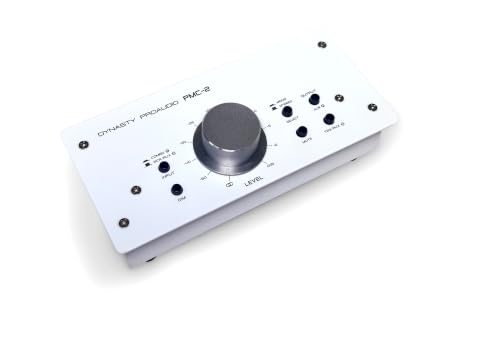
- Passive volume control keeps the signal path simple and transparent.
- Balanced XLR/TRS, RCA, and 3.5mm inputs offer flexible connectivity.
- DIM, Mute, and Mono switches make quick monitoring checks easy.
Best For: Home and project studios that want straightforward passive monitor level control with flexible analog I/O.
Best for Hybrid Studios
Mackie Big Knob Studio 3x2 Monitor Controller

- Switches between three speaker pairs for A/B/C listening
- Adds interface features to simplify a small studio setup
- Compact, no-fuss control layout for everyday mixing
Best For: Producers and home studios that want monitor control and interface features in one compact unit.
Best USB Control Hub – Mackie Big Knob Studio Plus
Mackie Big Knob Series, 4x3 Studio Monitor Controller 192kHz USB I/O (BIG KNOB STUDIO PLUS)
Check Price On AmazonIf you want a studio monitor controller for three speaker pairs with built-in USB audio, the Mackie Big Knob Studio Plus is a practical all-in-one pick. It gives you monitor switching, talkback, headphone control, and computer I/O in a single desktop unit, making it easier to manage a compact production setup without extra patching.
Best For: Home studios and project rooms that need simple monitor switching plus USB recording/playback in one controller.
Pros:
- Supports flexible monitor routing for multi-speaker workflows
- Integrated 192kHz USB interface adds recording and playback convenience
- Talkback and dual headphone outs help with tracking sessions
- Desktop layout keeps volume and source switching within easy reach
Cons:
- Bulkier than a basic passive monitor switcher
- More features than some minimalist setups need
Overall, this is a strong choice if you want a studio monitor controller for three speaker pairs that also doubles as a straightforward USB interface. It suits users who value convenience, monitoring flexibility, and hands-on control over a simple desk footprint.
Best for Multiple Monitoring Options – PreSonus Monitor Station V2 Desktop Control Center
If you need a studio monitor controller for three speaker pairs, the PreSonus Monitor Station V2 is built around flexible source switching, independent speaker selection, and enough front-panel control to keep a desk setup moving smoothly. It combines speaker management with cue mixing, talkback, and headphone monitoring in a compact desktop unit.
Best For: Producers, project studios, and engineers who want one central control hub for three speaker pairs, multiple sources, and fast headphone/cue management.
Pros:
- Handles three selectable stereo speaker outputs with individual level controls
- Includes four headphone amps with independent source selection
- Talkback mic, mono, dim, and mute controls add real studio convenience
- Supports multiple stereo sources plus S/PDIF digital input
Cons:
- More feature-rich than some simple monitor switchers
- Desktop footprint may be larger than ultra-minimal controllers
- Best suited to users who will actually use the cue and talkback features
For a studio monitor controller for three speaker pairs, this model stands out because it does more than just switch outputs: it gives you source routing, headphone control, and communication tools in one box. That makes it a strong fit for busy setups where monitoring flexibility matters more than keeping things bare-bones.
Best for USB Recording – Mackie Big Knob Studio 3×2 Monitor Controller
Mackie Big Knob Series, 3x2 Studio Monitor Controller 192kHz USB I/O (BIG KNOB STUDIO)
Check Price On AmazonIf you want a studio monitor controller for three speaker pairs with built-in recording features, the Mackie Big Knob Studio is a practical all-in-one option. It combines source and monitor switching with a 2×2 USB interface, so you can manage playback, capture basic recordings, and compare speakers without adding extra hardware.
Best For: Small studios that need monitor switching, simple USB I/O, and headphone control in one desktop unit.
Pros:
- Switches between 3 sources and 2 monitor pairs with the classic Big Knob layout
- Includes 192kHz/24-bit USB recording and playback for straightforward DAW use
- Two Onyx mic preamps plus phantom power support condenser mics
- Dual headphone outputs with independent level control add monitoring flexibility
Cons:
- Only supports 2 monitor pairs, so it is not ideal if you need true three-pair switching
- Desktop-focused feature set may be more than casual users need
As a studio monitor controller for three speaker pairs, this model is really better viewed as a flexible 3-source/2-pair control hub with interface duties built in. If that matches your setup, it offers strong value and a very clean workflow for Mac or Windows studios.
Best for Three-Pair Switching – PreSonus Central Station Plus
If you need a studio monitor controller for three speaker pairs, the PreSonus Central Station Plus makes it easy to route multiple sources, compare mixes, and switch between monitors without cluttering your desk. Its passive signal path is a strong fit for engineers who want control and clean monitoring over extra processing.
Best For: Home and project studios that need reliable switching among three pairs of speakers, plus remote desktop control.
Pros:
- Supports three stereo speaker outputs and multiple analog/digital inputs
- Passive audio path keeps the monitoring chain transparent
- Included remote control makes level and monitor switching convenient
- Built-in talkback and LED metering add practical studio workflow features
Cons:
- Rack-style design may be more hardware than casual users need
- Feature set is geared toward studio control rather than simplicity
For buyers comparing a studio monitor controller for three speaker pairs, this model stands out for its combination of routing flexibility, passive signal quality, and remote operation. It is a practical control hub when you want to audition mixes across multiple speakers without giving up a straightforward studio workflow.
Best for Low-Noise A/B Monitoring – Radial Nuance Select
If you want a studio monitor controller for three speaker pairs-style workflows without adding hiss or coloration, the Radial Nuance Select is built for clean, transparent monitoring. Its dual stereo inputs, low-distortion path, and rugged steel chassis make it a practical fit for serious studios that prioritize accurate playback and reliable day-to-day use.
Best For: Engineers, producers, and audiophile setups that need ultra-clean monitor switching with simple front-panel control.
Pros:
- Transparent, low-noise signal path for critical listening
- Dual stereo input sources for flexible monitoring setups
- Independent headphone amplifiers for private check mixes
- Steel enclosure and aluminum faceplate for durable studio use
Cons:
- Not designed as a full three-pair speaker switcher
- Only two stereo inputs, so routing options are limited
- Higher-end pricing than basic desktop controllers
The Nuance Select is a strong choice if your priority is fidelity over feature count. For buyers comparing a studio monitor controller for three speaker pairs, it stands out more for sonic purity, build quality, and straightforward operation than for complex speaker management.
Best for Bluetooth 2.1 Setups – PreSonus MicroStation BT 2.1 Monitor Controller
If you want a studio monitor controller for three speaker pairs, the PreSonus MicroStation BT is a compact alternative to a full monitor switcher, with Bluetooth, analog inputs, and subwoofer-friendly controls built in. It’s a practical pick for small desks where you want simple level control, quick source switching, and the option to build a clean 2.1 listening setup.
Best For: Desktop studios, home listening rigs, and creators who want Bluetooth plus easy subwoofer integration in a small footprint.
Pros:
- Bluetooth input adds wireless playback to studio or media monitors
- Balanced 1/4" TRS and 1/8" inputs support pro and consumer gear
- Large volume knob and sub bypass make 2.1 control straightforward
- Headphone/aux output adds quiet monitoring and flexible routing
Cons:
- Not a true three-pair monitor selector with dedicated speaker switching
- Focused more on 2.1 playback than advanced routing or A/B/C monitoring
- Limited control set compared with larger studio monitor controllers
For buyers comparing a studio monitor controller for three speaker pairs, this model makes the most sense when Bluetooth streaming and subwoofer integration matter more than complex multi-speaker switching. It’s simple, tidy, and easy to live with on a crowded desk.
Best Passive Routing – StudioMan M04 2 In 4 Out Monitor Controller
If you need a studio monitor controller for three speaker pairs without constant cable swapping, the StudioMan M04 keeps routing simple with 2 inputs and 4 outputs. Its fully passive design means no wall wart or battery, and the unbalanced 1/4" connections are straightforward for powered monitors or amplifiers in a compact setup.
Best For: Home studios, podcast rooms, and small project setups that want clean passive switching between multiple monitors or sources.
Pros:
- 2 input / 4 output routing makes multi-speaker switching easy
- Passive design avoids added noise and requires no power
- Large volume knob plus one-touch mute improve workflow
- Simple layout suits fast monitor checks and quick A/B comparisons
Cons:
- Uses unbalanced 1/4" connections, so it may not suit every studio chain
- No advanced features like talkback, dim, or source metering
- Best for basic switching rather than elaborate control rooms
As a studio monitor controller for three speaker pairs, the M04 is appealing if you value low-noise passive operation over feature depth. It covers the core job well: clean routing, quick muting, and easy volume control without complicating a small monitoring setup.
Best Hybrid Monitor Controller – Mackie Big Knob Studio
Mackie Big Knob Studio Monitor Controller and Interface + Software Bundle - Includes 2x 6' Cables
Check Price On AmazonIf you need a studio monitor controller for three speaker pairs-style workflow plus built-in recording, the Mackie Big Knob Studio is a strong all-in-one pick. It combines monitor switching, USB audio I/O, and practical studio controls like dim, mute, mono, and talkback in a compact desktop unit.
Best For: Home studios and project rooms that want monitor control, basic interface features, and two headphone mixes in one box.
Pros:
- 3×2 routing and USB recording make it flexible for small studio setups.
- Two headphone outputs with independent level control are great for collaboration.
- 24-bit/96kHz audio and Onyx preamps deliver solid sound quality for the price.
- Includes software and 2x 6′ TRS cables for a more complete starter bundle.
Cons:
- It supports switching between two monitor pairs, not true three-pair monitoring.
- Audio interface features are useful, but not as advanced as dedicated interfaces.
Overall, this is a practical choice if you want a studio monitor controller for three speaker pairs-like setup without buying separate gear for switching, cue mixes, and basic recording. It’s especially appealing for compact studios that value convenience and decent audio performance over expanded monitor matrix routing.
Best for Transparent Passive Control – DYNASTY PROAUDIO PMC-2 Monitor Controller
If you want a studio monitor controller for three speaker pairs, the DYNASTY PROAUDIO PMC-2 is worth a close look for simple, hands-on level control in a passive design. It sits between your interface or source and your monitors, giving you a large rotary knob, multiple input options, and quick DIM/Mute/Mono functions without adding another powered box to your setup.
Best For: Home and project studios that want transparent, no-power monitor volume control with flexible analog connections.
Pros:
- Passive design helps keep signal handling transparent and simple.
- Balanced XLR/TRS, RCA, and 3.5mm inputs support flexible studio and desktop routing.
- Large volume knob plus DIM, Mute, and Mono switches make daily monitoring easy.
- Metal chassis adds durability for permanent setups or mobile rigs.
Cons:
- Rated as a 2 x 2 controller, so it is not a true multi-speaker switcher for three pairs.
- Passive operation means no gain staging extras, metering, or talkback features.
- Works best in analog monitor chains rather than fully digital workflows.
Overall, the PMC-2 is a practical pick if your priority is clean, tactile monitor level adjustment rather than elaborate routing. For buyers searching specifically for a studio monitor controller for three speaker pairs, it is more of a straightforward passive controller than a dedicated three-pair switcher.
Best for Hybrid Studios – Mackie Big Knob Studio 3×2 Monitor Controller
If you need a studio monitor controller for three speaker pairs, the Mackie Big Knob Studio 3×2 is built for practical A/B/C switching, straightforward level control, and a compact desk footprint. It also adds interface features, so it can fit neatly into a small project room or hybrid production setup without adding extra clutter.
Best For: Producers and home studio owners who want monitor switching plus basic interface functions in one box.
Pros:
- Supports switching between three speaker pairs for easier mix checking
- Combines monitor control with interface-style functionality to reduce gear count
- Simple front-panel layout makes day-to-day use fast and intuitive
- Useful for compact studios where desk space matters
Cons:
- Not the most advanced control solution for large commercial studios
- Bundle packaging may include extras some buyers do not need
For buyers comparing a studio monitor controller for three speaker pairs, this Mackie option is appealing because it keeps the workflow simple while covering the core monitor-routing needs most small studios actually use.
How We Picked the Best Studio Monitor Controller for Three Speaker Pairs
We prioritized controllers that make it easier to manage multiple monitor sets, with an emphasis on switching speed, level control, stereo imaging consistency, and connectivity options. For a Studio Monitor Controller for Three Speaker Pairs, the biggest value is dependable source and speaker switching without adding noise or complicating your signal path.
We also favored models that suit real-world desktop setups, whether you want a simple passive box, a feature-rich control center, or an option with talkback, headphone routing, or USB audio integration.
Quick Comparison
In general, passive controllers are best if you want transparency and minimal circuitry, while active or feature-heavy units are better if you need multiple inputs, monitor management tools, or integrated interface functions. If your workflow includes frequent reference checks across three sets of speakers, prioritize clearly labeled outputs, durable switching, and a layout you can operate by feel.
Key Buying Factors for a Studio Monitor Controller for Three Speaker Pairs
Output and Routing Support
Confirm that the controller can handle three separate monitor pairs cleanly, either directly or through flexible output assignments. Some products are designed for broader monitor management, while others are more compact and may require you to adapt your setup.
Passive Vs. Active Design
Passive controllers can preserve signal purity and are often simple to use. Active designs may offer gain staging, remote control, or additional monitoring functions, but they can also add complexity. Choose based on how much control you need versus how simple you want the signal path to remain.
Desk Workflow and Controls
Look for a large volume knob, clear speaker-select buttons, mute/dim functions, and easy-to-read labeling. If you switch between three pairs often, tactile controls and obvious status indicators matter more than extra features you may rarely use.
Connections and Expansion
Match the controller to your studio gear: balanced TRS or XLR connections are usually preferable in pro environments, while unbalanced or desktop-friendly options can work well for compact home setups. USB, Bluetooth, or headphone features are useful if you also want a playback hub.
Who Should Buy Which Studio Monitor Controller for Three Speaker Pairs?
If you want the simplest path with minimal coloration, a passive controller is often the best fit. If you need a compact all-in-one desktop solution, a monitor controller with interface or Bluetooth features may be more practical. If your room demands frequent switching among several speaker sets, choose a model with strong routing flexibility and easy source selection so your three-pair workflow stays fast and reliable.
For most buyers, the right choice comes down to balancing transparency, connectivity, and speed. Focus on the controls you will use every day, not just the feature list on the box.