
Choosing a studio monitor controller with subwoofer output can make a setup cleaner, faster to use, and easier to tune. The right pick helps you switch sources, manage volume, and integrate a sub without adding noise or clutter.
In this roundup, we focus on practical options for home studios, desktop production, and small control rooms, with an eye on routing, connectivity, and bass integration.
Best 10 Studio Monitor Controller with Subwoofer Output Picks for 2026
Premium Full-Size Control Center

- 3 analog inputs and 2 digital S/PDIF inputs
- 3 stereo speaker outputs with trim pots
- Passive audio path with talkback and metering
Best For: Multi-source studios needing flexible monitor switching
Compact 2.1 Desktop Pick

- 2.1 monitor controller with subwoofer support
- Bluetooth input plus analog TRS connectivity
- Headphone/aux output in a small desktop footprint
Best For: Small setups wanting Bluetooth and sub integration
Dedicated Powered Subwoofer

- 8-inch powered subwoofer with 150W output
- Adjustable low-cut, high-cut, and phase controls
- Two XLR inputs for wired studio use
Best For: Monitoring systems that need dedicated low-end extension
Simple Passive Desk Controller

- Passive 2x2 monitor switching and source selection
- Mono, mute, and dim controls
- Built-like-a-tank desktop design
Best For: Compact studios needing simple passive monitor switching
Compact Desktop Monitor Pair with Sub Out
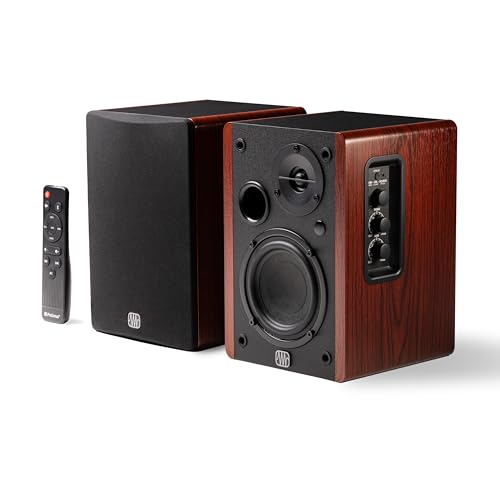
- RCA sub-out for easy system expansion
- Bluetooth 5.3 plus USB-C, optical, coaxial, RCA, and AUX
- Front-panel bass, treble, volume, and source controls
Best For: Desk setups and home users who want easy subwoofer expansion
Dedicated Studio Bass Add-On

- 10-inch active subwoofer with 28Hz low-end extension
- Adjustable crossover, phase, and volume for room matching
- XLR/RCA in-out and sub bypass for studio integration
Best For: Studio monitors that need accurate low-end extension
Flexible Near-Field Monitor Pair

- Hi-Res Audio certified with flat 52Hz to 40kHz response
- Balanced TRS, RCA, AUX, Bluetooth, and headphone output
- Monitor, Music, and Custom modes with app EQ control
Best For: Desktop creators who want flexible near-field monitors
Main Monitor Pick
PreSonus Eris Studio 8 Active Monitors

- 8-inch woofer with extended low end
- Wide sweet spot from EBM waveguide
- Room-tuning and multiple input options
Best For: Producers needing flexible main monitors for a subwoofer-based setup
Compact Sub Pick
PreSonus Eris Sub 8BT Powered Subwoofer

- 8-inch front-firing design with 30 Hz low end
- Highpass and lowpass crossover controls
- Bluetooth 5.0 plus TRS, RCA, and aux inputs
Best For: Small studios that want compact, accurate bass with flexible connectivity
Desktop Bass Control
Mackie CR8SBT Powered Subwoofer with Remote

- 8-inch woofer with custom-tuned ports
- Crossover, polarity, and level controls
- Desktop remote plus Bluetooth and TRS/RCA
Best For: Desktop studios that want easy bass control and broad speaker compatibility
Premium Full-Size Control Center – PreSonus Central Station Plus
If you want a studio monitor controller with subwoofer output-style routing flexibility for a more complex setup, the PreSonus Central Station Plus is built for multi-source monitoring. It gives you 3 sets of stereo analog inputs, 2 digital S/PDIF inputs, and 3 sets of stereo speaker outputs, so it fits control-room workflows where you need fast switching and level management.
Best For: Studios that need multiple input sources, several monitor pairs, and talkback in one control center.
Pros:
- 3 stereo analog inputs plus 2 192 kHz S/PDIF digital inputs
- 3 stereo speaker outputs with select switches and trim pots
- Transparent passive audio path with no op amps or integrated circuits
- Includes onboard talkback microphone, talkback input, and dual LED metering
Cons:
- No explicit subwoofer output is listed in the supplied notes
- More elaborate than a simple desktop monitor controller
- May be more system than a basic home-studio setup needs
The Central Station Plus makes sense when monitoring flexibility matters more than compact size. Its passive signal path and broad I/O give it a serious studio-control feel, while the remote and talkback features round out a practical command center.
Compact 2.1 Desktop Pick – PreSonus MicroStation BT
The PreSonus MicroStation BT is a compact studio monitor controller with subwoofer output support in a simple 2.1 desktop format. It combines Bluetooth, balanced TRS inputs, and a headphone/aux output, making it a practical way to add wireless playback and sub integration without taking up much space.
Best For: Small studios or home setups that want Bluetooth convenience and 2.1 monitoring in a tiny footprint.
Pros:
- 2.1 channel design with subwoofer connectivity mentioned in the notes
- Stereo Bluetooth input for wireless playback
- Balanced 1/4-inch TRS and stereo 1/8-inch TRS inputs for flexible hookup
- Headphone/aux output for listening or sending audio to a consumer device
Cons:
- Only two audio channels are listed beyond the 2.1 configuration
- Compact feature set compared with larger control centers
- Not aimed at complex multi-monitor switching
This is the easiest fit if you want a straightforward desktop controller that can handle a subwoofer setup and Bluetooth playback. It stays affordable and small, but still gives you the connections most compact monitoring rigs actually use.
Dedicated Powered Subwoofer – Yamaha HS8S
The Yamaha HS8S is the dedicated bass companion to a monitoring system, and it works well alongside a studio monitor controller with subwoofer output. With an 8-inch bass-reflex design, 150W amplification, and adjustable low-cut/high-cut controls, it is meant to help you shape low-end monitoring in a recording or live-music environment.
Best For: Studio owners who need a powered subwoofer with flexible crossover and phase controls.
Pros:
- 8-inch powered subwoofer with 150W output
- 22Hz to 150Hz frequency response for extended low end
- LOW CUT, HIGH CUT, and PHASE controls for tuning
- Two XLR inputs for wired studio integration
Cons:
- It is a subwoofer, not a monitor controller
- Requires a controller or monitor chain that can manage routing
- Bulky floor-standing unit compared with desktop control boxes
If the main goal is tighter low-end monitoring, the HS8S is the dedicated piece of the puzzle. It is best paired with a monitor controller that can handle sub routing, crossover decisions, and speaker management.
Simple Passive Desk Controller – Mackie Big Knob Passive
The Mackie Big Knob Passive is a straightforward studio monitor controller with subwoofer output-friendly monitoring logic in a no-frills 2×2 layout. Its passive audio path, source selection, monitor-pair switching, and mono/mute/dim controls make it a practical volume and routing hub for editing suites and compact studios.
Best For: Engineers who want simple source and monitor switching with a clean passive signal path.
Pros:
- Passive audio path for straightforward signal handling
- Choose between two sources and two monitor pairs
- Mono, mute, and dim buttons for fast control-room adjustments
- Compact, sturdy desktop design
Cons:
- No Bluetooth or digital input support
- More limited than full-featured monitor controllers
- Specific subwoofer output is not listed in the supplied notes
The Big Knob Passive is a good choice when reliability and simplicity matter most. It keeps the workflow direct and avoids extra processing, which suits users who just need clean switching and attenuation at the desk.
Compact Desktop Monitor Pair with Sub Out – PreSonus Eris Accent BT
If you want a studio monitor controller with subwoofer output in a simple desktop-friendly package, the PreSonus Eris Accent BT gives you flexible ways to build a small 2.1 setup. It combines powered stereo speakers, front-panel tone controls, and an RCA sub-out, so you can expand bass later without giving up everyday convenience for music, gaming, or creative work.
Best For: Desk setups, home studios, and listeners who want wired and wireless input options with easy sub expansion.
Pros:
- RCA sub-out makes it easy to add a subwoofer to the system.
- Multiple inputs include Bluetooth 5.3, USB-C, optical, coaxial, RCA, and AUX.
- Front-panel volume, treble, bass, power, and source controls simplify tuning.
- Remote control is included for room-wide volume and playback control.
Cons:
- 4-inch woofer is compact, so it will not deliver deep bass on its own.
- Designed as powered bookshelf speakers rather than a dedicated controller.
Overall, this is a practical choice if you need a compact monitor pair with subwoofer output and plenty of connection flexibility. It is especially appealing when you want easy setup and casual monitoring without extra hardware.
Dedicated Studio Bass Add-On – ADAM Audio T10S
The ADAM Audio T10S is the strongest match here if your goal is a studio monitor controller with subwoofer output behavior centered on accurate low-end extension. Built as an active subwoofer, it adds a 10-inch woofer, adjustable crossover, phase rotation, and XLR/RCA in-out connections for tighter integration with your monitors.
Best For: Studio setups that need a compact active subwoofer with flexible integration and calibration controls.
Pros:
- 10-inch active subwoofer extends low end down to 28Hz.
- Adjustable crossover, phase rotation, and dedicated volume help match your room.
- XLR and RCA inputs/outputs support wired studio connections.
- Sub bypass switch makes it easy to compare mixes with or without bass extension.
Cons:
- It is a subwoofer only, so you still need monitors to complete the system.
- Wired-only design may not suit flexible home audio setups.
For producers or mixers who need more control over the low end, this is the most focused option in the group. It is built for studio accuracy rather than all-in-one convenience.
Flexible Near-Field Monitor Pair – Edifier MR3
The Edifier MR3 works well when you want a compact near-field setup with monitoring features and broad input support. While it does not include a dedicated subwoofer output, it offers balanced TRS, RCA, AUX, and Bluetooth connectivity, plus monitor and custom modes for users who want more control over desktop listening.
Best For: Desktop creators and casual listeners who want flexible powered monitors with a headphone output.
Pros:
- Hi-Res Audio certification with a flat 52Hz to 40kHz response.
- Balanced TRS, RCA, AUX, Bluetooth, and headphone output.
- Monitor, Music, and Custom modes add flexibility for different uses.
- MDF cabinet is designed to reduce distortion.
Cons:
- No subwoofer output is listed.
- Smaller 3.5-inch drivers limit low-end output compared with larger monitors.
If your priority is a compact powered monitor rather than a bass-expansion hub, the MR3 is a strong value pick. It is especially useful for editing, guitar work, and near-field desktop listening.
Main Monitor Pick – PreSonus Eris Studio 8 Active Monitors
If you want a studio monitor controller with subwoofer output-friendly mains, the PreSonus Eris Studio 8 gives you a solid foundation for a 2.1 setup. These powered 8-inch monitors bring balanced XLR, 1/4-inch TRS, and RCA inputs, plus tuning controls that help them integrate more cleanly with a sub in smaller control rooms or desktop studios.
Best For: Producers who need accurate powered monitors with flexible inputs and room tuning for use with a subwoofer.
Pros:
- 8-inch woven-composite woofer delivers powerful, extended low end down to 35 Hz.
- EBM waveguide and silk-dome tweeter aim for a wide sweet spot and clear imaging.
- HF, midrange, highpass, and Acoustic Space controls help tailor the response to your room.
- Balanced XLR, balanced TRS, and unbalanced RCA inputs make hookup easy.
Cons:
- These are speakers only, so you still need a separate subwoofer for true low-end expansion.
- Best suited to users who want active monitors rather than a standalone control unit.
Overall, the Eris Studio 8 is a practical choice if you want accurate main monitors that can work alongside a subwoofer system without complicated setup. Its tuning options and connection flexibility make it especially useful in a home studio or desktop production space.
Compact Sub Pick – PreSonus Eris Sub 8BT Powered Subwoofer
The PreSonus Eris Sub 8BT is built for a studio monitor controller with subwoofer output style setup where you want compact bass reinforcement and easy crossover control. Its front-firing 8-inch design, Bluetooth 5.0 support, and wired inputs make it a strong fit for home studios that need accurate low end without taking up much floor space.
Best For: Small studios and desktop setups that need an accurate powered subwoofer with flexible wired and wireless connectivity.
Pros:
- Front-firing 8-inch sub reaches down to 30 Hz for deep low-end support.
- Highpass and lowpass controls help the sub blend with main monitors.
- Balanced TRS, RCA, and front-panel 1/8-inch aux inputs add flexibility.
- Bluetooth 5.0 makes wireless playback easy when you need it.
Cons:
- It is a subwoofer only, so it does not replace main studio monitors.
- Designed to complement compact Eris monitors, so larger systems may need more matching and setup care.
For compact reference systems, the Eris Sub 8BT offers the kind of controlled bass extension that can make mix decisions easier. The crossover tools and multiple input choices make it a versatile add-on for music production or multimedia listening.
Desktop Bass Control – Mackie CR8SBT Powered Subwoofer with Remote
The Mackie CR8SBT is a practical subwoofer choice if you’re building a studio monitor controller with subwoofer output setup and want simple desktop-friendly bass control. It combines an 8-inch powered woofer, Bluetooth, and stereo TRS/RCA connectivity with a desktop remote, making it easy to manage low end in a home studio or multimedia rig.
Best For: Users who want a powered subwoofer with desktop volume control, Bluetooth, and broad compatibility with powered speakers.
Pros:
- 8-inch polypropylene woofer and custom-tuned ports are built for deep bass extension.
- Input level, crossover frequency, and polarity controls help match the sub to your system.
- TRS and RCA inputs and outputs make it easy to route audio through powered speakers.
- Included desktop remote adds convenient volume control.
Cons:
- It is a subwoofer, so you still need compatible speakers for a full monitoring setup.
- Best results depend on setting crossover and polarity carefully.
As a flexible low-end hub, the CR8SBT works well when you want straightforward integration and remote volume access. Its connectivity and controls make it a strong fit for desktop systems where convenience matters as much as bass extension.
How We Picked the Best Studio Monitor Controller with Subwoofer Output
We prioritized gear that makes subwoofer integration simple and dependable, especially for users who want a Studio Monitor Controller with Subwoofer Output or a system that can be expanded around one. Key factors included usable I/O, monitoring flexibility, clean signal paths, room-friendly controls, and overall value for common studio setups.
We also looked at products that fit different workflow needs: passive control for minimal coloration, powered control for convenience, and subwoofers or monitor systems that support straightforward 2.1-style monitoring.
Quick Comparison
If you want the simplest routing, a dedicated controller with sub out and source switching is the most direct solution. If you are building a full 2.1 monitoring chain, a powered subwoofer with crossover controls may be the better fit. For desktop producers, compact monitor systems with Bluetooth or USB-C can be appealing, but verify that bass management and output routing match your studio needs.
Key Buying Factors for a Studio Monitor Controller with Subwoofer Output
Connectivity and Routing
Check for balanced inputs and outputs, plus a dedicated sub output or flexible main out routing. XLR, TRS, and RCA support can matter depending on whether you use pro interfaces, desktop gear, or consumer sources.
Level Control and Monitoring Features
A good controller should make it easy to trim volume accurately, mute speakers, and switch between monitor pairs or sources. For sub integration, look for models that support proper level matching so the low end does not overwhelm the mains.
Crossover and Bass Management
True bass management is one of the biggest advantages of a Studio Monitor Controller with Subwoofer Output. If the controller does not handle crossover duties internally, make sure your subwoofer or speaker system provides adjustable crossover and phase controls.
Noise, Transparency, and Convenience
Passive controllers can be very clean and simple, while active units may add features like remote control, Bluetooth, or headphone monitoring. Choose based on whether you value signal purity, convenience, or both.
Who Should Buy Which Studio Monitor Controller with Subwoofer Output?
Producers and engineers who need precise monitor switching and sub integration should look first at dedicated controllers. Desktop creators and home studio users may prefer compact systems that combine monitoring and bass control in fewer boxes. If your setup is already built around active monitors, a matching powered subwoofer with adjustable crossover may deliver the easiest upgrade path.
For most buyers, the best choice is the one that fits your room, your interface, and your monitoring habits—not just the most feature-rich model on paper.