
Choosing the right studio monitor controller with talkback can make a small control room feel far more efficient. The best units let you switch speakers, cue talent, and communicate clearly without breaking your workflow.
In this roundup, we focus on practical features that matter in real studios: routing, talkback usability, monitor control, and whether you need passive simplicity or built-in USB audio.
Best 10 Studio Monitor Controller with Talkback Picks for 2026
Premium Desktop Talkback Control
SPL MTC Mk2 Monitor and Talkback Controller

- Talkback headphone amplifier included
- Phonitor Matrix monitoring support
- Stainless steel desktop construction
Best For: Engineers needing a durable desktop controller with integrated talkback
All-in-One Communication Hub
Behringer CONTROL2USB Studio Control Center

- Built-in talkback microphone with level control
- USB audio interface included
- Master volume, source, and monitor switching
Best For: Home and project studios wanting monitoring and communication in one unit
Flexible Desktop Routing
Audient Nero Desktop Monitor Controller

- Four stereo sources and two line inputs
- Three speaker outputs plus four headphone outs
- External talkback input for studio communication
Best For: Studios needing flexible source, speaker, and headphone routing
Classic Studio Control Center

- Passive audio path with no op amps or ICs
- Onboard talkback microphone and talkback input
- Includes remote control and digital inputs
Best For: Studios wanting transparent monitoring with talkback and remote control
Passive analog controller

- Fully passive with no external power
- Large knob for quick, precise volume changes
- Mono, mute, and L/R flip buttons
Best For: Simple home and project studio monitor control
Talkback desktop hub

- Built-in talkback mic with gain control
- Four headphone amps with source selection
- Three speaker outputs plus mono/dim/mute
Best For: Multi-speaker studios needing talkback and headphone routing
USB monitor hub
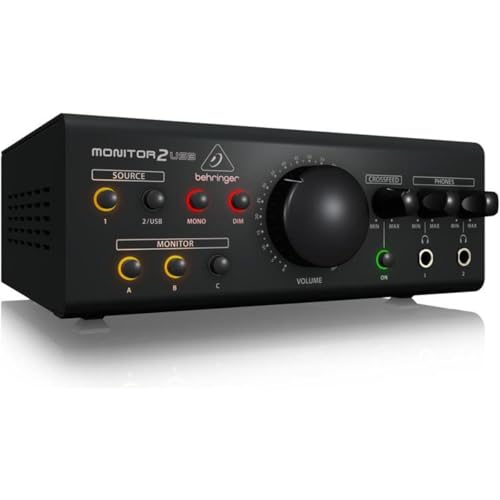
- Built-in USB audio interface
- VCA control for smooth level adjustment
- Speaker and headphone monitoring in one unit
Best For: Computer-based studios wanting USB monitoring control
Passive Precision
DYNASTY PROAUDIO PMC-2 passive monitor controller
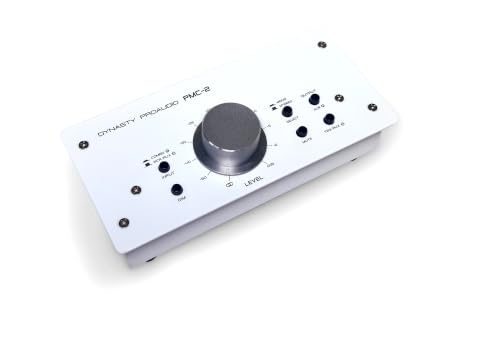
- Passive 2x2 analog volume control
- Balanced XLR, RCA, and 3.5mm inputs
- DIM, Mute, and Mono switches
Best For: Analog studios needing simple, transparent monitor level control
Classic USB Control
Mackie Big Knob Studio 3x2 USB monitor controller

- 3-source, 2-pair monitor switching
- 2x2 USB interface at 192kHz/24-bit
- Two Onyx preamps and dual headphone outs
Best For: Small studios that want monitor switching and a built-in USB interface
Multi-Source Routing
Mackie Big Knob Studio+ 4x3 monitor controller bundle

- Four input sources and three monitor pairs
- Dual Onyx preamps for recording
- Trim controls plus stereo aux input
Best For: Studios needing expanded switching and monitor balancing
Premium Desktop Talkback Control – SPL MTC Mk2 Monitor and Talkback Controller
The SPL MTC Mk2 is a studio monitor controller with talkback designed for setups that need straightforward speaker and headphone control in a solid desktop unit. It combines monitor switching, a talkback headphone amplifier, and Phonitor Matrix support in a stainless steel body, making it a practical hub for serious control-room use.
Best For: Engineers who want a durable desktop monitor controller with integrated talkback and headphone monitoring.
Pros:
- Includes a talkback headphone amplifier for communication during sessions
- Phonitor Matrix adds useful monitoring functionality
- Stainless steel construction for a sturdy desktop feel
- XLR, TRS, and barrel jack connectivity support flexible integration
Cons:
- Large footprint may take up considerable desk space
- Heavier design at 8.88 pounds
Overall, the MTC Mk2 is a focused monitor and talkback controller for users who prioritize build quality and a clean monitoring workflow. Its feature set is straightforward, but the combination of talkback, headphone amplification, and matrix monitoring gives it a professional edge.
All-in-One Communication Hub – Behringer CONTROL2USB Studio Control Center
Behringer CONTROL2USB High-end Studio Control with VCA Control and USB Audio Interface
Check Price On AmazonThe Behringer XENYX CONTROL2USB is a studio monitor controller with talkback built as an all-in-one control and communication center. It combines master volume control, source selection, monitor switching, and a built-in talkback microphone with level control, plus a USB audio interface for flexible studio routing.
Best For: Home and project studios that want one unit to handle monitoring, communication, and USB audio.
Pros:
- All-in-one design with master volume, source selector, monitor switcher, and talkback box
- Built-in talkback microphone with level control for direct communication
- Includes a USB audio interface
- VCA control and low-noise, high-headroom design
Cons:
- Listed Windows support and Ableton Live 10 or later compatibility may narrow workflow fit
- Not as compact as a basic passive monitor controller
For users who want monitoring and communication in a single device, the CONTROL2USB covers a lot of ground. Its talkback mic and USB interface make it especially useful when you want a practical center section without adding extra boxes.
Flexible Desktop Routing – Audient Nero Desktop Monitor Controller
The Audient Nero is a desktop studio monitor controller with talkback support through an external talkback input, built for hands-on monitoring control. It offers four stereo analogue sources, two line level inputs, a dedicated cue mix input, three stereo speaker outputs, and four headphone outputs, giving it plenty of routing flexibility for complex desktop studios.
Best For: Studios that need multiple sources, speaker sets, and headphone mixes in a single desktop controller.
Pros:
- Four stereo analogue sources plus two line level inputs
- Three stereo speaker outputs for monitor switching
- Four headphone outputs with flexible routing
- External talkback input supports communication workflows
Cons:
- Talkback is external rather than built into the unit
- Feature-rich layout may be more than a simple two-speaker setup needs
Nero is a strong fit when your monitoring setup needs more routing than a basic controller can provide. The combination of multiple sources, cue input, speaker outputs, and headphone outs makes it a capable desktop center for busy studios.
Classic Studio Control Center – PreSonus Central Station Plus
The PreSonus Central Station Plus is a studio control center with remote control and onboard talkback, aimed at straightforward monitor management in larger setups. It provides three sets of stereo analog inputs, two sets of 192 kHz S/PDIF digital inputs, three speaker outputs, and a transparent passive audio path for users who want flexible routing without extra coloration.
Best For: Studios that want a passive monitor controller with digital inputs, talkback, and remote operation.
Pros:
- Three stereo analog inputs and two 192 kHz S/PDIF digital inputs
- Three speaker outputs with select switches and trim pots
- Onboard talkback microphone plus talkback input
- Includes CSR-1 remote control for convenient operation
Cons:
- Passive design may not suit users looking for built-in processing
- Remote adds another component to manage
The Central Station Plus is a practical choice if you want a monitor controller that stays transparent and adds useful talkback and remote features. Its mix of analog and digital inputs gives it enough flexibility for many studio signal chains.
Passive analog controller – ESI MoCo Monitor Controller
If you want a studio monitor controller with talkback-like workflow basics kept simple, the ESI MoCo is a practical passive option for clean level control and source switching. It keeps the signal path uncolored by running without external power, while still giving you quick access to input/output selection, mono, mute, and left/right channel flip.
Best For: Home and project studios that need straightforward passive monitor control with flexible stereo I/O.
Pros:
- Fully passive design with no external power required
- Large knob makes volume changes fast and precise
- Switchable inputs/outputs plus mono, mute, and L/R flip controls
- Flexible connectivity with TRS, RCA, XLR, and 1/8″ options
Cons:
- No built-in talkback microphone
- Does not include headphone amp or digital input features
- Plastic enclosure may feel less rugged than metal units
MoCo is a clean, no-frills monitor controller for users who mainly need reliable analog switching and level control. If talkback is not essential, it offers a compact and simple way to manage studio monitors without adding power or coloration.
Talkback desktop hub – PreSonus Monitor Station V2
The PreSonus Monitor Station V2 is a strong fit if you’re looking for a studio monitor controller with talkback and a more complete desktop control center layout. It combines multiple stereo input pairs, a digital S/PDIF input, three selectable speaker outputs, four headphone amps, and a built-in electret-condenser talkback mic with gain control for session communication.
Best For: Studios that need talkback, multiple speaker paths, and several headphone mixes in one controller.
Pros:
- Built-in talkback microphone with input-gain control and Talkback button
- Four stereo headphone amplifiers with independent source selection
- Three speaker output pairs with level controls
- Includes Main Mute, Mono, and Dim functions with variable attenuation
Cons:
- Larger desktop footprint than simpler controllers
- More complex than a basic volume-only monitor box
- May be more controller than needed for small setups
This is the most fully featured option in the group for communication-heavy sessions. If you need talkback plus flexible routing for speakers and headphones, the Monitor Station V2 is built for that workflow.
USB monitor hub – Behringer MONITOR2USB
The Behringer MONITOR2USB is aimed at users who want a studio monitor controller with talkback-style monitoring flexibility plus USB audio integration. It combines speaker and headphone monitoring control with VCA-based level handling and a built-in USB audio interface, making it a compact option for computer-based setups.
Best For: Windows-based desktop studios that want monitor control and USB audio in one unit.
Pros:
- Includes a USB audio interface for direct computer connection
- VCA control supports smooth monitoring level adjustment
- Combines speaker and headphone monitoring in one center
- Compact enough for a desktop studio layout
Cons:
- Windows-focused compatibility in the supplied notes
- Fewer routing details than more full-featured monitor stations
- No built-in talkback microphone listed in the supplied specs
If your workflow is centered on a computer and you want monitoring control plus USB connectivity, this model is a practical choice. It is less expansive than a dedicated monitor station with talkback, but it can streamline a small Windows studio setup.
Passive Precision – DYNASTY PROAUDIO PMC-2 passive monitor controller
If you want a straightforward studio monitor controller with talkback-style day-to-day workflow support centered on fast level trimming, the DYNASTY PROAUDIO PMC-2 keeps things simple and transparent. It is a passive 2×2 monitor volume controller with balanced and unbalanced inputs, a large rotary knob, and handy DIM, Mute, and Mono switches for quick monitor management.
Best For: Home and project studios that want passive, no-power monitor level control with flexible analog connections.
Pros:
- Passive design means no power supply is required.
- Large rotary knob makes monitor level changes quick and easy.
- Balanced XLR/phone jack, RCA, and 3.5mm input options add flexibility.
- DIM, Mute, and Mono switches are useful for basic monitoring control.
Cons:
- Does not include built-in talkback features.
- No USB interface or mic preamps are listed.
- Focused on analog volume control rather than advanced studio routing.
Overall, the PMC-2 is a clean, transparent option if your main priority is simple monitor attenuation in an analog setup. It is best viewed as a practical controller for level management, not an all-in-one interface or speaker management hub.
Classic USB Control – Mackie Big Knob Studio 3×2 USB monitor controller
Mackie Big Knob Series, 3x2 Studio Monitor Controller 192kHz USB I/O (BIG KNOB STUDIO)
Check Price On AmazonThe Mackie Big Knob Studio is a studio monitor controller with talkback-friendly workflow features in the sense that it gives you fast source switching, monitor pair selection, and independent headphone control in one desktop unit. It also doubles as a 2×2 USB interface with 192kHz/24-bit recording and playback, making it a strong choice if you want monitoring and basic recording tools together.
Best For: Small studios that need monitor switching plus a built-in USB interface and headphone control.
Pros:
- Switches between 3 sources and 2 monitor pairs.
- Includes a 2×2 USB interface with 192kHz/24-bit audio.
- Two Onyx mic preamps add recording flexibility.
- Dual headphone outputs have independent level control.
Cons:
- Only 2 monitor pairs are supported, not 3.
- Talkback is not explicitly listed in the supplied notes.
- More complex than a simple passive volume controller.
For users who want an all-in-one desktop monitor hub, this Big Knob model offers a lot of practical control without feeling overbuilt. Its combination of source selection, monitor switching, and USB recording makes it especially useful in compact production setups.
Multi-Source Routing – Mackie Big Knob Studio+ 4×3 monitor controller bundle
If you need a studio monitor controller with talkback-friendly workflow and more routing flexibility, the Mackie Big Knob Studio+ gives you four input sources and three monitor pairs to work with. It also adds Dual Onyx preamps, trim controls for balancing monitor levels, and a stereo aux input for reference music, so it fits well in a busy studio control position.
Best For: Studios that want expanded source and monitor switching with integrated USB audio and preamps.
Pros:
- Switches between four input sources and three monitor pairs.
- Dual Onyx preamps support high-fidelity, low-noise recording.
- Trim controls help balance different monitor pairs.
- Stereo aux input is useful for playing reference tracks.
Cons:
- The supplied notes do not list explicit talkback controls.
- Bundle listing may include extras beyond the core controller.
- More feature-rich than a basic monitor volume box.
As a monitoring center, the Studio+ is the most flexible of the three products here. It suits users who need more routing options and want a controller that can handle both playback selection and light recording duties.
How We Picked the Best Studio Monitor Controller with Talkback
We selected models that balance monitor switching, talkback functionality, connection flexibility, and day-to-day usability. Priority went to controllers that fit common studio setups, from compact desktop rigs to larger production spaces with multiple speaker pairs and headphones.
We also considered build quality, signal path design, and whether the controller supports fast communication during recording sessions without adding unnecessary complexity.
Quick Comparison
If you want the simplest path, passive controllers are usually best for straightforward speaker switching and level control. If you need integrated source selection, headphone management, USB audio, or more studio-routing features, an active desktop unit may be the better fit.
A Studio Monitor Controller with Talkback is especially useful when you regularly record vocals, direct talent, or work with engineers and musicians in the same room.
Key Buying Factors for a Studio Monitor Controller with Talkback
Talkback Method
Check whether the talkback mic is built in, external, or routed through an interface input. A good implementation should be easy to trigger and clear enough for session communication without awkward setup.
Monitor Outputs and Source Switching
Look for the number of speaker pairs you need now and in the future. Dual- or multi-speaker support helps you reference mixes quickly across nearfields, mains, and alternate monitors.
Headphone and Cue Control
If you track performers often, independent headphone control can be just as important as speaker control. Some units also handle cue feeds or multiple sources for smoother recording sessions.
Passive Vs. Active Design
Passive controllers are often valued for simplicity and transparency. Active designs may add gain control, USB connectivity, or more routing options, but they can introduce extra complexity.
Desktop Layout and Workflow
Choose a unit with large, easy-to-reach controls if you want fast adjustments during sessions. The best controller should reduce interruptions, not create them.
Who Should Buy Which Studio Monitor Controller with Talkback?
Choose a compact passive controller if you mainly need straightforward monitor switching and level control. Pick a feature-rich desktop model if you want integrated talkback, USB audio, headphone routing, and flexible studio communication in one box.
For project studios, the best choice is usually the controller that matches your workflow, not the one with the most features. If your sessions involve artists, remote collaborators, or frequent reference checks, a Studio Monitor Controller with Talkback can be a worthwhile upgrade.