
Choosing a studio monitor subwoofer for surround mixing is about more than extra bass. You need low-end extension that integrates cleanly, stays consistent across formats, and supports accurate decisions in a multichannel room.
This roundup focuses on subwoofers that can help you build a more reliable monitoring chain, whether you are mixing film, music, or immersive content.
Best 10 Studio Monitor Subwoofer for Surround Mixing Picks for 2026
Studio-Grade Low End
JBL LSR310S 10-Inch Studio Subwoofer
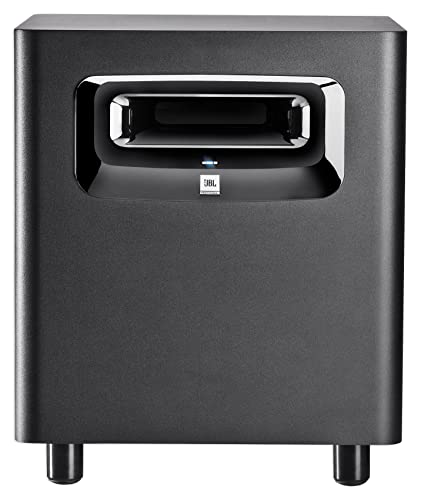
- Works as the .1 LFE channel in surround setups
- 10-inch driver reaches into the 20 Hz region
- Balanced XLR and TRS connections for studio systems
Best For: Surround rooms needing deep, accurate LFE support
Compact Wireless Bass

- 8-inch front-firing sub reaches down to 30 Hz
- Bluetooth 5.0 and wired inputs for flexible setup
- Crossover and tuning controls help match your monitors
Best For: Small studios wanting compact bass with wireless convenience
High-Power Reference Bass
Behringer NEKKST K10S Studio Subwoofer

- 300-watt amp with a 10-inch high-excursion woofer
- Variable low-pass and phase controls aid crossover matching
- Works with XLR, TS, and RCA sources
Best For: Larger monitor systems and surround rooms needing strong output
Coaxial Monitoring Accuracy
PreSonus Eris Pro 8 Coaxial Monitor

- Coaxial design improves imaging and phase alignment
- Built for stereo and surround, including Dolby Atmos
- Acoustic tuning helps match room placement
Best For: Immersive rooms that need precise main monitors beside a sub
Large-Room Low End
KRK S10.4 10" Powered Subwoofer

- 10-inch woofer reaches 28Hz
- Front-firing port aids placement
- Footswitch can bypass sub/crossover
Best For: engineers needing deep low end for surround or multichannel mixing
Nearfield Imaging

- 8-inch woofer with extended bass
- EBM waveguide widens the sweet spot
- Balanced XLR, TRS, and RCA inputs
Best For: producers needing accurate nearfield monitors with room-tuning controls
Compact Bass Support

- 8-inch woofer reaches 30Hz
- Front-firing port helps placement
- Footswitch can bypass sub/crossover
Best For: small studios that need compact low-end support for surround mixing
White Compact Sub
PreSonus Eris Sub 8 BT White 8-inch

- 8-inch front-firing woofer for accurate low end
- Variable crossover controls help blend with monitors
- Bluetooth 5.0 plus TRS, RCA, and aux inputs
Best For: Compact studio setups needing flexible bass reinforcement
Desktop Control Sub

- 8-inch woofer with custom-tuned ports for deep bass
- Crossover and polarity controls help integrate the sub
- Bluetooth plus TRS and RCA connections keep setup flexible
Best For: Desktop studios wanting remote volume control and easy bass tuning
Compact Monitor Pair

- 50W powered stereo pair for clear nearfield monitoring
- Woven-composite woofers and silk-dome tweeters
- TRS, RCA, and aux inputs with room tuning controls
Best For: Small studios wanting accurate monitors before adding a sub
Studio-Grade Low End – JBL LSR310S 10-Inch Studio Subwoofer
If you want a studio monitor subwoofer for surround mixing that can also serve as the .1 LFE channel, the JBL LSR310S is built for that role. Its 10-inch down-firing driver, patented port design, and XLF tuning are aimed at deep, dynamic low end, while the balanced XLR and 1/4" connections make it easy to slot into a professional monitor system.
Best For: Engineers who need a dedicated LFE/sub bass monitor for surround and immersive studio setups.
Pros:
- Can be used as the .1 LFE channel in a surround sound system.
- Reaches down into the 20 Hz region with up to 113 dB peak output.
- XLF mode adds a club-style bass tuning option for dance-focused work.
- Balanced XLR and TRS I/O support pro studio integration.
Cons:
- Only offers a single 10-inch subwoofer channel rather than full multi-sub management.
- XLF tuning is more specialized and may not suit every mix workflow.
The LSR310S is a strong pick if your priority is clean, extended low-frequency support in a surround room. It looks especially practical for studios that want one sub to handle both music production and the dedicated LFE job.
Compact Wireless Bass – PreSonus Eris Sub 8BT
The PreSonus Eris Sub 8BT is a practical studio monitor subwoofer for surround mixing when you need compact size, accurate bass, and flexible connectivity. Its front-firing 8-inch design, crossover controls, and Bluetooth 5.0 support make it easy to adapt to a home studio, multimedia desk, or smaller monitoring setup.
Best For: Small studios and hybrid workspaces that need a compact, accurate sub with wireless convenience.
Pros:
- Compact 8-inch front-firing design with accurate bass down to 30 Hz.
- Highpass and lowpass controls help align the sub with your main monitors.
- Bluetooth 5.0 plus TRS, RCA, and front aux input offer flexible hookup options.
- Built-in headphone output adds quick reference listening.
Cons:
- 100 watts is modest compared with larger studio subs.
- Best suited to compact monitor systems rather than larger control rooms.
This sub makes sense when you want cleaner low-end monitoring without a bulky footprint. For smaller surround rooms or general production spaces, it gives you usable bass control and easy connectivity in one compact package.
High-Power Reference Bass – Behringer NEKKST K10S Studio Subwoofer
Behringer NEKKST K10S Audiophile 10" Studio Subwoofer with High Excursion Woofer
Check Price On AmazonIf you need a studio monitor subwoofer for surround mixing with serious output, the Behringer NEKKST K10S is positioned as a high-power reference option. Its 300-watt amp, 10-inch high-excursion woofer, and variable low-pass plus phase controls give you the tools to integrate low end into stereo or surround monitor systems.
Best For: Engineers who want a powerful, affordable-style reference sub for larger monitor setups and surround rooms.
Pros:
- 300-watt reference-class design delivers strong low-frequency output.
- 10-inch high-excursion woofer is built for detailed bass reproduction.
- Variable low-pass filter and phase switch help with crossover alignment.
- XLR, TS, and RCA connectivity supports many studio and media sources.
Cons:
- Tabletop mounting is less typical for a studio subwoofer than floor placement.
- Lacks the room-specific tuning features found on some competing models.
The K10S is a straightforward choice if you want more headroom and simple integration without overcomplicating the setup. It should appeal to studios that need a capable bass anchor for music, computer audio, or surround monitoring.
Coaxial Monitoring Accuracy – PreSonus Eris Pro 8 Coaxial Monitor
The PreSonus Eris Pro 8 is not a subwoofer, but it is relevant if you’re building a studio monitor subwoofer for surround mixing workflow around accurate main speakers. Its coaxial single-point-source design, wide dispersion, and acoustic tuning controls are aimed at stereo and immersive Dolby Atmos environments where imaging and phase alignment matter.
Best For: Surround and immersive mixing rooms that need accurate main monitors to pair with a subwoofer.
Pros:
- Coaxial design improves phase alignment and stereo imaging.
- Built for stereo and surround applications, including Dolby Atmos.
- 8-inch woofer, front port, and 35 Hz to 20 kHz response provide extended low end.
- Acoustic tuning controls help adapt the monitor to walls or corners.
Cons:
- It is a monitor, not a dedicated subwoofer.
- Best value comes when used as part of a full monitoring system.
If you’re assembling an immersive room, this speaker can make the subwoofer integration more meaningful by delivering a stable, precise main-channel foundation. It’s a smart companion piece when the goal is balanced surround monitoring rather than bass alone.
Large-Room Low End – KRK S10.4 10" Powered Subwoofer
If you need a studio monitor subwoofer for surround mixing, the KRK S10.4 is built for adding controlled low end to a professional setup. Its 10-inch glass aramid composite woofer reaches down to 28Hz, and the front-firing port can make placement easier when you are working around walls or tight studio layouts.
Best For: Mixing engineers who want a 10-inch powered sub with flexible placement and deep extension for surround or multichannel monitoring.
Pros:
- 10-inch glass aramid composite woofer with bass extension to 28Hz
- Front-firing bass port supports more flexible room placement
- Class D amplification keeps the design powerful and lightweight
- Footswitch support lets you bypass the sub and crossover filter when needed
Cons:
- Footswitch is not included
- At 35 pounds, it is not the easiest sub to move around
The S10.4 makes sense if you want deeper extension than a smaller sub and a straightforward way to integrate low end into a surround mixing workflow. It is a practical choice for studios that need strong output and placement flexibility without stepping up to a much larger system.
Nearfield Imaging – PreSonus Eris Studio 8
The PreSonus Eris Studio 8 is a strong fit when you want accurate nearfield monitors for studio work and a studio monitor subwoofer for surround mixing later in the chain. The 8-inch woven-composite woofer, EBM waveguide, and front-firing port are aimed at clear stereo imaging and smooth bass response in a compact powered monitor.
Best For: Producers and mixers who want detailed nearfield monitors with flexible inputs and room-tuning controls.
Pros:
- 8-inch woven-composite low-frequency driver with extended bass response
- EBM waveguide provides a wide sweet spot for stereo imaging
- Front-firing acoustic port helps bass performance in tighter spaces
- Balanced XLR, 1/4-inch TRS, and RCA inputs offer flexible connectivity
Cons:
- As a monitor, it is not the subwoofer itself
- Requires a proper setup if you want to build a surround system around it
For buyers assembling a surround-capable studio rig, the Eris Studio 8 works well as a monitoring anchor before adding dedicated low end. Its tuning controls and wide imaging focus make it a practical option for rooms where accuracy matters more than hype.
Compact Bass Support – KRK S8.4 Powered Subwoofer
If your room is smaller but you still need a studio monitor subwoofer for surround mixing, the KRK S8.4 offers a more compact path into dedicated low end. Its 8-inch glass aramid composite woofer reaches down to 30Hz, and the front-firing bass port helps with placement flexibility in tighter studio spaces.
Best For: Smaller studios and desktop-based mixers that need controlled bass extension without a larger subwoofer footprint.
Pros:
- 8-inch woofer provides bass extension down to 30Hz
- Front-firing bass port supports flexible placement
- Class D amplification keeps the design efficient and lightweight
- Footswitch control can disable the sub and crossover filter
Cons:
- Max SPL is lower than the larger KRK S10.4
- Footswitch is not included
The S8.4 is a sensible choice when you want surround-ready low end without committing to a larger cabinet. It gives you useful bass extension and simple integration features, but it is best suited to smaller rooms or setups where space is at a premium.
White Compact Sub – PreSonus Eris Sub 8 BT White 8-inch
PreSonus Eris Sub 8 BT White 8-inch Front-Firing Studio Subwoofer with Bluetooth Wireless Technology
Check Price On AmazonIf you need a studio monitor subwoofer for surround mixing, the PreSonus Eris Sub 8 BT White is built to add accurate low-end support without turning your room into a bass boom box. Its 8-inch front-firing design, 100W power, and variable crossover controls make it easier to blend with compact monitors and keep the low end tight and readable.
Best For: Compact studio setups that need accurate bass extension, flexible wired/wireless connectivity, and easy crossover tuning.
Pros:
- 8-inch front-firing glass-composite woofer for clean, tight bass
- Variable lowpass and switchable 80 Hz highpass filters help match satellites
- Bluetooth 5.0 plus TRS, RCA, and front aux input for flexible hookup options
- Built-in tuning controls and headphone output add practical monitoring convenience
Cons:
- Designed around compact monitors, so it may be less ideal for larger full-range systems
- Single 100W sub is aimed at accurate reinforcement, not maximum room-shaking output
Overall, this is a practical choice when you want a compact sub that emphasizes control, compatibility, and easier integration into a small surround or desktop mixing setup. The white finish and Bluetooth support are useful extras, but the main value is its straightforward studio tuning tools.
Desktop Control Sub – Mackie CR8SBT 8-inch Powered
The Mackie CR8SBT is a strong studio monitor subwoofer for surround mixing when you want dedicated bass reinforcement with simple desktop control. Its 8-inch woofer, custom-tuned ports, and adjustable crossover and polarity controls give you useful tools for integrating it into a monitor chain, while Bluetooth and the included desktop remote make day-to-day use easier.
Best For: Home studios and desktop monitor setups that need convenient bass control, Bluetooth, and a matched visual style with CR Series monitors.
Pros:
- 8-inch polypropylene woofer with custom-tuned ports for deep bass extension
- Adjustable crossover from 40–180 Hz and polarity control for system matching
- TRS, RCA, and Bluetooth connectivity support flexible setup options
- CRDV desktop remote lets you adjust volume from the desk
Cons:
- Heavier and larger than a compact desktop subwoofer
- Made to pair especially well with CR Series monitors, so styling is most cohesive there
For mixed-use studios and home stereo spaces, the CR8SBT stands out because it combines practical control features with easy streaming and remote volume adjustment. It is less about minimal footprint and more about giving you hands-on bass management in a polished desktop-friendly package.
Compact Monitor Pair – PreSonus Eris 3.5 White
While this is not a studio monitor subwoofer for surround mixing, the PreSonus Eris 3.5 pair can still serve as a compact monitoring base if you plan to add a sub later. The 3.5-inch woven-composite woofers, 50W amplification, and room-tuning controls make them a straightforward desktop monitor option for small spaces and reference listening.
Best For: Small desktop studios that want accurate nearfield monitors and may expand with a subwoofer later.
Pros:
- Sold as a complete stereo pair with 50W built-in amplification
- Woven-composite woofers and silk-dome tweeters deliver balanced, detailed sound
- High- and low-frequency acoustic tuning helps adapt to the room
- TRS, RCA, and front aux inputs support wide device compatibility
Cons:
- 80 Hz frequency response means they do not replace a true subwoofer
- Best suited to nearfield use rather than larger surround-monitoring systems
As a monitor pair, these speakers are useful when you want clean reference sound first and a subwoofer added separately for fuller low end. They are not the bass solution themselves, but they can fit neatly into an expandable studio monitoring setup.
How We Picked the Best Studio Monitor Subwoofer for Surround Mixing
We focused on subwoofers and relevant matching monitor options that are commonly used in nearfield and project-studio environments. Priority went to models with useful crossover controls, phase or polarity adjustment, flexible connectivity, and a reputation for predictable low-end integration. For Studio Monitor Subwoofer for Surround Mixing setups, those controls matter more than raw output alone.
Quick Comparison
In a surround room, the best choice depends on your monitoring size and how much low-end headroom you need. Smaller rooms usually benefit from an 8-inch sub with careful crossover control, while larger control rooms may prefer a 10-inch model for more depth and margin. Bluetooth is not a priority for mixing accuracy, but it can be useful for casual playback or reference checks.
Key Buying Factors for Studio Monitor Subwoofer for Surround Mixing
Frequency Extension and Integration
Look for a subwoofer that extends low enough to support your main monitors without creating a hump in the overlap region. Smooth integration is more important than maximum bass.
Crossover, Phase, and Polarity Controls
These controls help the sub blend with your speakers and room. In surround systems, being able to dial in timing and placement is essential for stable imaging and a consistent center of low-frequency energy.
Room Size and Output
Choose output based on the room, not just the spec sheet. A compact edit suite may sound better with an 8-inch sub, while larger mixing rooms often need the extra headroom of a 10-inch design.
Connections and System Matching
Check whether the sub offers TRS, RCA, or other connections that match your interface and monitors. A clean signal path makes calibration simpler and reduces setup headaches.
Who Should Buy Which Studio Monitor Subwoofer for Surround Mixing?
If you are working in a smaller stereo or hybrid room, an 8-inch model is often the safer, easier-to-integrate choice. If your priority is fuller low-end translation for film, game audio, or larger surround rooms, a 10-inch sub is usually the better fit. Buyers who want the most practical setup should favor models with straightforward controls and proven compatibility over flashy extras.
For most shoppers, the right Studio Monitor Subwoofer for Surround Mixing is the one that gives you the cleanest calibration path, the most usable control, and the best match to your room size and monitors.