
Choosing the right studio monitor subwoofer with XLR inputs can tighten your low end, improve translation, and make mix decisions easier. The best models add depth without muddying your monitors.
Below, we focus on practical features that matter in real studios: balanced connectivity, crossover control, room fit, and enough output to support honest monitoring.
Best 10 Studio Monitor Subwoofer with Xlr Inputs Picks for 2026
Compact Low-End Extension
ADAM Audio T10S 10" Active Subwoofer

- 130W active 10-inch sub with 28Hz-120Hz response
- XLR/RCA in and out for flexible studio routing
- Adjustable crossover, phase, and volume controls
Best For: ADAM T-series and compact studio setups
Balanced Deep Bass
JBL LSR310S 10-Inch Studio Subwoofer
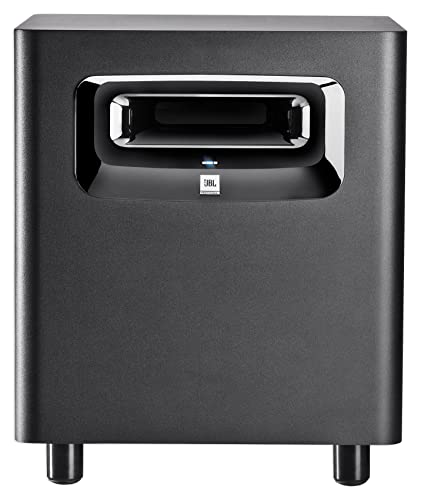
- Balanced XLR and 1/4" inputs with XLR outputs
- 10-inch down-firing driver and 200W amp
- XLF mode and -10dBV/+4 dBu switch add flexibility
Best For: Balanced studio and surround systems
Compact Studio Bass
KRK S8.4 Powered Studio Subwoofer

- 8-inch woofer with extension down to 30Hz
- Front-firing port helps with placement flexibility
- XLR connectivity and footswitch sub bypass support
Best For: Small studios and desktop production setups
Adjustable Studio Reference
Yamaha HS8S Powered Studio Subwoofer

- 8-inch bass-reflex sub with 150W power
- 22Hz-150Hz response and phase/filters for tuning
- Two XLR inputs for wired studio setups
Best For: Recording and live-music monitoring systems
Dark Wood Studio Bass Option
Rockville APM10D 10-inch studio subwoofer

- RCA, XLR, and 1/4-inch TRS connectivity
- 10-inch driver with 400W peak / 200W RMS
- Rear crossover, phase, and treble controls
Best For: Studios needing flexible wired hookups and bass tuning
Audiophile Reference Sub
Behringer NEKKST K10S 10-inch studio subwoofer

- 300W powered reference-class design
- XLR, TS, and RCA wired inputs
- Variable low-pass filter and phase switch
Best For: Reference setups that need simple monitor/sub integration
Compact Deep-Bass Studio Sub
KALI AUDIO WS-6.2 compact studio subwoofer
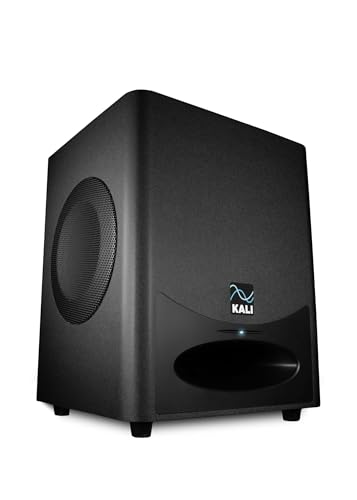
- Compact dual 6.5-inch driver design
- 600W output with up to 120dB SPL
- XLR, TRS, and RCA inputs plus crossover tools
Best For: Small studios needing powerful bass in limited space
Front-Firing Low-End Control

- 10-inch front-firing active subwoofer
- Balanced XLR/TRS inputs and pass-through outputs
- Variable lowpass and switchable highpass filters
Best For: Home and pro studios needing flexible wired bass management
Bundle With Matching Monitors

- Includes T10S subwoofer and T7V monitor pair
- XLR and TRS balanced cables are included
- Designed for professional studio monitoring
Best For: Small studios wanting a matched monitor-and-sub bundle
Compact Calibration Pick

- Compact subwoofer with response down to 25 Hz
- ARC X automatically calibrates sub and monitors
- XLR/RCA I/O with USB and Bluetooth support
Best For: Small studios needing compact bass with automatic calibration
Compact Low-End Extension – ADAM Audio T10S 10" Active Subwoofer
If you want a studio monitor subwoofer with xlr inputs that stays compact but still reaches deep, the ADAM Audio T10S is built for exactly that kind of setup. Its 10-inch active design, 130W output, and 28Hz-120Hz range make it a practical match for smaller studio rooms where you need clearer low-end translation without overbuilding the system.
Best For: ADAM T5V and T7V users, or any studio needing flexible low-end extension with XLR/RCA connectivity.
Pros:
- 10-inch active subwoofer with 130W power and 104dB SPL
- Adjustable crossover, phase rotation switch, and dedicated volume control
- XLR/RCA in and out for flexible studio wiring
- Downward-facing woofer can help placement in tight spaces
Cons:
- Designed specifically to complement ADAM T-Series monitors
- Footswitch for sub bypass is mentioned, but not included in the notes as a bundled item
The T10S is a sensible choice if you want controlled bass extension and straightforward calibration tools. For mixing setups that need a compact footprint and professional connections, it offers a balanced, studio-focused approach.
Balanced Deep Bass – JBL LSR310S 10-Inch Studio Subwoofer
The JBL LSR310S is a strong pick if you need a studio monitor subwoofer with xlr inputs and a more full-range reference for mixing. Its 10-inch down-firing driver, 200W amplifier, and low-frequency reach into the 20Hz region make it suited to control rooms that need deep bass without giving up professional balanced connectivity.
Best For: Studio monitor systems, surround setups, and engineers who want balanced XLR/TRS connectivity with deep bass.
Pros:
- Balanced XLR and 1/4″ inputs plus XLR outputs
- 10-inch down-firing driver with 200W amplification
- Low-frequency response reaches into the 20Hz region
- XLF setting adds a club-style bass tuning option
Cons:
- Larger studio subwoofer footprint at floor-standing size
- Features are geared more toward studio use than casual listening
For mixers who want dependable low-end extension and professional balanced connections, the LSR310S is easy to justify. It adds depth and flexibility without straying from a clearly studio-oriented design.
Compact Studio Bass – KRK S8.4 Powered Studio Subwoofer
If your setup needs a studio monitor subwoofer with xlr inputs in a smaller footprint, the KRK S8.4 is built for compact rooms and production desks. Its 8-inch glass aramid composite woofer, front-firing port, and 30Hz bass extension make it a practical way to add low-end support without taking over the space.
Best For: Small studios, desktop production setups, and users who want an 8-inch sub with XLR connectivity.
Pros:
- 8-inch woofer with bass extension to 30Hz
- Front-firing bass port improves placement flexibility
- XLR connectivity for wired studio integration
- Footswitch can enable or disable the sub and crossover filter
Cons:
- Smaller 109W output than some larger studio subs
- Footswitch is not included
The S8.4 makes sense when space is tight and you still want usable low-frequency extension for music production. It focuses on practical placement and simple sub control rather than maximum output.
Adjustable Studio Reference – Yamaha HS8S Powered Studio Subwoofer
The Yamaha HS8S is a straightforward studio monitor subwoofer with xlr inputs for recording and live-music setups that need controllable bass. With an 8-inch bass-reflex design, 150W amplifier, and adjustable low-cut, high-cut, and phase controls, it gives you the tools to tune the low end to your room.
Best For: Recording studios, live music rigs, and users who want adjustable XLR-based bass management.
Pros:
- 8-inch powered bass-reflex subwoofer with 150W output
- 22Hz-150Hz frequency response for extended low end
- Low cut, high cut, and phase controls for room tuning
- Two XLR inputs for wired studio connections
Cons:
- 8-inch design may be less forceful than larger subwoofers
- Feature set is focused on control, not extra convenience extras
For engineers who want a familiar, no-frills studio bass solution, the HS8S is easy to work into a monitoring chain. Its strength is simple adjustment and reliable XLR connectivity rather than flashy extras.
Dark Wood Studio Bass Option – Rockville APM10D 10-inch studio subwoofer
If you want a studio monitor subwoofer with xlr inputs, the Rockville APM10D is built for straightforward integration into a studio or music production setup. Its 10-inch design, front-firing port, and adjustable crossover/phase controls make it a practical choice for dialing in low-end support without overcomplicating the signal chain.
Best For: Studio producers and home setups that want flexible wired connectivity and adjustable bass control.
Pros:
- RCA, XLR, and 1/4-inch TRS inputs/outputs for flexible wired hookup
- 10-inch woofer with 400W peak / 200W RMS output for punchy bass
- Rear controls for volume, crossover frequency, phase, and treble
- MDF enclosure with a front-firing port for studio-oriented low-end response
Cons:
- Large floor-standing cabinet may take up noticeable space
- Mono subwoofer only, so it is strictly for bass support
Overall, the APM10D is a strong fit if you want a wired studio sub with XLR connectivity and physical tuning controls. It emphasizes setup flexibility and cabinet construction over portability, which suits fixed production spaces well.
Audiophile Reference Sub – Behringer NEKKST K10S 10-inch studio subwoofer
Behringer NEKKST K10S Audiophile 10" Studio Subwoofer with High Excursion Woofer
Check Price On AmazonThe Behringer NEKKST K10S is a straightforward studio monitor subwoofer with xlr inputs for users who want a wired low-end add-on with simple crossover alignment. Its 10-inch high-excursion woofer, variable low-pass filter, and phase switch are aimed at matching stereo monitor systems cleanly.
Best For: Studio and desktop users who want a reference-style sub with basic tuning controls.
Pros:
- 300W powered design for reference-class studio low end
- XLR, TS, and RCA connectivity for wired integration
- Variable low-pass filter and phase switch help align with monitors
- 10-inch high-excursion woofer for detailed bass reproduction
Cons:
- Tabletop mount and larger footprint may not suit very compact desks
- Fewer advanced setup features than some newer studio subs
For buyers focused on simple, wired monitor integration, the K10S keeps the feature set practical and centered on bass alignment. It is a good match when you want clean sub support rather than extra processing or compact portability.
Compact Deep-Bass Studio Sub – KALI AUDIO WS-6.2 compact studio subwoofer
If you need a studio monitor subwoofer with xlr inputs but do not have much room, the KALI AUDIO WS-6.2 is designed around compact placement and clean low-end extension. Its dual opposed drivers, 600W output, and built-in crossover controls make it a practical fit for nearfield studio monitoring.
Best For: Small studios and desktop production setups that need powerful bass in a compact cabinet.
Pros:
- Dual opposed 6.5-inch drivers help cancel cabinet vibration
- Up to 600W power and 120dB SPL for strong bass output
- XLR, TRS, and RCA inputs for flexible studio connectivity
- Built-in 80Hz high-pass crossover, polarity reversal, and LFE mode
Cons:
- Still a powered subwoofer, so it needs dedicated placement and power
- Smaller cabinet limits driver size versus full-size studio subs
The WS-6.2 stands out for packing serious output into a small footprint, which is useful when desk space is tight. Its integration tools make it easier to match with studio monitors while keeping bass tight and controlled.
Front-Firing Low-End Control – PreSonus Eris Pro Sub 10
If you want a studio monitor subwoofer with xlr inputs for a serious home studio or project room, the PreSonus Eris Pro Sub 10 is built to extend the low end without overpowering the mains. Its 10-inch front-firing design, variable crossover, and balanced XLR/TRS connectivity make it easy to integrate into a monitoring setup where control matters as much as depth.
Best For: Home studios and professional music-production setups that need flexible wired connectivity and adjustable bass management.
Pros:
- Balanced XLR and 1/4-inch TRS main inputs plus pass-through outputs for flexible studio wiring.
- Continuously variable lowpass filter and switchable 80 Hz highpass filter help shape integration with main monitors.
- 170W RMS Class AB amplification and up to 113 dB SPL provide plenty of output for nearfield systems.
- Included footswitch can bypass the subwoofer, highpass filter, and Sub Out when needed.
Cons:
- Front-firing 10-inch sub is larger and less desktop-friendly than compact alternatives.
- Best suited to wired studio systems rather than portable or wireless setups.
The Eris Pro Sub 10 focuses on practical bass control and straightforward studio integration, which makes it a strong fit when you want deeper low end and standard balanced connections. If your priority is accurate monitoring with room to tune the crossover, it offers a very usable feature set.
Bundle With Matching Monitors – ADAM Audio T7V + T10S Kit
If you’re shopping for a studio monitor subwoofer with xlr inputs and want a matched monitoring package, this ADAM Audio bundle keeps the wiring and system pairing simple. It combines the T10S 10-inch powered subwoofer with a pair of T7V monitors and includes XLR and TRS cables, so you have the key pieces needed for a balanced studio setup right out of the box.
Best For: Buyers who want a monitor-and-sub bundle with balanced cabling included for a small studio or desktop recording space.
Pros:
- Bundle includes the T10S subwoofer, two T7V monitors, and both XLR and TRS balanced cables.
- T7V monitors use a rear-firing bass reflex port and analog input connections for studio monitoring.
- T10S gives you a 10-inch powered subwoofer in the same package as the monitors.
- Good fit for professional audio recording and monitoring with wired connectivity.
Cons:
- Bundle is more than just a subwoofer, so it may be more than some buyers need.
- Rear-firing ported monitor design may require some placement care on a desk or stand.
This kit is most appealing when you want a complete, matched monitor system instead of piecing together individual components. The included balanced cables and subwoofer pairing make it a convenient way to build around wired studio monitoring.
Compact Calibration Pick – IK Multimedia iLoud Sub
The IK Multimedia iLoud Sub is a compact choice if you need a studio monitor subwoofer with xlr inputs for a small room or desktop setup. It focuses on controlled 25 Hz bass, and its ARC X calibration is designed to automatically correct both the sub and your connected monitors, which can simplify setup when space and time are limited.
Best For: Compact studios and desktop setups that benefit from automatic room calibration and flexible connectivity.
Pros:
- Compact cabinet with low-frequency response down to 25 Hz.
- ARC X auto calibration can correct both the subwoofer and connected monitors, regardless of brand.
- XLR/RCA I/O plus USB audio and Bluetooth support make it flexible for modern studio setups.
- 200W power and dual passive radiators are designed for controlled, musical bass.
Cons:
- Connectivity emphasis is broader than a purely traditional balanced XLR sub design.
- Best suited to small studios, so larger rooms may need more output than this compact unit is intended to provide.
For buyers who value automation and a small footprint, the iLoud Sub stands out as a practical low-end upgrade. It is especially compelling when you want calibration help rather than manual tuning for every setup change.
How We Picked the Best Studio Monitor Subwoofer with Xlr Inputs
We prioritized subs that make sense in a studio monitoring chain, not just home theater-style bass. That means balanced XLR connectivity where possible, usable crossover adjustment, solid output for nearfield listening, and designs that integrate cleanly with common powered monitors.
We also considered cabinet size, driver size, frequency extension, and control flexibility so you can match the sub to your room and workload.
Quick Comparison
If you want a simple way to narrow the list, think in terms of room size and bass target. Larger rooms usually benefit from a 10-inch class model with stronger headroom, while smaller spaces may do better with a compact sub that’s easier to place and tune. A Studio Monitor Subwoofer with Xlr Inputs is usually the safest choice for balanced signal runs and lower noise.
Key Buying Factors for a Studio Monitor Subwoofer with Xlr Inputs
Connectivity and Signal Path
Look for XLR input and output options so you can route signal from your interface or controller into the sub and then out to your monitors. Balanced connections help reduce hum and interference, especially over longer cable runs.
Crossover and Phase Control
A variable crossover lets you blend the sub with your main monitors instead of creating a bass bump or gap. Phase adjustment is equally important because it helps the sub and monitors work together at the listening position.
Driver Size and Low-End Extension
Ten-inch models are a common sweet spot for music production because they can reach low enough to reveal sub-bass detail without becoming too difficult to manage in average rooms. Smaller drivers can be useful in compact setups, but they may offer less authority.
Room Size and Placement
Subwoofers are highly sensitive to placement. Front-firing designs can be easier to integrate in tight rooms, while any sub may need careful positioning away from walls and corners to avoid exaggerated bass.
Integration and Calibration
If your priority is accuracy, consider models with room calibration or straightforward tuning controls. The easier it is to dial in the sub, the faster you’ll get dependable monitoring.
Who Should Buy Which Studio Monitor Subwoofer with Xlr Inputs?
Choose a larger, more flexible model if you mix bass-heavy material, need stronger headroom, or work in a medium-sized room. Pick a compact sub if you produce in a small space and need controlled extension rather than maximum output.
If your setup already uses balanced monitor connections, a Studio Monitor Subwoofer with Xlr Inputs is the cleanest and most professional route. If you need multiple connection types, look for a model that also includes RCA, TRS, or optical options for easier system matching.
For most producers, the best choice is the sub that balances extension, control, and room fit rather than the one with the highest wattage on paper.