
Choosing the right studio desk can make setup faster, keep cables under control, and give your gear a cleaner, more professional layout.
Below, we focus on practical options for different room sizes, workflows, and budgets so you can narrow down the best fit with less guesswork.
Best 10 Studio Recording Desk with Cable Management Picks for 2026
Studio Desk With Mobility
Acme 47" Music Recording Desk With Tray

- Sliding keyboard tray and top shelf
- Cup holder, headset hook, and open storage
- Lockable casters for easy repositioning
Best For: Small studios that need a movable, organized desk
Fabric Tray Cable Control
KEEGH Extra Large Under-Desk Tray

- Hides cords and power strips out of sight
- Clamp or screw mount with no drilling
- Rubber pads protect desk surfaces
Best For: Users who need an easy under-desk cable organizer
Compact Rack Workstation
Glorious Sound Desk C Studio Desk

- Cable ducts help route wiring neatly
- Two 3U rack sections for outboard gear
- Pull-out keyboard compartment adds workspace
Best For: Compact studios that need racks and cable routing
Rack Ready Music Desk
Acme Rectangular Music Desk Table
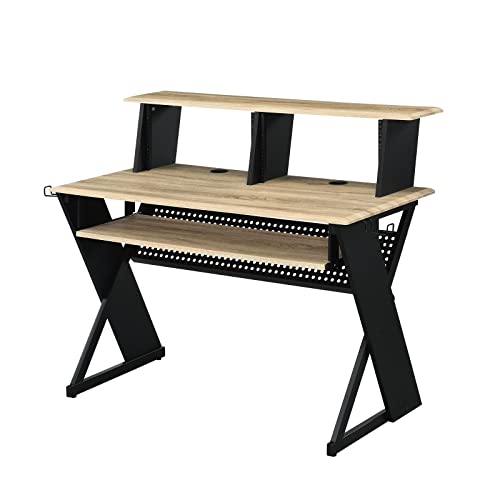
- Two cord management points plus holed panel
- Tray can hold a power strip
- Includes keyboard tray and earphone racks
Best For: Producers who want cable routing and rack-style storage
Studio Organizer Pick
61-Key Music Studio Desk with Sliding Tray

- Sliding tray fits a 61-key MIDI keyboard
- Pegboard, headphone hook, and cable management
- Steel frame for stable home studio use
Best For: Compact home studios that need tidy cable and accessory storage
Rack Workflow Pick
Studio Desk with Rack Bays and Keyboard Tray
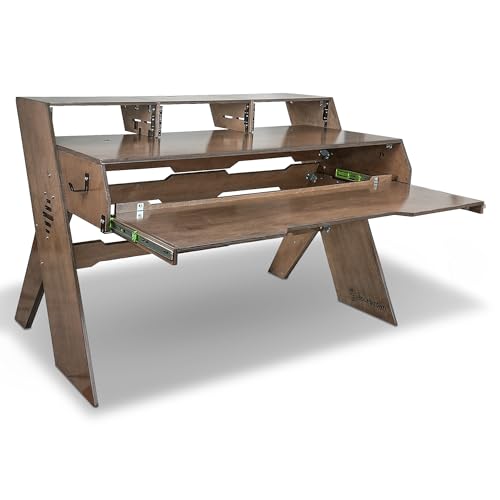
- Three 3U rack bays for organized gear storage
- 56.5-inch tray fits most MIDI keyboards up to 88 keys
- Built-in cable management for a cleaner workstation
Best For: Home studios that rely on rack gear and a full-size controller
Wide Surface Pick
63-Inch Music Recording Desk with Tray

- 63-inch desktop leaves room for studio gear
- Sliding tray supports keyboards and MIDI devices
- Steel frame and thick tabletop for stability
Best For: Producers who want a wider desk with simple, sturdy workflow
Large Multi-Station Studio Desk
Acme 71" Recording Workstation

- 71-inch desktop for monitors and gear
- Pull-out keyboard tray with speaker stands
- Bottom shelf plus rack space for storage
Best For: Large studio setups that need room to organize multiple devices
Compact Power Hub Desk
Armocity 47" Studio Workstation

- Built-in USB ports and outlet plugs
- Included velcro tape for wire organization
- Raised monitor shelf and keyboard tray
Best For: Small studios that want built-in charging and neater cable control
Studio Desk With Mobility – Acme 47" Music Recording Desk With Tray
If you want a studio recording desk with cable management that also works as a compact workstation, this Acme desk is built around space-saving storage. The raised shelf, keyboard tray, headset hook, and cup holder help keep gear and accessories organized, while the open design and casters make it easy to move.
Best For: Home studios, small production setups, and users who want a movable desk with built-in storage.
Pros:
- Includes a sliding keyboard tray, shelf, cup holder, and headset hook for organized setup.
- Lockable swivel casters make repositioning simple.
- Raised shelf helps keep monitors at a comfortable viewing height.
- Metal frame and MDF build are rated for everyday use.
Cons:
- Cable management is more basic than on desks with dedicated ducts or trays.
- Requires full assembly.
- Storage is useful, but not as specialized for outboard rack gear.
Overall, this is a practical pick if you want a flexible desk that keeps essentials close without taking up much room. It leans more toward general studio organization than advanced cable routing, but the layout still helps reduce clutter.
Fabric Tray Cable Control – KEEGH Extra Large Under-Desk Tray
For a studio recording desk with cable management, this KEEGH under-desk tray is designed to hide power strips, adapters, and loose wires out of sight. The fabric build fully conceals cords, and the clamp-or-screw installation makes it a straightforward add-on for desks used in home or office setups.
Best For: Anyone who wants a dedicated under-desk cable organizer for a cleaner studio or office workspace.
Pros:
- Large-capacity tray holds power strips, chargers, adapters, and extra cords.
- Fabric design hides wires for a cleaner look.
- Clamp or screw mount installation avoids drilling.
- Rubber pads help protect wood, metal, or glass desk surfaces.
Cons:
- It is an accessory, not a full desk.
- Requires separate installation under your existing workstation.
- Best results depend on having enough space beneath the desk.
This is a strong choice if your main goal is cable cleanup rather than buying a new workstation. It adds organized wire storage to almost any setup and is especially useful when you want to keep power accessories hidden.
Compact Rack Workstation – Glorious Sound Desk C Studio Desk
This studio recording desk with cable management is built for compact production setups that still need a serious workflow. The Glorious Sound Desk C combines a pull-out keyboard compartment, dual 3U rack sections, and included cable ducts, making it easier to keep outboard gear and wiring under control.
Best For: Small studios that want rack space, a pull-out keyboard tray, and built-in cable routing.
Pros:
- Includes cable ducts for cleaner wire routing.
- Two 3U rack areas support outboard equipment.
- Pull-out keyboard compartment adds an extra working level.
- Compact design ships in one box and stays under 65 pounds.
Cons:
- Maximum weight recommendation is limited to 35 kg.
- Smaller footprint means less surface space than larger desks.
- Assembly is recommended for two people.
Among compact studio options, this one stands out because it blends rack storage with actual cable management. If your setup includes a keyboard controller and outboard gear, it gives you a tidy, purpose-built layout without a large footprint.
Rack Ready Music Desk – Acme Rectangular Music Desk Table
Acme Furniture Rectangular Music Desk Table with Earphone Rack, Natural and Black
Check Price On AmazonIf you need a studio recording desk with cable management built into the layout, this Acme desk adds practical wire-handling features alongside storage for music gear. It includes two cord management points, top rack mounts, and a holed panel, plus a tray that can hold a power strip for a cleaner workspace.
Best For: Music producers who want a compact desk with cord routing and rack-style organization.
Pros:
- Two cord management features plus a holed panel help organize cables.
- Metal tray can hold a power strip for tidier routing.
- Includes a keyboard tray, shelf, and earphone racks.
- Rack spaces and mounts support more studio gear.
Cons:
- Smaller size may not suit users who need a larger main surface.
- Assembly is required.
- More specialized than a simple desk for basic office use.
This is a solid fit if your setup needs both storage and integrated cable organization. The added rack-style features make it especially useful for producers who want to keep accessories, power, and monitoring gear within reach.
Studio Organizer Pick – 61-Key Music Studio Desk with Sliding Tray
If you want a studio recording desk with cable management built around music production, this 47.2-inch workstation is made to keep a home setup tidy and easy to use. The sliding keyboard tray helps clear the desktop, while the pegboard side panel, headphone hook, and integrated cable management support a cleaner, more organized workflow.
Best For: Music creators who want a compact, organized desk for MIDI keyboards, recording, streaming, and everyday studio use.
Pros:
- Sliding tray keeps a 61-key MIDI keyboard close at hand without taking over the desktop.
- Pegboard and headphone hook add practical storage for accessories and studio gear.
- Built-in cable management helps reduce clutter around recording and production equipment.
- Steel frame construction adds stability for monitors, interfaces, and other studio essentials.
Cons:
- Keyboard tray is sized specifically for 61-key MIDI keyboards, so larger setups may be limited.
- Desktop is wide, but still more compact than full-size production stations.
This is a smart pick if organization matters as much as workspace. It blends useful storage with a music-first layout, making it easier to keep cables, headphones, and controller gear under control.
Rack Workflow Pick – Studio Desk with Rack Bays and Keyboard Tray
This studio recording desk with cable management is geared toward users who need a more structured production layout. With three 3U rack bays, an adjustable top shelf, and a wide slide-out keyboard tray, it gives you room to organize rack gear, a controller, and your main work surface in one setup.
Best For: Producers, podcasters, and creators who want rack storage, a large keyboard tray, and an organized workstation.
Pros:
- Three 3U rack bays make it easy to keep rack-mounted gear within reach.
- Large 56.5-inch keyboard tray fits most MIDI controllers, including up to 88 keys.
- Built-in cable management helps maintain a cleaner, less cluttered workspace.
- Plywood construction offers a sturdier feel than particle board.
Cons:
- Assembly is required, so setup takes some time.
- Fixed-height design may not suit every ergonomic preference.
If your gear includes rack units and a full-size controller, this desk is one of the most practical layouts in the group. It focuses on access and organization first, which makes it a strong choice for serious home studios.
Wide Surface Pick – 63-Inch Music Recording Desk with Tray
If you need a studio recording desk with cable management and a larger main surface, this 63-inch workstation offers a straightforward layout for music production. It includes a sliding keyboard tray, two side stands, and a sturdy steel-and-wood build that can handle typical studio essentials like a monitor, speakers, audio interfaces, and MIDI gear.
Best For: Users who want a wider music production desk with a keyboard tray and extra side storage.
Pros:
- 63-inch width gives you more room for monitors, controllers, and other gear.
- Sliding keyboard tray holds digital pianos, keyboards, and MIDI devices.
- Two stands provide useful spots for speakers, microphones, books, or interfaces.
- Steel frame and thick tabletop are built for stable everyday use.
Cons:
- The notes do not call out a dedicated cable management system as clearly as some other desks.
- Assembly is required, and the desk is relatively heavy at 99 pounds.
This is a solid option if your priority is surface area and an uncomplicated studio layout. It does not lean as hard into storage features, but it gives you a spacious, sturdy base for building a practical production setup.
Large Multi-Station Studio Desk – Acme 71" Recording Workstation
If you want a studio recording desk with cable management and plenty of room for a full setup, this 71-inch workstation is built around scale and organization. The wide desktop, speaker stands, pull-out keyboard tray, and lower shelf give you multiple zones for monitors, controllers, books, and accessories without feeling cramped.
Best For: Producers or creators who need a large desktop, speaker stands, and extra storage in one stable workstation.
Pros:
- 71-inch wide desktop leaves ample room for monitors, speakers, and documents.
- Pull-out keyboard tray plus two speaker stands add helpful studio organization.
- Bottom shelf and rack space under the stands support gear storage.
- Metal support frame and included casters improve stability and mobility.
Cons:
- Large footprint may be too big for compact rooms.
- Assembly comes in two boxes, so setup is less convenient than smaller desks.
Overall, this desk makes sense if your priority is spread-out working space and built-in gear placement rather than a minimalist footprint. It’s a practical pick for a more permanent studio layout.
Compact Power Hub Desk – Armocity 47" Studio Workstation
This studio recording desk with cable management is a strong option if you want built-in power and a cleaner desktop without adding extra chargers. The integrated USB ports, outlet plugs, and included velcro tape help keep a small home studio more organized while the raised monitor shelf and keyboard tray support a practical production layout.
Best For: Smaller home studios, editing spaces, or desk setups that benefit from built-in charging and tidier wiring.
Pros:
- Built-in 3 USB ports and 2 outlet plugs reduce the need for extra power strips.
- Velcro tape is included to help organize wires.
- Raised shelf positions monitors at eye level and fits two monitors.
- Pull-out keyboard tray and three layers of usable space support a compact workflow.
Cons:
- 47-inch size is better for smaller setups than expansive studios.
- The overall design is focused on function, so it may feel simple compared with larger workstation desks.
For buyers who value convenience and cable cleanup, this desk offers a well-rounded set of practical features. It’s especially appealing when you want charging access built into the workstation itself.
Mobile Compact Recording Desk – Acme 47" Keyboard Tray Desk
If you need a smaller studio recording desk with cable management-friendly organization features, this 47-inch model keeps the layout straightforward and efficient. The open compartment, keyboard tray, headset hook, cup holder, and caster wheels make it easy to keep essentials in place while moving the desk when needed.
Best For: Home studios, gaming setups, or multipurpose rooms that need a compact, movable desk with simple storage.
Pros:
- Compact 47-inch size fits more easily into smaller rooms.
- Open compartment, cup holder, and headset hook help keep accessories organized.
- Sliding keyboard tray adds a dedicated space for input gear.
- Lockable swivel casters make repositioning the desk easier.
Cons:
- Smaller surface area limits how much studio gear you can spread out.
- It does not include built-in power outlets or USB charging.
As a compact workstation, this desk works best when you want a tidy, mobile layout without a large studio footprint. It balances basic recording needs with practical everyday storage.
How We Picked the Best Studio Recording Desk with Cable Management
We focused on desks that support real studio use: cable routing, keyboard trays, monitor shelving, rack space, and layouts that work for both production and everyday computer tasks. Since a Studio Recording Desk with Cable Management should help reduce clutter without sacrificing workflow, we favored designs that make power, audio, and USB organization easier.
Quick Comparison
Think first about footprint and function. Compact desks are better for small rooms and simple setups, while larger workstations suit multi-device studios, rack gear, and dual-purpose spaces. A few models emphasize keyboard trays and shelves, while others lean into storage, rack bays, or integrated power access.
Key Buying Factors for a Studio Recording Desk with Cable Management
Desk Size and Room Fit
Measure your wall space, chair clearance, and monitor depth before buying. A desk that is too large can choke a small room, while a compact desk may not leave enough surface area for speakers, interfaces, and controllers.
Cable Routing and Access
Look for built-in openings, rear gaps, trays, or under-desk management features that keep cords away from your legs and desktop clutter. If you run multiple devices, good cable access matters as much as surface space.
Workflow Features
Keyboard trays, pull-out compartments, racks, and upper shelves can improve ergonomics and keep frequently used gear within reach. The best layout depends on whether you produce, mix, perform, or also use the desk as a home office station.
Build Quality and Stability
Heavy monitors, keyboards, and rack-mounted gear require a stable frame and a top that does not wobble under pressure. Materials, weight capacity, and support design all matter if you want long-term reliability.
Who Should Buy Which Studio Recording Desk with Cable Management?
If you have a small bedroom studio, choose a compact desk with smart storage and simple cable access. If you use multiple peripherals or want a cleaner workstation, look for larger surfaces and stronger cable management features. Producers who rely on controllers or keyboards may prefer a tray-focused design, while users with rack gear should prioritize desks with rack bays or shelf space. For the most organized setup, pairing your desk with an under-desk cable tray can make a major difference in keeping the studio tidy and efficient.