
Choosing among telephone audio interfaces for mobile recording can be confusing: some products are built for instruments and livestreams, while others capture phone calls, aviation communications, or spoken audio.
This roundup compares 10 portable options by connection type, recording quality, device compatibility, controls, and intended use so you can choose the right interface without paying for features you do not need.
Best 10 Telephone Audio Interfaces for Mobile Recording Picks for 2026
Best Creator-Focused Interface
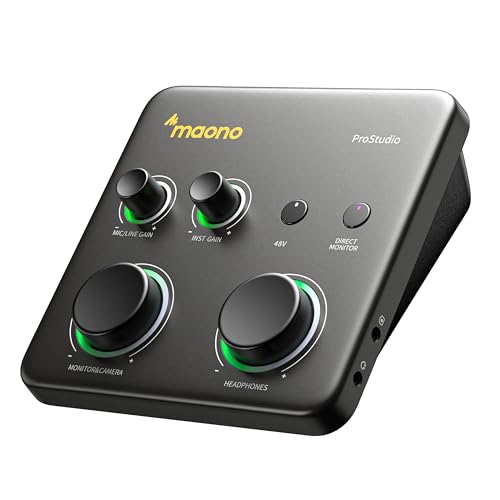
- Dual USB connectivity for phone and computer workflows
- 70dB gain with 24-bit/192kHz recording
- Loopback, auto-gain, and direct monitoring features
Best For: Musicians, podcasters, and streamers needing flexible mobile and desktop recording
Best Aviation Recording Adapter
GA Cockpit Voice Recorder Adapter

- Captures headset and ATC audio on mobile devices
- Compatible with iOS and Android phones and tablets
- Includes a five-foot cable
Best For: General aviation users recording cockpit and ATC audio
Best Pocket Guitar Interface
Portable 192kHz/24-bit Interface

- 24-bit/192kHz recording with low-latency monitoring
- Pocket-sized design weighs 4.8 ounces
- Works with phones, tablets, computers, and major DAWs
Best For: Guitarists and mobile creators recording on the go
Best Effects-Focused Mobile Mixer

- Supports two phones or a phone and computer
- Includes voice changing and multiple sound effects
- Portable design with a large battery
Best For: Mobile livestreamers wanting dual-device mixing and effects
Best Mobile Mic

- 24-bit/96 kHz recording
- Front, rear, and bidirectional modes
- Lightning, Micro-USB, and USB-C cables included
Best For: Portable vocals, interviews, and mobile video recording
Best Landline Recorder

- RJ11 analog phone-line connection
- 32GB storage with WAV recording
- Loop recording overwrites oldest files
Best For: Automated recording of compatible analog landline calls
Best Guitar Interface

- 24-bit/48 kHz recording
- 1/4-inch guitar input and headphone output
- Type-C and Lightning compatibility
Best For: Beginner guitar or bass recording and mobile live streaming
Best Call Recorder

- Records both sides of Bluetooth-compatible mobile calls
- Works as a standalone voice recorder
- Built-in USB plug and speaker simplify file access and playback
Best For: Mobile call recording and everyday voice memos
Best Beginner Guitar Interface
Pocket USB-C/Lightning Sound Card

- Connects guitars to iPhone, Android, tablets, and computers
- Supports 24-bit/48kHz low-latency recording
- Plug-and-play, battery-free design with level controls
Best For: Basic guitar recording and mobile live streaming
Best Bluetooth Guitar Interface

- Adds Bluetooth sync and internal audio capture
- Delivers 24-bit/48kHz sound with under-5ms latency
- Includes mobile adapters and a clip-friendly compact design
Best For: Portable guitar recording and synchronized streaming
Best Creator-Focused Interface – MAONO P1
The MAONO P1 is a versatile choice for telephone audio interfaces for mobile recording when you also need computer connectivity. Its dual USB ports support simultaneous computer and phone or iPad connections, while 70dB of gain suits microphones, guitars, and creator-focused recording setups.
Best For: Musicians, podcasters, and streamers who want flexible mobile and desktop recording with advanced routing.
Pros:
- Connects to Mac, PC, iPhone, Android devices, tablets, and cameras.
- Offers up to 70dB of gain and 24-bit/192kHz recording.
- Includes auto-gain, loopback, direct monitoring, and independent mute controls.
- Compact zinc-alloy housing has a practical 15-degree tilt.
Cons:
- Its extensive routing and software features may be more than casual users need.
- Some functions depend on the included or supported software workflow.
Choose the P1 if you want one interface for mobile recording, streaming, and desktop production. It is especially compelling for creators who need high gain and flexible audio routing rather than a minimal plug-and-play adapter.
Best Aviation Recording Adapter – GA Cockpit Voice Recorder Adapter
Smartphone iOS & Android GA Cockpit Voice Recorder Headset Adapter, ATC and Audio Recorder for GA
Check Price On AmazonThis GA Cockpit Voice Recorder adapter is a specialized option among telephone audio interfaces for mobile recording. It connects an aviation headset to an iOS or Android smartphone or tablet so you can record headset audio and ATC audio delivered through the headset.
Best For: General aviation users who need to capture cockpit headset and ATC audio on a mobile device.
Pros:
- Works with iOS and Android smartphones and tablets.
- Records audio heard through the headset, including ATC audio.
- Five-foot cable provides flexibility between the headset and mobile device.
- Made in the USA according to the supplied description.
Cons:
- Designed for aviation headset recording rather than general microphones or instruments.
- Uses an auxiliary connector and has one port.
- The description does not specify recording-resolution or monitoring features.
This is a focused solution, not a general-purpose studio interface. If your goal is recording aviation communications directly to a phone or tablet, its dedicated design is more relevant than the broader controls found on music-oriented interfaces.
Best Pocket Guitar Interface – Portable 192kHz/24-bit Interface
This compact guitar interface is a straightforward pick for telephone audio interfaces for mobile recording. It is designed for phone, tablet, Mac, and PC use, with 24-bit/192kHz capture, gain controls, and a pocket-sized design for recording away from a studio.
Best For: Guitarists and mobile creators who want a small interface for recording, streaming, podcasting, or video production.
Pros:
- Supports 24-bit/192kHz recording and low-latency monitoring.
- Compact 2.4-by-2.2-by-0.6-inch design weighs 4.8 ounces.
- Compatible with iPhone, Android, iPad, Mac, Windows, Linux, and common DAW software.
- Dual gain dials allow input and output level adjustment.
Cons:
- The supplied details identify line-in audio input but do not specify microphone preamp gain.
- It has two channels, which may limit larger recording setups.
- The charging connection supplies the phone or tablet rather than powering the interface.
For simple guitar and creator setups, this interface balances portability with high-resolution recording. It is a better fit for users who value a pocketable design than for those needing extensive routing or studio expansion.
Best Effects-Focused Mobile Mixer – V9 Sound Card
The V9 Mobile Phone Sound Card takes a different approach to telephone audio interfaces for mobile recording by emphasizing live mixing and effects. It supports two mobile phones, or one phone and one computer, and adds voice changing, reverberation, and special effects for interactive broadcasts.
Best For: Mobile livestreamers who want dual-device support and built-in voice and sound effects.
Pros:
- Supports two mobile phones or one phone and one computer simultaneously.
- Includes an adjustable voice changer with eight levels.
- Provides three effects, 12 special effects, and eight reverberation levels.
- Portable ABS housing and a large battery are suited to mobile use.
Cons:
- The supplied details do not list recording resolution or sampling rate.
- It is focused on live sound effects rather than detailed studio production.
- No warranty is listed in the supplied specifications.
The V9 is worth considering when entertainment features and multi-device livestreaming matter more than high-resolution music recording. Buyers seeking clean instrument capture or DAW-oriented production may prefer a conventional audio interface instead.
Best Mobile Mic – iRig Mic Cast HD
For creators comparing telephone audio interfaces for mobile recording, the IK Multimedia iRig Mic Cast HD is a compact microphone built for smartphone and tablet capture. Its front, rear, and bidirectional modes provide flexibility for vocals, interviews, and video recordings.
Best For: Mobile creators who want a clip-on microphone with multiple pickup directions and headphone monitoring.
Pros:
- Includes Lightning, Micro-USB, and USB-C cables for broad device compatibility.
- Supports 24-bit/96 kHz recording.
- Offers front, rear, and bidirectional recording modes.
- Magnetic mounting works with a device case, and headphone output supports monitoring.
Cons:
- It is a single-channel microphone rather than a multi-input interface.
- Its corded USB design may be less convenient than a wireless setup.
This is a practical pick when portability, flexible microphone direction, and high-resolution mobile recording matter more than multiple instrument inputs.
Best Landline Recorder – RJ11 Phone Call Recorder
Greensen Mini Phone Call Recorder, RJ11 Landline Recording Device for Home Office, 32GB USB
Check Price On AmazonAmong telephone audio interfaces for mobile recording, this RJ11 phone recorder is designed for analog landline calls rather than smartphone microphones or instruments. It records WAV audio, offers 32GB of storage, and can continuously overwrite older files when storage is full.
Best For: Users who need automated recording and storage for calls on compatible analog telephone lines.
Pros:
- RJ11 interface recognizes telephone input and output connections.
- Records in WAV format with 32GB of internal storage.
- Loop recording automatically replaces the oldest file when memory is full.
- USB supports plug-and-play charging and access through the U-disk function.
Cons:
- It is intended for analog phone lines, not general mobile audio recording.
- The supplied notes do not indicate support for smartphone or cellular-call recording.
Choose this model when your priority is hands-off recording of analog landline calls, especially if continuous operation and simple file access are important.
Best Guitar Interface – Pocket Mobile Sound Card
For musicians researching telephone audio interfaces for mobile recording, this pocket audio interface connects an electric guitar or bass to smartphones, tablets, laptops, and PCs. It provides plug-and-play 24-bit/48 kHz recording, low-latency monitoring, and compatibility with most recording apps.
Best For: Beginners who want a compact guitar or bass interface for recording and live streaming on mobile devices.
Pros:
- Includes Type-C connectivity and a Lightning-to-Type-C adapter for iPhone and iPad.
- Provides a 1/4-inch instrument input and 1/8-inch headphone output.
- Supports 24-bit/48 kHz audio with low-latency monitoring.
- Runs plug-and-play without batteries and includes monitor-volume controls.
Cons:
- It is designed for recording only and does not provide editing or mixing functions.
- The maximum sample rate is 48 kHz.
- Its single instrument input may limit multi-source recording.
This compact interface makes sense for straightforward guitar or bass capture, particularly when easy mobile setup and headphone monitoring are more important than advanced mixing.
Best Call Recorder – PR200 Mobile Call Recorder
If you need telephone audio interfaces for mobile recording but mainly want to capture phone conversations, the RecorderGear PR200 is a focused option. It records both sides of calls over Bluetooth with compatible iPhone, Android, and other Bluetooth-enabled phones, while also working as a standalone voice recorder.
Best For: Recording mobile calls, meetings, lectures, dictation, and voice memos without installing extra computer software.
Pros:
- Records both sides of conversations wirelessly through Bluetooth.
- Built-in speaker lets you play recordings directly from the device.
- Built-in USB plug connects directly to Mac or Windows computers.
- Offers up to 12 hours of battery life and substantial recording capacity.
Cons:
- Designed for call and voice recording rather than instrument recording or live mixing.
- Bluetooth compatibility is required for wireless mobile call recording.
- The supplied details list both 4GB and 8GB capacity, so storage specifications should be confirmed before purchase.
The PR200 is most compelling for users who prioritize straightforward call capture and portable voice recording. Its direct USB design and built-in playback make transferring and reviewing files convenient, but it is not a substitute for a multi-input music interface.
Best Beginner Guitar Interface – Pocket USB-C/Lightning Sound Card
For musicians exploring telephone audio interfaces for mobile recording, this compact guitar sound card provides a simple connection between an electric guitar or bass and a phone, tablet, laptop, or PC. It is plug-and-play, supports USB-C and Lightning connections, and is intended for recording and streaming rather than editing or mixing.
Best For: New guitar players who want a small, battery-free interface for basic mobile recording or live streaming.
Pros:
- Supports iPhone, iPad, Android phones, laptops, and PCs with included connection options.
- Provides 24-bit/48kHz recording with low-latency stereo audio.
- Plug-and-play design requires no drivers or batteries.
- Volume controls and an indicator light help monitor levels.
Cons:
- Not compatible with GarageBand according to the supplied notes.
- Designed for recording only, without editing or mixing features.
- May not work with every app and requires Android users to enable OTG.
This interface keeps the setup approachable for beginners and mobile creators who need basic guitar capture. Its app limitations and recording-only design make it less suitable for advanced production, but the portable, no-battery format is practical for quick sessions and streams.
Best Bluetooth Guitar Interface – Pocket Recording Sound Card
This pocket interface is a versatile choice for telephone audio interfaces for mobile recording when Bluetooth synchronization and instrument input are priorities. It connects guitars or basses to iPhone, Android devices, Macs, and computers, with internal recording support and a claimed latency of less than 5ms.
Best For: Guitarists, musicians, and streamers who want portable instrument recording with Bluetooth-synced audio.
Pros:
- Offers Bluetooth sync and internal audio capture for video-focused workflows.
- Supports 24-bit/48kHz sound and less-than-5ms latency.
- Works with iPhone, Android, Mac, and computers, with a Lightning adapter included.
- Compact body includes a back clip for mobile use.
Cons:
- Its listed warranty is 180 days.
- Compatibility is tied to iOS-compatible DAW software and supported devices.
- The supplied specifications list AUX, USB, and instrument connectivity, so users should verify their exact cable and input needs.
The Bluetooth and internal-recording features give this model an advantage for creators syncing instrument audio with mobile video. It remains a compact two-channel solution, so it is better suited to individual performers and streamers than larger multi-microphone recording setups.
How We Picked These Telephone Audio Interfaces for Mobile Recording
We focused on products that connect a phone, tablet, computer, headset, landline, microphone, or guitar to a recording setup. The selection covers USB interfaces, Lightning and USB-C adapters, mobile mixers, Bluetooth-enabled recorders, headset adapters, and dedicated telephone recording devices.
Key criteria included compatibility with current iOS and Android devices, input and output flexibility, recording resolution where specified, gain and monitoring controls, portability, and the clarity of each product’s intended use. Because “telephone audio interface” can describe several different tools, we separated music recording, live streaming, voice capture, and call recording needs rather than treating them as interchangeable.
Quick Comparison
| Best For | Look For | Typical Connection |
|---|---|---|
| Guitar and instrument recording | Instrument input, low latency, direct monitoring | USB-C, Lightning, or USB |
| Mobile livestreaming | Mixing controls, headphone monitoring, flexible inputs | Phone adapter or USB |
| Voice and interview recording | Clean preamp, compatible microphone input, compact design | USB, Lightning, or USB-C |
| Telephone or headset recording | Correct line or headset compatibility and recording storage | RJ11, headset adapter, or Bluetooth |
Key Buying Factors for Telephone Audio Interfaces for Mobile Recording
Device Compatibility
Check the exact connector before buying. USB-C, Lightning, USB-A, Bluetooth, and RJ11 products serve different purposes. iPhone compatibility may also depend on the phone generation, adapter, operating system, or whether external accessories are supported. Android compatibility can vary by manufacturer and USB audio settings.
Inputs, Outputs, and Monitoring
For guitar or microphone work, prioritize the input you actually need and confirm whether the interface provides headphone monitoring. Livestream mixers may offer more routing controls, while simple adapters can be smaller and easier to use. A product designed for a landline or aviation headset should not be assumed to work as a general-purpose music interface.
Recording Quality and Power
Higher sample-rate claims do not guarantee better results if the microphone, source, or software is limiting quality. Look for practical specifications such as bit depth, gain range, noise performance, and latency. Also check whether the unit draws power from the phone, needs charging, or requires an external power supply.
Call-Recording Rules and Privacy
Dedicated call recorders can be useful for personal documentation, customer-service notes, or telephone testing, but recording laws differ by location. Follow applicable consent requirements and use the device only with permission. Confirm whether recordings are stored internally, on removable media, or directly on a connected computer.
Who Should Buy Which Telephone Audio Interfaces for Mobile Recording?
Musicians should choose a compact guitar interface with the correct Lightning or USB-C connection and direct monitoring. Livestreamers will generally benefit from a mobile mixer with physical level controls and multiple routing options. Podcasters, interviewers, and voice creators should prioritize a clean microphone path, low noise, and reliable headphone monitoring.
For landline calls, choose a purpose-built RJ11 recorder rather than a standard guitar interface. Aviation users should select a headset adapter specifically rated for the relevant cockpit or communications setup. If you need flexible use across phones and computers, a USB interface with broad operating-system support is usually the safest choice—but verify the included cables and adapters before ordering.