
Small rooms need audio equipment that solves routing problems without creating a cluttered rack or complicated setup. The right interface can connect telephone audio with microphones, instruments, background music, or recording equipment while keeping levels manageable.
We selected 10 telephone audio interfaces and related compact USB options for different use cases, from paging and telephone integration to podcasting, recording, and basic signal conversion. Use the guide below to narrow the list by connectivity, power requirements, control, and room size.
Best 10 Telephone Audio Interfaces for Small Rooms Picks for 2026
Paging Hub

- Single-zone telephone paging
- Separate music and paging outputs
- Built-in 24 V power and programmable controls
Best For: Analog telephone paging systems in small facilities
Compact Recording Pick

- One mic preamp and one instrument input
- 24-bit/192 kHz recording
- Low-noise outputs and headphone monitoring
Best For: Small-room vocals, podcasts, and guitar recording
Phone-Line Specialist
TAP-1 Audio and Power Interface

- Simulates an analog phone line
- Supplies -48 V DC telephone power
- Separates transmit and receive audio
Best For: Analog phone audio routing with RCA equipment
Creator Workflow Pick
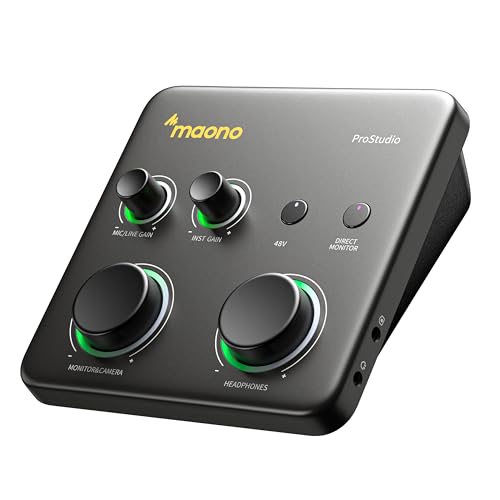
- Computer and mobile connectivity
- 70 dB gain with 24-bit/192 kHz audio
- Loopback, auto-gain, and direct monitoring
Best For: Small-room streaming, podcasting, and mobile recording
Phone-Line Pick
Passive Telephone Audio Interface

- Full-duplex audio over a telephone line
- Two-channel RCA connectivity
- 2-year warranty
Best For: Small-room telephone interviews and call-in audio
Paging-System Pick
- Single-zone telephone paging support
- Separate paging and music outputs
- Built-in 24V power and programmable controls
Best For: Small offices and facilities with analog paging systems
Compact Starter Pick
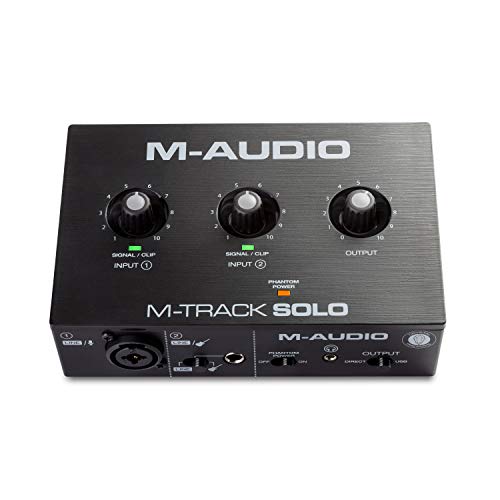
- Compact footprint for small rooms
- Mic, line, and instrument input options
- Zero-latency USB/direct monitoring
Best For: Solo podcasters, vocalists, and musicians with basic input needs
Effects-Focused Choice
Pyle PMUX9 USB Audio Interface

- 24 preset digital effects
- Two combo inputs plus AUX and RCA connectivity
- Compact design with 48V phantom power
Best For: Small-room performers wanting onboard effects and flexible inputs
Two-Input Recording Pick

- Two combo XLR/line/instrument inputs
- Zero-latency USB/direct monitoring
- Compact desktop format for two-source recording
Best For: Two-person podcasts, stereo sources, and small-room musicians
Paging Hub – Universal Telephone Interface
For small rooms that need telephone audio interfaces for small rooms, the Bogen UTI1 is aimed at paging and background-music distribution rather than music recording. It connects to several analog telephone-system interfaces and provides configurable outputs for speaker systems.
Best For: Small offices, facilities, and single-zone paging systems using analog telephone equipment.
Pros:
- Supports loop start, ground start, analog station, and page-port connections.
- Provides separate paging and paging-with-background-music outputs with individual level controls.
- Includes built-in 24 V DC power, programmable tones, timers, and DTMF setup.
- Retains configuration in non-volatile memory and supports wall mounting.
Cons:
- Designed for one-way paging, not two-way telephone conversations or studio recording.
- Its metal wall-mount enclosure and optional rack hardware may be more than a very small installation needs.
The UTI1 is the most specialized option here for telephone-triggered paging. Its multiple control modes and background-music handling make it a practical choice when room announcements are the priority.
Compact Recording Pick – Scarlett Solo 3rd Gen
The Focusrite Scarlett Solo 3rd Gen is a compact USB interface for recording a microphone or instrument to a computer, tablet, or compatible mobile setup. For telephone audio interfaces for small rooms, it fits best where the goal is voice, podcast, or instrument capture rather than telephone-line integration.
Best For: Small-room vocal recording, podcasts, guitar, and straightforward computer-based monitoring.
Pros:
- Combines one XLR microphone preamp with one Hi-Z instrument input.
- Offers Air mode, gain halos, and recording up to 24-bit/192 kHz.
- Provides two low-noise balanced outputs and a headphone connection for monitoring.
- Includes introductory recording software and a three-year warranty according to the supplied notes.
Cons:
- It is a USB recording interface, not an adapter for analog telephone lines.
- Its single microphone preamp limits simultaneous microphone recording.
The Solo is a sensible small-room choice for creators who need clean voice or instrument recording in a compact footprint. Choose it only if your telephone-related workflow ultimately feeds a computer through standard audio equipment.
Phone-Line Specialist – TAP-1 Audio and Power Interface
JK Audio TAP-1 Telephone Audio and Power Interface, 600 ohms RCA Line Input and Output
Check Price On AmazonThe TAP-1 directly addresses telephone audio interfacing by simulating an analog phone line and supplying the voltage needed for telephone operation. Its RCA connections and adjustable hybrid controls make it suited to small-room setups that need to separate telephone transmit and receive audio.
Best For: Analog or cordless telephone setups requiring separated audio paths and RCA connectivity.
Pros:
- Simulates the electrical characteristics of an analog phone line.
- Provides -48 V DC for telephone operation.
- Separates transmit and receive audio signals.
- Offers RCA line input/output, recessed volume controls, and hybrid-null adjustment.
Cons:
- Its 600-ohm RCA design may require additional adapters or equipment in modern digital setups.
- The supplied notes do not list USB, computer, or mobile-device connectivity.
Among these telephone audio interfaces for small rooms, the TAP-1 is the most focused on telephone-line electrical compatibility. It is a better match than a general USB recording interface when the installation depends on analog phone behavior and separate call audio paths.
Creator Workflow Pick – MAONO P1 USB Interface
The MAONO P1 is a compact USB interface for creators working with computers, phones, tablets, microphones, and guitars. In a small room, it can support podcasting, streaming, and recording workflows that combine voice with device audio, though it is not presented as a telephone-line interface.
Best For: Small-room streamers, podcasters, and musicians who need computer-and-mobile connectivity.
Pros:
- Supports simultaneous computer and phone or iPad connectivity through dual USB ports.
- Offers up to 70 dB of gain and 24-bit/192 kHz recording.
- Includes auto-gain, loopback, direct monitoring, mute controls, and software routing features.
- Compact tilted design and zinc-alloy housing suit desk-based setups.
Cons:
- It is aimed at creator recording and streaming, not analog telephone-line simulation.
- Its broad routing features may be unnecessary for a simple one-microphone setup.
The P1 is a flexible option when “telephone audio” means capturing calls or mobile content as part of a broader creator workflow. For direct analog phone-line interfacing, the TAP-1 or Bogen UTI1 is more purpose-built.
Phone-Line Pick – Passive Telephone Audio Interface
For small rooms that need a direct connection to a telephone line, the Autohybrid Passive Telephone Audio Interface focuses on two-way telephone audio. Its RCA connectivity and support for microphones, computers, headphones, and speakers make it a practical option for basic telephone audio routing.
Best For: Small-room telephone interviews, call-in audio, and full-duplex telephone connections.
Pros:
- Supports full-duplex audio over a telephone line.
- Provides two audio channels through RCA connectivity.
- Works with microphones, computers, headphones, and speakers.
- Includes a 2-year warranty.
Cons:
- Designed for telephone-line audio rather than USB recording.
- Windows is the listed operating-system support.
This is the most purpose-built choice of the three for telephone audio interfaces for small rooms, especially when the setup centers on a phone line rather than instrument recording.
Best for Everyday Use – USB Audio Interface
For small rooms where telephone audio is part of a broader recording setup, the Kmise USB Audio Interface offers a compact hub for microphones, instruments, headphones, and speakers. USB connectivity, low-latency monitoring, and 48V phantom power support make it suited to computer-based voice and audio production.
Best For: Small-room podcasting, vocal recording, streaming, and instrument recording.
Pros:
- Supports microphone, instrument, headphone, and speaker connections.
- Includes 48V phantom power for compatible condenser microphones.
- Offers low-latency monitoring for recording and podcast production.
- Compact 3.5-by-6.5-by-1.5-inch design helps limit workspace clutter.
Cons:
- Its listed maximum sample rate is 48 kHz, despite the supplied marketing claim of 24-bit/192 kHz recording.
- It is a USB recording interface, not a dedicated telephone-line interface.
- Warranty coverage is limited to six months.
This model is a flexible choice among telephone audio interfaces for small rooms when calls are only one part of a computer-based recording workflow; users needing direct phone-line interfacing should look elsewhere.
Paging-System Pick – Universal Telephone Interface
The Bogen UTI1 is built for small commercial rooms and paging systems rather than personal recording. It connects compatible analog telephone sources to a single-zone paging system, with separate audio outputs, background-music handling, programmable tones, and built-in power for supported external devices.
Best For: Small offices, service areas, and facilities requiring telephone-triggered paging with background music.
Pros:
- Supports loop-start, ground-start, analog-station, and page-port connections.
- Provides separate paging and paging-with-background-music outputs.
- Includes adjustable music muting, programmable tones, and page timers.
- Built-in 24V DC power supply can provide up to 1A to external devices or self-amplified speakers.
Cons:
- At 6.2 pounds, it is substantially heavier than the other listed interfaces.
- Designed for one-way paging, not full-duplex telephone conversation audio.
- Optional rack kit is sold separately.
Choose the UTI1 when telephone audio needs to feed a structured paging system. Its feature set is more specialized than typical telephone audio interfaces for small rooms, but it fits facilities that need reliable paging control.
Compact Starter Pick – M-Audio M-Track Solo
For telephone audio interfaces for small rooms, the M-Audio M-Track Solo is a compact option for basic recording, podcasting, and live streaming. It offers one combo mic/line input, a separate line/instrument input, and straightforward zero-latency monitoring in a small footprint.
Best For: Solo podcasters, vocalists, and musicians working in space-constrained setups.
Pros:
- Compact 6.43-by-4.46-inch design suited to small workspaces.
- Combo XLR/line input includes phantom power for compatible condenser microphones.
- USB/direct monitoring switch helps support zero-latency monitoring.
- Includes MPC Beats and Ableton Live Lite software.
Cons:
- Only one combo XLR/line input is provided.
- Maximum sample rate is 48 kHz.
- Uses stereo RCA outputs rather than 1/4-inch main outputs.
The M-Track Solo keeps the essentials accessible without taking over a desk. It is a practical fit when a small room calls for a simple, portable interface rather than extensive input capacity.
Effects-Focused Choice – Pyle PMUX9 USB Audio Interface
The Pyle PMUX9 stands out among telephone audio interfaces for small rooms when built-in effects and flexible connections matter. Its compact enclosure combines USB recording, multiple analog inputs, 48V phantom power, and 24 preset digital effects.
Best For: Beginners and performers who want onboard effects and several connection options in a compact setup.
Pros:
- Compact 1.5-by-6.8-by-4.7-inch design is easy to store.
- Provides two combo XLR/6.35 mm inputs plus additional guitar, AUX, and RCA inputs.
- Includes 24 preset effects such as reverb, delay, chorus, and wah-wah.
- Offers 48V phantom power and multiple headphone, monitor, stereo, and phone outputs.
Cons:
- Supplied operating-system information lists Windows only.
- Its larger control set may be more than a simple voice setup requires.
- The notes do not specify a manufacturer warranty.
With its effects and broad connection layout, the PMUX9 is more versatile than a bare-bones interface. It makes the most sense for small-room users who want hands-on sound shaping without adding separate effects hardware.
Two-Input Recording Pick – M-Audio M-Track Duo
For telephone audio interfaces for small rooms, the M-Audio M-Track Duo offers a useful step up in input capacity while retaining a compact desktop design. Its two combo XLR/line/instrument inputs support simultaneous microphone, instrument, or line recording with direct monitoring.
Best For: Two-person podcasts, stereo sources, or small-room musicians who need two inputs.
Pros:
- Two combo inputs support XLR microphones, line-level sources, and instruments.
- Phantom power supports compatible condenser microphones.
- USB/direct switch provides zero-latency monitoring.
- Includes MPC Beats and Ableton Live Lite software.
Cons:
- Maximum sample rate is 48 kHz.
- Its 7.5-inch width is larger than the M-Track Solo.
- It does not include the PMUX9’s built-in digital effects.
The M-Track Duo is a sensible choice when a small room still needs two usable recording channels. It balances a modest footprint with enough connectivity for paired voices, guitar and vocal, or other two-source sessions.
How We Picked the Best Telephone Audio Interfaces for Small Rooms
We focused on equipment that can fit practical small-room systems rather than large broadcast installations. Selection criteria included telephone-line compatibility, input and output options, impedance or level matching, USB connectivity where applicable, phantom-power support, physical size, controls, and setup complexity.
Because these products are not identical, the list includes dedicated telephone interfaces, paging adapters, passive line interfaces, and compact USB recording interfaces. Dedicated telephone hardware is usually the safest choice for connecting to telephone equipment, while USB models are better suited to microphones, instruments, computers, and hybrid production setups.
Quick Comparison
| Best For | Look For | Typical Advantage |
|---|---|---|
| Telephone and paging systems | Telephone interface, paging outputs, tone controls | Purpose-built routing |
| Computer recording | USB connection, microphone preamp, headphone output | Easy recording and monitoring |
| Mixed analog setups | RCA, 1/4-inch, AUX, or line-level I/O | Flexible equipment matching |
| Portable or occasional use | Compact enclosure and bus power | Simple installation |
Key Buying Factors for Telephone Audio Interfaces for Small Rooms
Telephone Compatibility and Isolation
First determine whether the device connects directly to a telephone line, a telephone handset, or an existing audio system. Passive interfaces may require additional equipment and careful level matching. Isolation is important because it can reduce hum, feedback, and unwanted electrical interaction between telephone and audio circuits.
Inputs, Outputs, and Signal Levels
Check whether your system uses RCA, 1/4-inch, XLR, USB, or speaker-level connections. Line-level outputs are appropriate for mixers, amplifiers, and recording gear, while microphone inputs need suitable preamps. Do not assume a USB interface can replace a telephone-line adapter; they serve different purposes.
Room Size and Control Layout
For a small room, prioritize accessible gain controls, direct monitoring, headphone volume, and a compact footprint. Extra effects or channels are useful only if they support your workflow. Simple controls often make troubleshooting easier.
Power and Installation
Confirm whether the unit uses USB bus power, an external adapter, phantom power, or a connection to a paging system. Leave room for cable strain relief and ventilation, even in a compact setup.
Who Should Buy Which Telephone Audio Interfaces for Small Rooms?
Choose a dedicated telephone or paging interface if your main goal is connecting telephone audio to a paging amplifier, background-music system, or fixed installation. A passive telephone interface may suit buyers who already understand analog routing and want a straightforward, low-cost connection.
Choose a compact USB interface if your priority is recording calls or voice work through a computer, or if you need microphone and instrument inputs more than direct telephone-line integration. Models with phantom power are useful for condenser microphones, while basic two-channel units are often enough for a small podcast or home studio.
Before ordering, map every connection in your setup and verify the required signal type. That step will prevent the most common mismatch: buying a capable USB recording interface when the system actually requires telephone-line isolation or paging compatibility.