
Choosing your first telephoto lens can feel complicated, especially when Canon EF and RF mounts, autofocus, reach, and low-light performance all affect the experience. The right lens should match your camera body, subject, and willingness to manage manual focus.
We compare 10 telephoto camera lenses for beginners, including compact Canon zooms, renewed value options, and extreme-reach manual lenses. Use the guide below to narrow the field before checking the details of each product.
Best 10 Telephoto Camera Lenses for Beginners Picks for 2026
Renewed Budget Reach

- 75-300mm zoom range for distant subjects
- Autofocus and compact 16.8-ounce design
- Renewed Canon EF SLR lens with 90-day warranty
Best For: Canon EF SLR beginners seeking an affordable telephoto starter lens
Stabilized RF Upgrade

- 100-400mm range for wildlife and sports
- Optical stabilization up to 5.5 stops
- Quiet, smooth Nano USM autofocus
Best For: Canon EOS R-series users wanting stabilized long-range reach
Classic DSLR Starter

- 75-300mm range for everyday telephoto practice
- Autofocus and compact 16.8-ounce design
- One-year warranty, but no image stabilization
Best For: Canon EF DSLR beginners shooting in bright outdoor conditions
RF Beginner Bundle

- 75-300mm range for EOS R-series cameras
- Eye-detection autofocus for stills and video
- Includes UV filter and cleaning accessories
Best For: EOS R-series beginners wanting a portable lens-and-accessory kit
Budget Super-Telephoto Pick

- Extreme 420-800mm reach
- Full-metal construction
- Manual focus; tripod recommended
Best For: Canon DSLR users learning long-distance wildlife, moon, and sports photography
Beginner-Friendly Autofocus Choice
Canon RF 75-300mm Telephoto Zoom
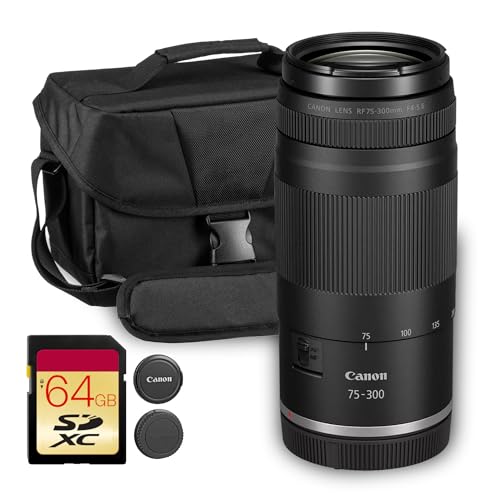
- Autofocus for simpler operation
- Compact 75-300mm zoom range
- Includes bag and 64GB memory card
Best For: Canon RF mirrorless users photographing sports, wildlife, portraits, and travel
Maximum Reach Bundle

- Includes 2X teleconverter
- Canon and Nikon SLR adapters
- Manual focus with no stabilization
Best For: Experimenting with extreme-reach moon, wildlife, bird, and airplane photography
Classic Canon Reach

- 75-300mm 4:1 zoom range
- Autofocus for Canon EF DSLRs
- No image stabilization
Best For: Beginner Canon DSLR telephoto shooting
Extreme Manual Reach

- 420-800mm zoom with 2x teleconverter
- Manual focus and Mode M required
- Designed for distant wildlife and moon shots
Best For: Beginners ready to learn manual long-lens shooting
Mirrorless Starter Zoom

- 75-300mm RF-mount zoom
- Servo AF and pupil detection
- No image stabilization
Best For: Canon EOS R-series beginners
Renewed Budget Reach – Canon EF 75-300mm III
Canon EF 75-300mm f/4-5.6 III Telephoto Zoom Lens for Canon SLR Cameras, 6473A003 (Renewed)
Check Price On AmazonFor beginners looking for telephoto camera lenses for beginners, this renewed Canon EF zoom offers a straightforward 75-300mm range for learning distant-subject photography. Its autofocus motor and relatively light 16.8-ounce design make it a practical starter option for compatible Canon SLR cameras.
Best For: Canon EF SLR owners who want affordable reach for outdoor subjects, sports practice, or casual wildlife photography.
Pros:
- Versatile 4:1 zoom range from 75mm to 300mm
- Autofocus motor and smoother zooming mechanism
- Compact 4.8-inch length and 16.8-ounce weight
- Includes a 90-day limited warranty as a renewed product
Cons:
- No supplied image-stabilization benefit is clearly specified for this renewed listing
- 4.9-foot minimum focusing distance limits close-up work
- Compatible with Canon EF SLR cameras, not RF mirrorless bodies
This lens is a sensible low-cost introduction to telephoto shooting when you already use a Canon EF camera. Its reach and manageable size are appealing, but buyers should confirm mount compatibility and account for the shorter renewed warranty.
Stabilized RF Upgrade – Canon RF100-400mm IS USM
This Canon RF100-400mm is a more capable choice among telephoto camera lenses for beginners using an EOS R-series mirrorless camera. It combines a broad 100-400mm range with optical stabilization, quiet Nano USM autofocus, and useful close-focusing performance at longer focal lengths.
Best For: Canon EOS R-series beginners who want extra reach for wildlife, sports, travel, and handheld outdoor shooting.
Pros:
- Flexible 100-400mm telephoto zoom range
- Optical stabilization rated up to 5.5 stops, or up to 6 stops with compatible IBIS bodies
- Nano USM provides fast, smooth, quiet autofocus
- Maximum magnification of 0.41x at 400mm
Cons:
- Designed for Canon RF mirrorless cameras rather than EF SLR bodies
- Its f/5.6-8 aperture range is relatively modest for low-light work
- Not listed as water resistant
For beginners who have already committed to Canon RF, this lens offers helpful stabilization and a longer 400mm endpoint than the other 75-300mm options here. It is especially appealing for handheld subjects in daylight, provided your camera uses the RF mount.
Classic DSLR Starter – Canon EF 75-300mm III
Beginners comparing telephoto camera lenses for beginners may appreciate this classic Canon EF 75-300mm zoom for its simple controls and familiar range. It is built for Canon EF-mount DSLRs, includes autofocus, and remains relatively compact for a lens reaching 300mm.
Best For: Canon EF DSLR owners learning composition and subject tracking in bright outdoor conditions.
Pros:
- Useful 75-300mm, 4x zoom range
- Autofocus operation for easier subject tracking
- Lightweight 16.8-ounce body measuring 4.8 inches long
- Includes a one-year limited warranty
Cons:
- No image stabilization
- 4.9-foot closest focusing distance is not suited to close-up photography
- Limited to Canon EF-mount DSLR cameras
This is a basic, approachable telephoto lens for learning how focal length changes perspective without adding much weight to a camera bag. Since it lacks stabilization, beginners will get the best results in good light or with careful shutter-speed choices.
RF Beginner Bundle – Canon RF75-300mm Kit
Canon RF75-300mm F4-5.6 Zoom Lens with Tiffen 58mm UV Filter and Striker Photo Lens Cap Keeper
Check Price On AmazonThis Canon RF75-300mm bundle is a convenient starting point for beginners shopping for telephoto camera lenses for beginners with an EOS R-series body. Along with the compact 75-300mm zoom, it includes a UV filter, cap keeper, and cleaning kit for basic lens care.
Best For: Canon EOS R-series beginners who want a lightweight telephoto lens and useful maintenance accessories in one package.
Pros:
- Versatile 75-300mm zoom range
- Eye-detection autofocus support during stills and video shooting
- Includes UV filter, cap keeper, blower, lens pen, brush, and case
- Compact and portable design described as about the weight of a 500ml water bottle
Cons:
- No image stabilization
- Compatible only with Canon EOS R-series RF cameras, not EF, EF-S, or EF-M DSLRs
- Not listed as water resistant
The accessory bundle adds practical value for newcomers, while the 75-300mm range gives an EOS R user a straightforward way to explore telephoto photography. Confirm your exact camera model before buying, and plan on using good technique or faster shutter speeds because stabilization is not included.
Budget Super-Telephoto Pick – JINTU 420-800mm Manual Zoom
For beginners comparing telephoto camera lenses for beginners, the JINTU 420-800mm offers exceptional reach at a budget-oriented price point. Its metal construction and manual controls suit photographers learning to frame distant subjects such as birds, wildlife, sports, and the moon.
Best For: Canon DSLR users who want extreme focal-length reach and are comfortable focusing manually with tripod support.
Pros:
- 420-800mm zoom range brings distant subjects significantly closer.
- Full-metal body with multi-coated, low-dispersion glass elements.
- Includes a Canon adapter and weighs about 700g according to the supplied details.
- Two-year warranty is listed in the product specifications.
Cons:
- Manual focus only; the camera may display “lens not attached.”
- No image stabilization, so a tripod is recommended for steadier images.
- Its f/8.3-16 aperture range can make focusing and shooting in lower light more demanding.
This is a specialized entry point into super-telephoto photography rather than an all-purpose lens. Choose it if maximum reach matters most and you are willing to learn manual focusing and use a tripod.
Beginner-Friendly Autofocus Choice – Canon RF 75-300mm Telephoto Zoom
For beginners seeking telephoto camera lenses for beginners, the Canon RF 75-300mm is the most straightforward option here for compatible mirrorless cameras. Autofocus, a compact design, and a versatile zoom range make it practical for sports, wildlife, portraits, travel, and everyday distant subjects.
Best For: Canon RF-mount full-frame and APS-C mirrorless users who want an easy-to-carry autofocus telephoto lens for general photography.
Pros:
- Autofocus supports automatic AF-A and continuous-servo AF-C modes.
- 75-300mm range covers portraits, sports, wildlife, and travel subjects.
- Lightweight design weighs about 16 ounces and uses a 58mm filter thread.
- 0.25x magnification and a 4.9-foot minimum focus distance support semi-macro work.
Cons:
- Compatible with Canon RF-mount mirrorless cameras, not the Canon DSLR mounts listed for the other lenses.
- The variable f/4-5.6 aperture is less bright at the long end.
- No image-stabilization feature is specified in the supplied details.
Among these choices, this Canon is the easiest recommendation for beginners who already own an RF camera. Its autofocus and modest weight prioritize convenience, while the 75-300mm range provides useful reach without the complexity of a manual super-telephoto lens.
Maximum Reach Bundle – JINTU 420-1600mm Manual Zoom
For beginners exploring telephoto camera lenses for beginners, this JINTU bundle emphasizes maximum reach rather than ease of operation. The 420-800mm lens includes a 2X teleconverter for a stated range up to 1600mm, making it suited to very distant subjects when used with careful manual technique.
Best For: Canon or Nikon SLR owners interested in moon, bird, wildlife, airplane, and other long-distance photography with a manual setup.
Pros:
- Includes a 2X teleconverter to extend the stated reach to 1600mm.
- Adapters are supplied for Canon EF/EF-S and Nikon F cameras.
- Full-metal construction and multi-coated low-dispersion glass elements.
- Bundle includes lens pouch, protective caps, hood, cleaning cloth, and user manual.
Cons:
- Manual focus only and no electronic contacts; the camera may show “lens not attached” or F00.
- No image stabilization is listed.
- The f/8.3-16 aperture range and extreme focal lengths demand careful technique and likely support equipment.
This bundle offers the most ambitious reach in the group, but it also has the steepest learning curve. It makes sense for a beginner specifically motivated by extreme-distance subjects and willing to work in manual mode.
Classic Canon Reach – EF 75-300mm III
For beginners comparing telephoto camera lenses for beginners, the Canon EF 75-300mm f/4-5.6 III offers a straightforward 4:1 zoom range for bringing distant subjects closer. It uses autofocus with Canon EF-mount DSLR cameras and has a 1.5 m minimum focusing distance.
Best For: Beginner Canon DSLR users photographing distant subjects, outdoor scenes, and general telephoto subjects.
Pros:
- Versatile 75-300mm zoom range.
- Autofocus operation supports simpler shooting.
- Super Spectra coating and a seven-blade diaphragm.
- Relatively light at 1.1 pounds.
Cons:
- No image stabilization.
- Maximum aperture narrows from f/4 to f/5.6 across the zoom range.
- Designed for Canon EF DSLR cameras, not Canon RF mirrorless cameras.
This is a practical entry point for Canon DSLR owners who want familiar autofocus and useful reach without a complicated setup. Because it lacks image stabilization, steady technique or a faster shutter speed can be helpful at longer focal lengths.
Extreme Manual Reach – JINTU 420-1600mm Telephoto
Among telephoto camera lenses for beginners, the JINTU 420-1600mm is a specialized option for Canon EF and EF-S cameras. It combines a 420-800mm manual-focus zoom with a supplied 2x teleconverter, but requires manual exposure and focusing in Mode M.
Best For: Patient beginners exploring moon, wildlife, bird, airplane, or distant-subject photography with a Canon DSLR.
Pros:
- Very long 420-800mm range, extendable to 1600mm with the included 2x teleconverter.
- Compatible with a broad range of Canon EF and EF-S cameras.
- Full-metal body with multi-coated low-dispersion glass elements.
- Includes a lens pouch, protective caps, hood, adapter, and cleaning cloth.
Cons:
- Manual focus only; it has no autofocus or electronic contacts.
- Requires Mode M and may display F00 for aperture information.
- Its F8.3-16 aperture range can require careful control of shutter speed and light.
This lens offers exceptional reach for hobbyists willing to learn manual focusing and exposure. It is less forgiving than an autofocus zoom, so it suits beginners who specifically want to practice long-lens technique rather than an effortless everyday telephoto.
Mirrorless Starter Zoom – Canon RF75-300mm F4-5.6
Canon RF75-300mm F4-5.6, Telephoto Zoom Lens, Compatible with EOS R Series Mirrorless Cameras, Black
Check Price On AmazonFor beginners seeking telephoto camera lenses for beginners for Canon mirrorless systems, the RF75-300mm F4-5.6 provides an accessible 4:1 zoom range. It supports Canon RF cameras with autofocus and can reach an approximate 120-480mm equivalent on APS-C-equipped bodies.
Best For: Canon EOS R-series mirrorless users photographing sports, wildlife, outings, and other subjects beyond arm’s reach.
Pros:
- Useful 75-300mm telephoto range.
- Servo AF and pupil detection support subject tracking at long focal lengths.
- Portable and lightweight for this zoom class at 1.1 pounds.
- Can provide background compression and blur at longer focal lengths.
Cons:
- No image stabilization.
- Maximum aperture ranges from f/4 to f/5.6.
- Compatible with Canon RF mirrorless cameras rather than Canon EF DSLRs.
This is the most approachable choice here for Canon EOS R-series owners who want autofocus and a familiar zoom format. Its lack of stabilization is worth considering for handheld shooting at 300mm, especially in lower light.
How We Picked These Telephoto Camera Lenses for Beginners
We focused on lenses that offer useful reach beyond a standard kit lens and are accessible to new photographers. The selection includes Canon EF lenses for DSLR cameras, Canon RF lenses for EOS R-series mirrorless bodies, and manual-focus third-party models for buyers who prioritize maximum focal length or low cost.
We also considered autofocus availability, aperture range, portability, compatibility, and how practical each lens is for common beginner subjects such as wildlife, sports, travel, pets, and distant details. Product listings should be checked carefully for mount type, condition, included accessories, and camera compatibility before purchase.
Quick Comparison
| Lens type | Best suited to | Main advantage | Main compromise |
|---|---|---|---|
| Canon EF 75-300mm | Canon DSLR beginners | Affordable, familiar zoom range | Older design and modest low-light performance |
| Canon RF 75-300mm | EOS R-series users | Simple native RF compatibility | Limited reach compared with 400mm options |
| Canon RF 100-400mm | Wildlife and outdoor shooting | Longer reach with autofocus | Higher price and slower maximum aperture |
| Manual 420-800mm or 420-1600mm | Stationary distant subjects | Exceptional focal-length range | Manual focus and demanding handling |
Key Buying Factors for Telephoto Camera Lenses for Beginners
Mount and Camera Compatibility
EF lenses fit Canon EOS DSLR cameras, while RF lenses are designed for Canon EOS R-series mirrorless cameras. An EF lens can often be used on an RF camera with Canon’s EF-EOS R adapter, but an RF lens cannot be mounted on an EF DSLR. Confirm the exact mount before ordering.
Autofocus Versus Manual Focus
Autofocus is the easier choice for moving wildlife, sports, children, and pets. Manual-focus lenses with extreme focal lengths can be inexpensive, but they require patience, a steady technique, and often a tripod or monopod. They are better suited to predictable, distant subjects than fast action.
Focal Length and Aperture
A 75-300mm lens is versatile for outdoor portraits, travel, and casual wildlife photography. A 100-400mm lens provides more reach for birds and field sports. Remember that long lenses with narrow maximum apertures need bright conditions or higher ISO settings, particularly near the longest end of the zoom range.
Size, Stabilization, and Support
Long telephoto lenses magnify camera shake. Look for optical image stabilization when available, and consider a monopod for extended sessions. If a lens lacks stabilization, use faster shutter speeds, solid support, or a tripod when practical.
Who Should Buy Which Telephoto Camera Lenses for Beginners?
Choose a Canon EF 75-300mm model if you own a Canon DSLR and want an inexpensive, straightforward introduction to telephoto photography. A renewed version may offer better value, while a standard new listing may be preferable if condition and warranty are priorities.
Choose a Canon RF 75-300mm lens for an EOS R-series camera when you want a native, uncomplicated setup. Step up to the Canon RF 100-400mm if wildlife, birds, or sports are your main subjects and you value autofocus plus additional reach.
Choose a JINTU or similar 420-800mm or 420-1600mm manual lens only if you understand its limitations and mainly photograph distant, relatively stationary subjects in good light. For most beginners, an autofocus lens with a moderate zoom range will be easier to learn with and more consistently useful.