
Choosing among Thunderbolt audio interfaces for untreated rooms requires more than comparing preamp counts or connection speeds. In an acoustically imperfect space, monitoring control, dependable headphone outputs, low-latency processing, and a workflow that helps you make consistent decisions matter just as much.
This roundup compares 10 current interfaces across compact desktop, hybrid, and high-channel-count setups. Use the guide below to narrow your choice by room, recording needs, computer platform, and budget before comparing individual models.
Best 10 Thunderbolt Audio Interfaces for Untreated Rooms Picks for 2026
High-End DSP Hub

- Eight-channel interface with 192 kHz support
- Includes UAD DSP and Native plug-in access
- Bass management and Auto-Gain aid room setup
Best For: Larger studios needing UAD processing and flexible monitoring
Routing Powerhouse

- Offers 32 inputs and 34 outputs
- Includes DSP mixing, effects, and AVB networking
- Provides detailed metering and A/B/C speaker selection
Best For: Complex hybrid studios with extensive line-level and digital I/O
Portable Tracking Choice

- Bus-powered for portable Mac and Windows setups
- Provides Unison and UAD near-zero-latency tracking
- Includes five premium plug-in titles
Best For: Solo performers and mobile producers using headphone monitoring
Mic-Input Workhorse
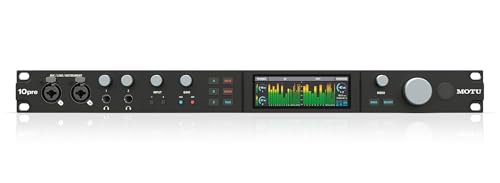
- Provides 10 mic/line/instrument inputs
- Offers 64-channel DSP mixing and effects
- Includes speaker selection, mono, mute, and talkback controls
Best For: Small studios and ensembles recording multiple microphones
Premium Tracking Pick
Apollo Twin X DUO G2 Essentials Edition

- 192 kHz conversion with detailed audio performance
- Thunderbolt 3 and near-zero-latency UAD processing
- Includes headphones and a 25-foot XLR cable
Best For: Home recording with premium monitoring and bundled essentials
Compact Value Option
Zoom TAC-2 Thunderbolt Audio Interface

- Native Thunderbolt operation with extremely low latency
- 24-bit/192 kHz conversion for detailed recording
- Includes MixEfx software mixer
Best For: Solo recording and compact home setups
Expandable Studio Choice
Apollo x6 Gen 2 Thunderbolt 3 Interface

- Wide dynamic range and low-distortion conversion
- Access to 200+ UAD DSP and Native plug-ins
- Auto-Gain and bass management for advanced workflows
Best For: Producers building a more capable Apollo monitoring setup
Best Complete Recording Bundle
Apollo Twin X Gen 2 + Sphere LX

- Sphere LX modeling microphone included
- Quad Core DSP for realtime UAD plug-ins
- Dual Unison preamps and 192 kHz support
Best For: Home producers needing an interface and versatile microphone in one bundle
Best for Multi-Input Tracking

- Eight-channel configuration for larger sessions
- Auto-Gain across multiple inputs
- Bass management for subwoofer integration
Best For: Project studios and bands recording multiple sources
Best for Expandable Studio Systems

- 16 channels for large routing needs
- Bass management supports a subwoofer
- Wide-dynamic-range conversion and UAD access
Best For: Established studios building a high-channel-count UAD system
High-End DSP Hub – Apollo x8 Gen 2
Universal Audio Apollo x8 Gen 2 with UAD Analog Classics Thunderbolt 3 Audio Interface
Check Price On AmazonFor Thunderbolt audio interfaces for untreated rooms, the Apollo x8 Gen 2 is a strong choice when you want detailed conversion, flexible monitoring, and onboard processing. Its bass-management feature can help integrate a subwoofer, while Auto-Gain simplifies setup across multiple inputs.
Best For: Producers and engineers building a larger studio setup with multiple inputs, UAD processing, and bass-managed monitoring.
Pros:
- Eight-channel interface with conversion supporting sample rates up to 192 kHz.
- Access to more than 200 UAD DSP and Native plug-ins, including the Analog Classics collection.
- Auto-Gain helps set input levels quickly across multiple channels.
- Bass management supports adding a subwoofer to the monitor setup.
Cons:
- At 16.9 pounds, it is less portable than the compact options in this roundup.
- Its extensive UAD ecosystem may be more than a small, simple recording setup needs.
The Apollo x8 Gen 2 is a feature-rich option for untreated spaces where monitoring control and fast gain setup matter. Its eight-channel format and UAD integration make it better suited to a serious studio than a minimalist desk rig.
Routing Powerhouse – MOTU 16A
The MOTU 16A is aimed at users who need extensive I/O and flexible routing from a Thunderbolt audio interface for an untreated room. Its high-resolution metering, onboard mixing, room-control buttons, and up to 192 kHz operation provide useful oversight when the room itself is not acoustically predictable.
Best For: Hybrid studios, electronic-music setups, and advanced users managing many line-level, optical, or networked connections.
Pros:
- Provides 32 inputs and 34 outputs, including 16 TRS line I/O and two banks of ADAT optical I/O.
- ESS Sabre32 converters offer 125 dB dynamic range and sample rates up to 192 kHz.
- Includes 64-channel DSP mixing with EQ, compression, gating, filtering, and reverb.
- A/B/C speaker selection and talkback features support comparative monitoring.
Cons:
- Its 16 line-focused analog inputs are not designed as a large bank of built-in mic preamps.
- The extensive routing and AVB features may be excessive for a basic home setup.
The 16A is a connectivity-first interface rather than a simple desktop recorder. For an untreated room, its metering, DSP, and speaker-selection tools are particularly useful, provided you can take advantage of its substantial I/O.
Portable Tracking Choice – Apollo Solo Heritage
The Apollo Solo Heritage Edition is a compact pick among Thunderbolt audio interfaces for untreated rooms, especially when portability and controlled headphone monitoring matter. Its Unison preamp and guitar-amp emulations let you shape sounds while tracking, without requiring a large hardware setup.
Best For: Solo musicians, vocalists, and mobile producers who need a portable interface with low-latency UAD processing.
Pros:
- Bus-powered design reduces cable clutter and supports portable use with Mac and Windows systems.
- Unison mic preamp and guitar-amp emulations support familiar recording workflows.
- UAD SOLO Core Processing enables near-zero-latency tracking through supported plug-ins.
- Includes a premium suite of five plug-in titles and a detailed headphone amplifier.
Cons:
- Its compact format offers less I/O than the larger interfaces here.
- The supplied details describe it as a Windows-compatible product, while LUNA is identified as Mac-only.
The Solo Heritage is a practical choice when an untreated room calls for headphone-focused monitoring and flexible software processing rather than extensive routing. Its small, bus-powered design also makes it the easiest option to move between locations.
Mic-Input Workhorse – MOTU 10pre
MOTU 10pre 26x28 Thunderbolt 4/USB4 audio interface for Mac, Windows and iOS with 10 mic inputs
Check Price On AmazonFor recording groups or multiple microphones in an untreated room, the MOTU 10pre combines ten mic/line/instrument inputs with detailed metering and onboard DSP. Its Thunderbolt 4/USB4 connectivity, flexible routing, and control-room features make it useful when you need to manage several sources while keeping monitoring organized.
Best For: Small studios, ensemble recording, and producers needing many mic inputs plus flexible monitor and headphone outputs.
Pros:
- Ten combo mic/line/instrument inputs provide substantial recording capacity.
- Mic channels offer up to 74 dB of gain, phantom power, pad, and phase invert.
- Includes 64-channel DSP mixing with EQ, compression, gating, filtering, and reverb.
- Front-panel A/B/C speaker selection, talkback, mute, and mono controls aid room checking.
Cons:
- The supplied details do not specify the full maximum sample-rate information beyond support for standard rates up to 192 kHz.
- Its larger I/O and routing feature set may be unnecessary for one- or two-mic recording.
The 10pre is the most practical MOTU choice here for microphone-heavy work. In an untreated room, its metering and control-room tools can help you compare monitoring perspectives while its DSP handles routine mixing tasks.
Premium Tracking Pick – Apollo Twin X DUO G2 Essentials Edition
For Thunderbolt audio interfaces for untreated rooms, the Apollo Twin X DUO G2 is a strong choice when you want detailed conversion and real-time processing to make monitoring and tracking more controlled. Its compact I/O, UAD processing, and included headphones and cable create a practical starter setup.
Best For: Home recordists who need premium conversion, low-latency UAD processing, and a bundled recording setup.
Pros:
- Elite-class A/D and D/A conversion with support up to 192 kHz.
- Thunderbolt 3 provides fast, low-latency performance.
- Includes two mic preamps, Hi-Z input, line I/O, ADAT/SPDIF, headphones, and a 25-foot XLR cable.
- Real-time UAD plug-in processing supports near-zero-latency tracking.
Cons:
- Limited to two mic preamps for larger recording sessions.
- Thunderbolt connectivity may require system compatibility checks.
This Apollo package is especially appealing if your untreated room makes monitoring difficult and you want dependable conversion plus processing tools in a compact interface. The included accessories also reduce the number of extra purchases needed to begin recording.
Compact Value Option – Zoom TAC-2 Thunderbolt Audio Interface
Among Thunderbolt audio interfaces for untreated rooms, the Zoom TAC-2 keeps the setup straightforward with two inputs, two outputs, very low latency, and a software mixer. Its compact design suits musicians recording microphones, guitars, or other simple sources in a home environment.
Best For: Solo musicians and small home setups that prioritize simple connectivity, low latency, and high-resolution conversion.
Pros:
- Native Thunderbolt design supports extremely low-latency operation.
- Provides 24-bit/192 kHz A/D and D/A conversion.
- MixEfx software mixer is included for routing and control.
- Accepts XLR and 1/4-inch TRS inputs for microphones and instruments.
Cons:
- Two-in/two-out configuration is less suitable for multi-microphone sessions.
- Its supplied details list Windows support, so operating-system compatibility should be verified.
The TAC-2 is a practical minimalist interface rather than an expandable studio hub. For an untreated room and a focused recording workflow, its low latency and included MixEfx software offer useful control without unnecessary complexity.
Expandable Studio Choice – Apollo x6 Gen 2 Thunderbolt 3 Interface
Universal Audio Apollo x6 Gen 2 with UAD Analog Classics Thunderbolt 3 Audio Interface
Check Price On AmazonFor Thunderbolt audio interfaces for untreated rooms, the Apollo x6 Gen 2 is aimed at users who need broader studio control, advanced conversion, and room-focused monitoring features. Its UAD plug-in access, Auto-Gain, and bass-management support make it better suited to a more developed monitoring and mixing setup.
Best For: Producers and mix engineers building a larger Apollo-based setup with UAD processing and bass-management support.
Pros:
- Offers next-generation conversion with wide dynamic range and low distortion.
- Provides access to more than 200 UAD DSP and Native plug-ins.
- Auto-Gain can set levels across multiple inputs quickly.
- Bass management supports adding a subwoofer to a monitor setup.
Cons:
- Its advanced feature set may be more than a basic two-input recording setup requires.
- The supplied details identify Ethernet connectivity, so confirm the intended computer connection before buying.
- Plug-in access may depend on the listed Essentials+ or Studio+ editions.
The Apollo x6 Gen 2 stands out when untreated-room work calls for more deliberate monitoring tools rather than just basic input and output. Auto-Gain, bass management, and extensive UAD support give experienced users more ways to build a controlled production workflow.
Best Complete Recording Bundle – Apollo Twin X Gen 2 + Sphere LX
For untreated rooms, the Apollo Twin X Quad Gen 2 bundle combines high-dynamic-range conversion, dual Unison preamps, realtime UAD processing, and the Sphere LX modeling microphone. The modeled microphone can provide useful tonal flexibility when room limitations make mic placement and sound selection especially important.
Best For: Home producers and vocalists who want a compact Thunderbolt setup with a modeling microphone and onboard DSP.
Pros:
- Includes the Sphere LX large-diaphragm modeling microphone, mount, cable, and carrying case.
- Quad Core DSP supports realtime recording through UAD plug-ins.
- Dual Unison preamps offer modeled tones from several classic hardware categories.
- Supports up to 192 kHz and works with major DAWs on Windows and macOS.
Cons:
- Only two Unison preamps are specified, so it is less suited to larger simultaneous recording sessions.
- The bundle is more specialized than a standalone interface if you already own a suitable microphone.
This is the most self-contained option of the three: it pairs Apollo processing with a flexible mic system in one package. It is particularly practical when you need to shape vocal or instrument capture without committing to multiple microphones.
Best for Multi-Input Tracking – Apollo x8p Gen 2
Universal Audio Apollo x8p Gen 2 with UAD Analog Classics Thunderbolt 3 Audio Interface
Check Price On AmazonThe Apollo x8p Gen 2 is a strong choice for untreated-room setups that need several inputs and detailed monitoring. Its next-generation conversion, eight-channel configuration, Auto-Gain, UAD processing access, and bass-management support make it suitable for building a more capable recording and mixing system.
Best For: Bands, project studios, and producers who need multiple inputs and room-aware low-end monitoring options.
Pros:
- Provides eight channels for more simultaneous sources than the compact Apollo Twin bundle.
- Auto-Gain can set levels across multiple inputs quickly.
- Bass management supports adding a subwoofer to the monitor setup.
- Offers access to the UAD DSP and Native plug-in library, with operation up to 192 kHz.
Cons:
- Its larger 16.9-pound form factor is less convenient for portable recording.
- The supplied details list Ethernet connectivity, so buyers should verify the intended computer connection and workflow.
- It does not include a microphone.
Choose this model when input count and monitoring expansion matter more than a compact footprint. Auto-Gain can simplify tracking, while bass management gives you a way to extend monitoring as your room setup develops.
Best for Expandable Studio Systems – Apollo x16 Gen 2
Universal Audio Apollo x16 Gen 2 with UAD Analog Classics Thunderbolt 3 Audio Interface
Check Price On AmazonThe Apollo x16 Gen 2 is designed for Thunderbolt-oriented studio systems that prioritize channel capacity and expansion. With 16 channels, next-generation conversion, UAD plug-in access, and bass management, it can serve as a central component in a larger untreated-room setup where monitoring and routing flexibility are important.
Best For: Established project studios that need 16 channels and plan to build around a larger UAD-based system.
Pros:
- Offers 16 channels for extensive routing and larger recording setups.
- Provides next-generation conversion with wide dynamic range and low distortion.
- Bass management supports adding a subwoofer for more controlled low-end monitoring.
- Includes access to the UAD DSP and Native plug-in library and supports up to 192 kHz.
Cons:
- Its 16.6-pound design is intended more for a fixed studio than mobile work.
- The supplied details list Ethernet connectivity, so compatibility with the planned computer and network setup should be confirmed.
- It does not include a microphone.
The x16 makes the most sense when you need substantial channel capacity rather than an all-in-one starter package. Its bass-management feature is useful for extending monitoring in an untreated room, but careful speaker and subwoofer placement remains important.
How We Picked These Thunderbolt Audio Interfaces for Untreated Rooms
We focused on interfaces that can support accurate, practical recording and monitoring in rooms without dedicated acoustic treatment. Selection criteria included conversion and driver performance, direct-monitoring latency, headphone flexibility, preamp quality, line-level connectivity, software control, and compatibility across current Mac and Windows systems where specified.
We also considered how easily each model fits a real setup. Desktop interfaces suit solo creators and mobile rigs, while rack units provide more inputs, outputs, cue mixes, and expansion for bands, production rooms, and hybrid studios. DSP-equipped Apollo models receive particular attention because their low-latency UAD processing can help shape sounds while recording, though DSP is not a substitute for acoustic treatment or trustworthy monitoring.
Quick Comparison
| Best For | Look For | Why It Matters in an Untreated Room |
|---|---|---|
| Solo recording | Compact size, quality preamps, headphone control | Keeps the setup simple and reduces monitoring variables |
| Multiple microphones | Higher input count and flexible routing | Lets you capture complete performances without repeated repositioning |
| Hybrid production | Many line I/O, stable software mixer, expansion | Supports external gear while keeping monitor paths organized |
| Low-latency vocal tracking | Onboard DSP or dependable direct monitoring | Allows comfortable headphone monitoring without relying on large buffer sizes |
Key Buying Factors
Monitoring and Room Translation
In an untreated room, prioritize a clean monitor path, adjustable speaker and headphone levels, mono or dim controls, and a mixer application that makes routing obvious. Consider using headphones for cross-checks, but do not assume expensive conversion alone will correct room modes, reflections, or poor speaker placement.
Inputs, Outputs, and Expansion
Count the sources you will record simultaneously, then add room for growth. Two mic inputs may be enough for vocals and guitar; a drum setup, multiple synthesizers, or outboard hardware can quickly justify eight or more inputs. Line outputs and ADAT or digital expansion are valuable if you plan to add monitor controllers, headphone amps, preamps, or external converters.
DSP, Software, and Compatibility
DSP can provide near-zero-latency effects monitoring, while flexible software mixers can create separate artist cue mixes. Check Thunderbolt generation, required adapters, operating-system support, and whether the manufacturer continues to update drivers and control software for your computer.
Gain, Noise, and Practical Placement
Look for sufficient clean gain for your microphones, sensible metering, and controls that are easy to use from your seating position. A quieter interface and shorter signal path help, but cable placement, monitor positioning, and room treatment still have a larger effect on what you hear.
Who Should Buy Which Thunderbolt Audio Interfaces for Untreated Rooms?
Choose a compact Apollo Solo or Twin-style interface if you mainly record one or two performers and value portable, low-latency workflows. Step up to larger Apollo x-series models when you need more simultaneous microphone inputs, cue mixes, monitor outputs, or integrated DSP for a growing studio.
The MOTU 10pre is a strong fit for creators who need many mic inputs in a relatively manageable setup, while the MOTU 16A is better suited to line-level instruments, external hardware, routing, and larger hybrid systems. The Zoom TAC-2 remains an option for straightforward, compact Thunderbolt recording when your I/O requirements are modest.
Finally, choose the Apollo x16 only when extensive line-level connectivity and expansion are central to your workflow. Regardless of model, use reference tracks, check mixes on headphones and another playback system, and improve speaker placement or treatment as your budget allows.