
The best travel-friendly camera cranes help filmmakers create sweeping camera moves without the bulk of a full studio jib. This roundup compares compact mini cranes, longer jib arms, and gimbal-focused systems for shoots where portability matters.
Consider reach, packed size, payload, setup requirements, and compatibility with your camera or gimbal before choosing. The right model balances cinematic movement with the practical limits of travel, transport, and location work.
Best 10 Travel-Friendly Camera Cranes Picks for 2026
Compact Pro Pick

- 85-inch carbon-fiber arm with 33-pound load capacity
- Folds to about 38.2 inches for transport
- Supports low-angle, inverted, tilt, and focus shots
Best For: Traveling crews needing high capacity in a foldable jib
Lightweight Overhead Option
K&F Concept 76-Inch Camera Tripod

- Folds to 15.3 inches and weighs 3.63 pounds
- Removable arm rotates 180 degrees with 360-degree panning
- Reaches 76.7 inches and supports up to 17.6 pounds
Best For: Travelers wanting a compact overhead shooting platform
Handheld Stabilizer Pick

- Weighs 705 grams for easy handheld travel
- Stabilizes mirrorless cameras, phones, and action cameras
- Offers wireless control and up to 7.5 hours of battery life
Best For: Solo creators needing compact stabilized camera movement
Long-Reach Production Choice

- 14-foot arm supports rigs up to 8 kilograms
- Configures at 10 or 14 feet for varied locations
- Provides 270-degree tilt and includes storage bags
Best For: Crews needing dramatic reach for planned location shoots
Best Lightweight Stabilizer
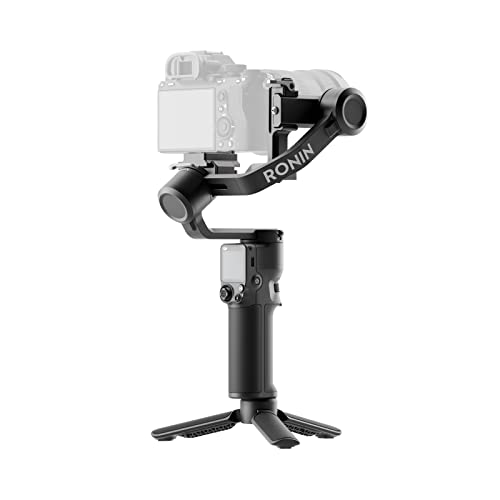
- 795g compact three-axis gimbal
- Supports camera setups up to 2kg
- Offers vertical shooting and Bluetooth shutter control
Best For: Traveling creators who prioritize lightweight handheld stabilization
Best Portable Jib Crane

- 9ft arm supports up to 8kg
- Breaks into two sections for transport
- Works with gimbals, pan-tilt heads, and fluid heads
Best For: Small crews shooting elevated and sweeping camera movements
Best Extended-Reach Carbon Fiber Jib

- Extends to 16ft
- Supports loads up to 20 pounds
- Carbon fiber arm includes a counterweight rod
Best For: Filmmakers needing long-reach crane shots with compatible gimbals
Best All-in-One Stabilizer

- Native horizontal and vertical shooting
- Bluetooth control and built-in camera adjustments
- Up to 12 hours of operation
Best For: Traveling creators who prioritize handheld stabilization
Best Compact Traditional Jib

- Four-foot jib arm folds to about 18 inches
- Automatic tilt helps keep the camera level
- Supports cameras up to 7 pounds
Best For: Travel shoots needing elevated jib movements
Best Heavy-Duty Pocket Jib
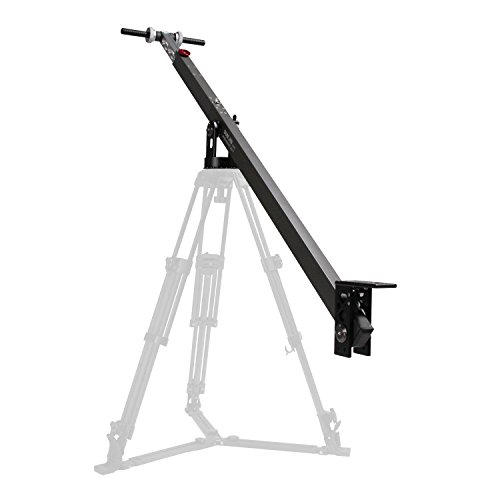
- Internal balancing system minimizes exposed components
- Compatible with flat bases and ball heads
- Rated for up to 20 kg
Best For: Larger camera packages and supported travel production
Compact Pro Pick – IFOOTAGE M1 III Mini Jib
For creators seeking travel-friendly camera cranes with meaningful reach, the IFOOTAGE M1 III combines an 85-inch carbon-fiber arm with a foldable design. Its 33-pound maximum load, multiple quick-release plates, and flexible camera positioning make it suitable for more than simple overhead shots.
Best For: Traveling video crews that need a sturdy, versatile jib for cameras, long lenses, and low-angle or inverted shots.
Pros:
- Carbon-fiber square tube provides rigidity while the arm folds to about 38.2 inches.
- Supports up to 33 pounds, accommodating a broad range of camera setups.
- Offers tilt adjustment, focus-shot movement, and low-profile or upside-down mounting options.
- Includes multiple quick-release plates and 1/4-inch and 3/8-inch mounting threads.
Cons:
- At 13.2 pounds, it is heavier than smaller travel-oriented camera supports.
- Its 85-inch reach still requires a suitable tripod or support base.
The M1 III is a strong choice when portability matters but you do not want to sacrifice payload capacity or creative camera angles. Its included water bag and accessory-mounting options add practical flexibility for field production.
Lightweight Overhead Option – K&F Concept 76-Inch Camera Tripod
The K&F Concept is a practical entry in the travel-friendly camera cranes category, pairing a removable boom arm with a lightweight tripod platform. It folds to 15.3 inches, weighs 3.63 pounds with the included head and arm kit, and can reach 76.7 inches.
Best For: Mobile photographers and small crews that prioritize quick setup, compact packing, and overhead or panoramic shooting.
Pros:
- Folds to 15.3 inches and weighs only 3.63 pounds with the arm and ball head.
- Extension arm rotates from 0 to 180 degrees and supports 360-degree horizontal rotation.
- Height adjusts from 17.3 to 76.7 inches using four-section legs.
- 8-kilogram load rating and standard 1/4-inch compatibility suit cameras, phones, projectors, and telescopes.
Cons:
- Its 17.6-pound load limit is substantially lower than heavier professional jib systems.
- The aluminum tripod is not water resistant.
This model stands out for portability rather than maximum reach or payload. The compact folded size, one-hand flip locks, and included carrying bag make it especially convenient for location work and travel setups.
Handheld Stabilizer Pick – Zhiyun Crane M3S Gimbal
Unlike full-size jib arms, the Zhiyun Crane M3S offers a handheld approach to travel-friendly camera cranes-style movement. At 705 grams, it is designed for mirrorless cameras, smartphones, and action cameras, with three-axis stabilization, wireless shutter control, and a built-in display.
Best For: Solo travelers and run-and-gun creators who need stabilized movement in a small, handheld package.
Pros:
- Lightweight 705-gram design balances portability with support for mainstream cameras.
- Quick-release system simplifies installation and reduces repeated balancing.
- Bluetooth shutter control enables wireless zoom and recording functions.
- Offers multiple gimbal modes, a 1.22-inch screen, and up to 7.5 hours of battery life.
Cons:
- It is a handheld gimbal, so it does not provide the elevated reach of a jib arm.
- Compatibility and usable payload depend on the specific camera setup.
The Crane M3S is the most packable option here for travelers who value smooth moving shots over overhead elevation. Fast charging, charging while in use, and wireless controls further suit extended mobile shooting days.
Long-Reach Production Choice – Proaim 14ft Camera Crane
The Proaim P-14 is built for sweeping crane moves and substantial camera rigs rather than ultralight packing. Its modular arm can be configured at 10 or 14 feet, supports up to 8 kilograms, and breaks into sections with carry bags for transport between locations.
Best For: Production crews traveling with a stand and needing long reach, large arcs, or high-angle shots.
Pros:
- 14-foot reach can provide up to 15 feet of height when used with a 5-foot stand.
- Supports cameras, gimbals, pan-tilt heads, and fluid heads up to 8 kilograms.
- Modular 10-foot and 14-foot configurations adapt to tighter shooting spaces.
- 270-degree platform tilt, thrust roller bearings, monitor mounting, and storage bags expand production flexibility.
Cons:
- At 16 kilograms, it is much less convenient to carry than compact travel supports.
- It requires an appropriate stand or base, which is not specified as included.
- Its large assembled footprint is better suited to crew-based production than solo travel.
The P-14 is the reach specialist in this roundup. Its sectioned construction helps with transport, but the weight and required support equipment mean it is best for planned shoots where dramatic elevation and stable long-arm movement justify the extra logistics.
Best Lightweight Stabilizer – DJI RS 3 Mini
For travel-friendly camera cranes and handheld shooting setups, the DJI RS 3 Mini is a compact three-axis gimbal designed to reduce shake without adding much luggage weight. At 795g, it is easy to carry and supports camera-and-lens combinations up to 2kg.
Best For: Travelers and solo creators using compatible mirrorless cameras for stabilized video, low-angle shots, and vertical social content.
Pros:
- Lightweight 795g design with a compact folded size.
- Supports payloads up to 2kg and offers three-axis stabilization.
- Native vertical shooting and Bluetooth shutter control add shooting flexibility.
- Includes a quick-release plate, tripod, and 1.4-inch full-color touchscreen.
Cons:
- Not water resistant.
- Requires the DJI Ronin app for activation and full functionality; the app is not currently available through Google Play.
- Designed for cameras and lenses within its 2kg maximum payload.
The RS 3 Mini is the most travel-oriented option here, prioritizing low weight and quick setup over the elevated reach of a traditional jib. Choose it when portability and stabilized handheld movement matter most.
Best Portable Jib Crane – Proaim 9ft Camera Crane
The Proaim 9ft Camera Crane is a practical choice for travel-friendly camera cranes when you need genuine elevated movement rather than handheld stabilization. Its two-section aluminum arm supports up to 8kg and packs into a supplied carrying bag for transport between locations.
Best For: Small production crews needing sweeping rises, reveals, and elevated camera moves with gimbals, pan-tilt heads, or fluid heads.
Pros:
- Supports camera setups up to 8kg.
- Two-section aluminum construction improves transport and storage.
- Compatible with three-axis gimbals, motorized pan-tilt heads, and fluid heads.
- Includes auto/manual platform tilt control and an integrated LCD monitor mount.
Cons:
- Weighs 22 pounds, making it less convenient for solo travel than a handheld gimbal.
- Requires a suitable camera head and support setup for operation.
- Not water resistant.
With a 9ft reach and 8kg capacity, this jib offers much more cinematic movement than a handheld stabilizer, but its 22-pound weight makes it better suited to planned location work than ultralight travel.
Best Extended-Reach Carbon Fiber Jib – Teris JQ50-II Mini Jib
The Teris JQ50-II is a long-reach option among travel-friendly camera cranes, extending to 16ft while using carbon fiber construction to keep the jib arm relatively manageable at 15 pounds. It is designed for handheld gimbals and supports loads up to 20 pounds.
Best For: Filmmakers who need extended crane reach for compatible handheld-gimbal setups and can accommodate a larger jib system.
Pros:
- Extends to 16ft for broad elevated camera movements.
- Supports loads up to 20 pounds.
- Carbon fiber construction helps reduce arm weight.
- Includes a counterweight rod compatible with standard weight plates.
Cons:
- At 15 pounds, it is not an ultralight travel accessory.
- Designed for use with specific handheld gimbals, including DJI Ronin-S and RS2.
- Its extended reach requires suitable space and counterweight setup.
The JQ50-II provides the greatest stated reach and payload capacity in this group, making it the better fit for ambitious crane shots. Its size and counterweight requirements mean it is portable in principle, but not a grab-and-go travel tool.
Best All-in-One Stabilizer – ZHIYUN Crane 4E Gimbal
For creators comparing travel-friendly camera cranes, the ZHIYUN Crane 4E is a compact handheld alternative focused on stabilized movement rather than overhead jib shots. Its integrated controls, native vertical shooting, and 12-hour rated runtime make it practical for mobile video work.
Best For: Handheld creators who need stabilized horizontal and vertical camera movement while traveling.
Pros:
- Switches between horizontal and vertical shooting without additional accessories.
- Supports Bluetooth shutter control and quick adjustment of shutter, aperture, and ISO.
- Built-in 2,600mAh battery offers up to 12 hours of operation and can work while charging.
- Includes a tripod, quick-release plates, lens support, and expansion hardware.
Cons:
- At 1.33 kg, it may add noticeable weight to a travel kit.
- It is not water resistant.
- Its handheld gimbal design does not provide the elevated jib-arm perspective of a traditional crane.
The Crane 4E is the most travel-oriented choice here for stabilized camera operation, especially when quick setup and vertical content matter more than sweeping crane moves.
Best Compact Traditional Jib – ProAm USA Orion Jr DVC50
The ProAm USA Orion Jr DVC50 is a four-foot jib for shoppers seeking travel-friendly camera cranes with a traditional elevated camera perspective. Its tool-less design, smooth steel bearings, and automatic tilt keep operation straightforward, though the supporting tripod and counterweights must be supplied separately.
Best For: Videographers wanting smooth, compact jib movements for DSLR or video camera setups.
Pros:
- Four-foot compact crane arm folds to approximately 18 inches long.
- Tool-less design and smooth steel bearings support effortless three-axis motion.
- Automatic tilting helps keep the camera level during crane movement.
- Supports cameras up to a stated 7-pound maximum weight recommendation.
Cons:
- Tripod, tripod head, stand, camera, and weights are not included.
- At 7 pounds before adding supporting equipment, it is less packable than a handheld gimbal.
- It uses a 1/4-inch x 20 mounting connection, so compatibility with the support head matters.
This is a sensible middle ground for compact jib shots: more cinematic elevation than a gimbal, while remaining shorter when folded than a full-size crane. Budget for the required support gear.
Best Heavy-Duty Pocket Jib – KONOVA S1200 SUNJIB
KONOVA S1200 SUNJIB Camera Jib Arm Mini Crane Single Arm Pocket Jib DSLR RED Plate Bowl Compatible
Check Price On AmazonThe KONOVA S1200 SUNJIB suits buyers looking for travel-friendly camera cranes with a compact single-arm jib format and substantial payload capacity. Its internal balancing system, compatibility with flat bases and ball heads, and tool-free assembly are designed to simplify setup while minimizing vibration.
Best For: Crews carrying larger camera packages who need a portable jib with broad mounting compatibility.
Pros:
- Hidden internal balance bar creates a clean, integrated design.
- Works with both flat-base and ball-head setups.
- One-touch assembly and disassembly is stated to take about four minutes.
- Maximum weight recommendation is listed at 20 kg.
Cons:
- Its listed 18-pound weight is substantial for travel.
- The supplied notes do not indicate that a tripod or other support equipment is included.
- Its 142-centimeter size may require more transport space than a handheld stabilizer.
The S1200 offers the strongest payload rating in this group, but its 18-pound listed weight makes it better suited to vehicle-based production or crews prepared to transport robust support equipment.
How We Picked the Best Travel-Friendly Camera Cranes
We focused on camera cranes and jib systems that make sense for mobile production, prioritizing portability, usable reach, payload capacity, setup flexibility, and compatibility with modern mirrorless cameras, DSLRs, action cameras, and handheld gimbals. The selection includes compact four-foot and mini-jib designs as well as longer systems for operators who need more dramatic vertical or sweeping movement.
Because a crane is only as useful as its support system, we also considered whether each design requires a sturdy tripod, pan-and-tilt head, gimbal, counterweights, or additional mounting hardware. Product specifications can vary by configuration, so verify the manufacturer’s payload and mounting requirements before ordering.
Quick Comparison
| Best for | Look for | Trade-off |
|---|---|---|
| Air travel and small kits | Carbon fiber, compact packed length, low weight | Less reach and payload |
| Mirrorless camera motion | Stable platform and balanced payload rating | May require a heavier tripod |
| Gimbal-mounted cameras | Compatible plate, head, and counterweight setup | More components to transport |
| Large establishing moves | Long jib arm and high rigidity | Bulkier setup and greater support demands |
Key Buying Factors for Travel-Friendly Camera Cranes
Reach and Packed Size
Longer arms provide larger arcs and more dramatic rises, but they are harder to pack and stabilize. A compact mini jib is often the better choice for hotel rooms, small studios, weddings, and run-and-gun production. Check both the maximum extension and the collapsed length.
Payload and Balance
Calculate the combined weight of the camera, lens, gimbal, plate, monitor, and accessories. Stay comfortably below the stated maximum rather than operating at the limit. A balanced setup produces smoother movement and reduces stress on the arm, tripod, and head.
Mounting and Compatibility
Confirm the crane’s plate type, bowl or tripod connection, and compatibility with your gimbal or pan-and-tilt head. Some systems are designed around handheld gimbals, while others assume a conventional camera mount. You may also need a counterweight system or a separately purchased support tripod.
Transport and Setup
Carbon-fiber construction can reduce carrying weight, but every accessory adds bulk. Look for sections that pack efficiently, quick-adjust hardware, and a design you can assemble reliably under time pressure. Remember that a portable crane still needs a wide, stable base and safe operating space.
Who Should Buy Which Travel-Friendly Camera Cranes?
Choose a compact mini jib if you travel frequently, work with lightweight mirrorless cameras, or need cinematic movement in confined locations. A gimbal-oriented crane is a strong fit for creators who already own a compatible stabilizer and want smooth, controlled tracking or rising shots.
Choose a longer 9- to 14-foot arm when maximum reach and sweeping movement matter more than minimal luggage. These systems suit commercial, event, music, and narrative productions, but they demand a robust tripod, careful balancing, and more room to operate. If you want the simplest entry point, a short compact jib can provide useful overhead and reveal shots without the complexity of a full-size crane.