
If you want a little more warmth, thickness, and character in your recordings, a tube microphone preamplifier can be a smart upgrade. The right unit can add usable gain, tame harsh edges, and help vocals, instruments, and voice-over tracks sit better in a mix.
In this roundup, we focus on practical models for home studios, project rooms, and budget-conscious creators who want better front-end tone without overcomplicating their setup.
Best 10 Tube Microphone Preamplifier Picks for 2026
Studio-Ready Tube MP
- Single-channel tube mic/instrument preamp
- Variable Valve Voicing for tone shaping
- Compact metal build with XLR output
Best For: Home studios needing a versatile basic tube preamp
Tube DI Utility

- 12AX7 tube preamp with XMAX input stage
- Separate mic and instrument inputs
- Includes phantom power, pad, HP filter, and polarity reverse
Best For: Rigs that need a tube preamp and DI box in one
Classic Tube Preamp Pick

- Single-channel mic/instrument tube preamp
- Compact stainless steel build
- Lightweight and backed by a 2-year warranty
Best For: Buyers who want a simple, no-frills tube preamp
USB Tube Interface Preamp

- Tube preamp with USB/audio interface
- 16 voicings for mic, instrument, and line sources
- Includes software plus 150 plug-ins
Best For: Computer-based recording and podcasting with tube color
Hybrid Dual-Channel Tube Color
PreSonus BlueTube DP v2 2-Channel Tube Preamp

- Dual tube/solid-state gain stages
- Combo mic/instrument inputs with phantom power
- Tube Drive, VU meter, pad, and high-pass filter
Best For: Flexible home and project studios needing two channels
Audiophile Tube EQ Preamplifier
Behringer ULTRAGAIN PRO MIC2200 Tube Preamp
- 12AX7 tube with discrete mic/line preamp stage
- Fully parametric EQs built in
- Line driver converts -10 dBV to +4 dBu
Best For: Users who want preamp, EQ, and level conversion in one unit
Warm Variable Valve Front End
ART TPS II Tube Preamplifier System

- Variable impedance and variable valve voicing
- Auto-switches between instrument and mic preamp
- Wide 5 Hz to 50 kHz response with metering
Best For: Guitar and mic users wanting adjustable tube warmth
Compact Tube Channel Strip

- Single-channel tube microphone/instrument preamp
- Limiter helps prevent clipping
- Supports mic, instrument, and line-level sources
Best For: Solo recording chains and compact studio or live setups
Warmth-Focused Project Preamp
- Clean, neutral sound with tube warmth available
- High-impedance instrument input for guitar pickups
- External power supply helps reduce hum
Best For: Guitar pickups and project studios
Dual-Input Phantom Power Preamp

- 48V phantom power built in
- Two-channel inputs for two sources
- XLR and 6.35mm output options
Best For: Mixed mic and instrument recording setups with flexible routing
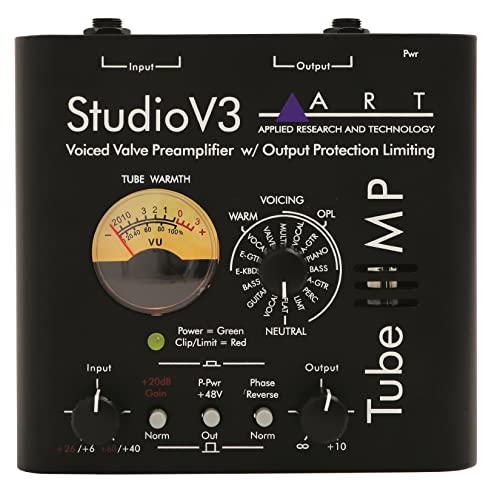
Studio-Ready Tube MP – ART Tube MP Studio V3
If you want a compact tube microphone preamplifier for vocals, guitars, keys, bass, or drums, the ART Tube MP Studio V3 is built around a single-channel tube design with Variable Valve Voicing. Its small metal enclosure, XLR connection, and corded power make it an easy add-on for simple recording or instrument tracking setups.
Best For: Home studios and musicians who want a versatile single-channel tube preamp for mic or instrument use.
Pros:
- Single-channel tube microphone and instrument preamplifier
- Variable Valve Voicing for shaping the tube character
- Works with vocals, electric/acoustic guitars, keyboards, bass, and drums
- Compact metal build with XLR connectivity
Cons:
- Only one output channel
- Corded power only, so it is not portable in the battery-powered sense
- Basic feature set compared with models that add USB or onboard processing
Overall, this is a straightforward tube preamp for users who want a simple, flexible front end without extra interface features. The Studio V3 focuses on core preamp duties and keeps the footprint small.
Tube DI Utility – Presonus TubePre v2
The Presonus TubePre v2 is a practical tube microphone preamplifier and DI box for users who want one unit to handle mic and instrument inputs. It combines a 12AX7 tube-based preamp with an XMAX solid-state input stage, plus gain and tube drive controls so you can adjust saturation as needed.
Best For: Recording setups that need a tube preamp with DI flexibility and useful front-panel controls.
Pros:
- 12AX7 tube-based preamp with XMAX solid-state input stage
- Separate instrument and mic inputs
- Gain control and tube drive saturation control
- Includes phantom power, HP filter, -20 dB pad, and polarity reverse
Cons:
- Single-channel design
- Heavier than some compact alternatives at 3 pounds
- No built-in USB interface listed in the supplied details
For a tube preamp in a small recording or live rig, this model offers more control than a bare-bones unit. The extra tone and input-shaping tools make it a solid utility piece if you need both mic and instrument support.
Classic Tube Preamp Pick – ART Tube MP
The ART Tube MP is a simple single-channel tube microphone preamplifier for users who want an uncomplicated front end for microphones or instruments. With a stainless steel body and a compact design, it fits easily into smaller recording setups where the main goal is adding tube preamp functionality without extra complexity.
Best For: Budget-conscious users who want a basic tube mic or instrument preamp in a compact form.
Pros:
- Single-channel tube microphone/instrument preamplifier
- Compact stainless steel construction
- Lightweight at 2.3 pounds
- Backed by a 2-year warranty
Cons:
- Very minimal feature set in the supplied details
- Only one channel
- No extra controls or digital connectivity listed
This is the most straightforward option in the group for buyers who just need the core preamp function. It is a practical choice if you value simplicity and a small footprint over feature depth.
USB Tube Interface Preamp – Behringer MIC500USB
The Behringer TUBE ULTRAGAIN MIC500USB is a tube microphone preamplifier aimed at users who want preamp modeling plus direct USB connection. It supports microphone, instrument, and line-level sources, offers 16 preamp voicings, and includes a built-in USB/audio interface for recording straight to a computer.
Best For: Recording and podcasting users who want a tube preamp with USB connectivity and modeled voicings.
Pros:
- Handles microphone, instrument, and line-level sources
- 16 preamp voicings for different instruments and vocal uses
- Built-in USB/audio interface for direct computer connection
- Includes software and 150 instrument/effect plug-ins
Cons:
- Feature set is broader than a simple standalone preamp, which may be more than some buyers need
- Only the supplied details identify it as a 2-channel unit, so it is not a minimal single-channel box
- Uses a stainless steel enclosure, but portability is still secondary to desktop use
If you want a tube preamp that doubles as a computer-ready recording tool, this model stands out. Its modeling options and USB output make it more versatile than the basic analog-only choices here.
Hybrid Dual-Channel Tube Color – PreSonus BlueTube DP v2 2-Channel Tube Preamp
If you want a tube microphone preamplifier that can move from clean gain to obvious saturation, the PreSonus BlueTube DP v2 is built for that kind of flexibility. Its dual-path design combines a 12AX7 vacuum tube stage with solid-state gain, plus combo mic/instrument inputs, phantom power, and practical front-panel controls for tracking a range of sources.
Best For: Home studios and small racks that need two channels of preamp flexibility, from transparent recording to colored tube drive.
Pros:
- Dual-path design with both tube and solid-state gain stages
- Combo mic/instrument inputs with XMAX mic preamps and 48V phantom power
- Tube Drive control lets you add tube saturation as needed
- Useful extras like VU metering, high-pass filter, pad, and polarity reverse
Cons:
- 1/2U rack format may be too small for those wanting a full-size front panel
- Voice is versatile rather than strictly pure or transparent
For buyers comparing a tube microphone preamplifier for everyday recording, the BlueTube DP v2 stands out for giving you multiple tonal options in one compact unit. It is especially appealing if you want an easy way to blend cleaner preamp behavior with audible tube character.
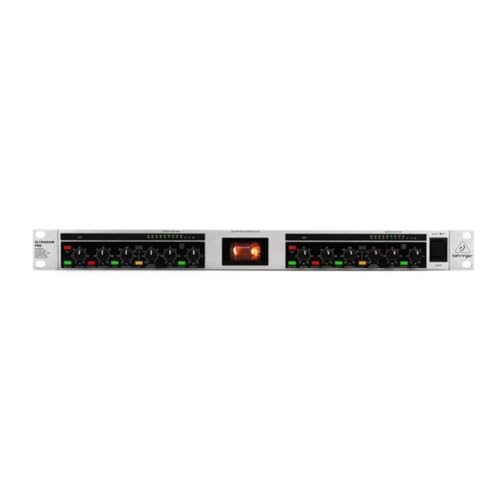
Audiophile Tube EQ Preamplifier – Behringer ULTRAGAIN PRO MIC2200 Tube Preamp
Behringer ULTRAGAIN PRO MIC2200 Audiophile Vacuum Tube Microphone/Line Preamplifier
Check Price On AmazonThe Behringer ULTRAGAIN PRO MIC2200 is a tube microphone preamplifier aimed at users who want more than just basic gain. It pairs a discrete mic/line preamp stage with a hand-selected 12AX7 tube, ultra-wide bandwidth, and built-in fully parametric EQs, making it useful when you need shaping and level conversion in one box.
Best For: Recording or utility setups that need a tube preamp with EQ and line-driver functionality.
Pros:
- Hand-selected 12AX7 tube for an “ultra-musical” sound
- Discrete microphone/line preamp with ultra-low noise design
- Integrated fully parametric EQs for detailed tone shaping
- Independent line driver can convert -10 dBV to +4 dBu pro level
Cons:
- More of a feature-rich utility unit than a simple single-purpose preamp
- Front-panel editing may take more setup time than basic preamps
If you want a tube microphone preamplifier that also handles EQ and signal-level matching, the MIC2200 is a strong multifunction pick. Its wide bandwidth and built-in processing make it better suited to practical studio routing than to minimalist signal chains.
Warm Variable Valve Front End – ART TPS II Tube Preamplifier System
The ART TPS II is a tube microphone preamplifier system built for users who want adjustable tube character and a practical recording front end. With variable input impedance, variable valve voicing, automatic switching between instrument and mic preamp modes, and wide frequency response, it is designed to adapt to different sources rather than impose one fixed sound.
Best For: Guitar and mic setups where you want flexible tube voicing and a warm overall character.
Pros:
- Variable Input Impedance and Variable Valve Voicing for tonal flexibility
- Automatically switches between instrument and mic preamp use
- Wide frequency response from 5 Hz to 50 kHz
- LED input meter, analog output meter, and output protection limiter
Cons:
- Single-channel design limits it to one source at a time
- Large rack footprint compared with compact preamps
For buyers looking at a tube microphone preamplifier with a warmer sound and hands-on controls, the TPS II offers a lot of classic tube-style flexibility. It makes the most sense if you value voicing options and instrument/mic adaptability more than channel count.
Compact Tube Channel Strip – Behringer MIC300
Behringer Tube ULTRAGAIN MIC300 Audiophile Vacuum Tube Preamplifier with Limiter
Check Price On AmazonIf you want a tube microphone preamplifier that adds warmth while staying simple, the Behringer Tube ULTRAGAIN MIC300 is built as a single-channel option for studio and live recording setups. It supports microphone, instrument, and line-level sources, and its built-in limiter is there to help keep the output from clipping.
Best For: Solo recording chains, condenser mic setups, and compact live or studio rigs that need tube flavor plus output protection.
Pros:
- Single-channel tube preamp for straightforward one-source recording.
- Works with microphone, instrument, and line-level sources.
- Limiter helps prevent output clipping.
- Designed for studio-grade condenser mics.
Cons:
- Only provides one channel.
- No USB connectivity listed in the supplied details.
Overall, the MIC300 is a practical tube microphone preamplifier for users who want a compact way to add tube preamp character without complicating their setup. The limiter and broad source compatibility make it especially useful in simple recording chains.
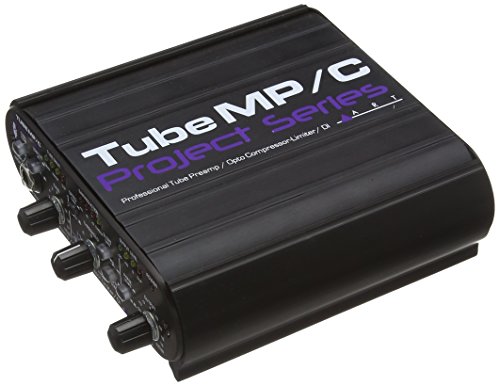
Warmth-Focused Project Preamp – ART TubeMP
ART TubeMP Project Series with USB Professional Microphone and Instrument Tube Preamplifier C
Check Price On AmazonThe ART TubeMP Project Series is a tube microphone preamplifier aimed at users who want a clean, neutral base with a bit of tube warmth when needed. It includes a high-quality 12AX7A tube, high-impedance 1/4-inch instrument input for guitar pickups, and controls for gain and tube drive to shape the signal.
Best For: Guitar pickups, project studios, and users who want a neutral preamp that can add tube warmth on demand.
Pros:
- Clean, neutral sound with a wide variety of signal sources.
- High-impedance 1/4-inch instrument input is optimized for guitar pickups.
- 12AX7A tube adds warmth to musical dynamics.
- External power supply helps keep AC line noise and hum down.
Cons:
- Supplied notes do not list phantom power.
- Details focus on project use rather than multi-channel operation.
As a tube microphone preamplifier, the TubeMP stands out for balancing a clean signal path with flexible tone shaping. That makes it a sensible pick for players and recording users who want warmth without losing clarity.
Dual-Input Phantom Power Preamp – Dynasty TMP-1
Dynasty PROAUDIO TMP-1 Professional Vacuum Tube Microphone Preamplifier with Limiter
Check Price On AmazonThe Dynasty PROAUDIO TMP-1 is a tube microphone preamplifier built for users who need flexible input options and built-in phantom power. It includes 48V phantom power, two-channel inputs, and both XLR balanced output and 6.35mm stereo mic and line output for connecting to interfaces, mixers, consoles, and speakers.
Best For: Recording setups that need phantom power, dual inputs, and flexible output connections for microphones or instruments.
Pros:
- Built-in 48V phantom power for dynamic and condenser microphones.
- Two-channel inputs let you boost two sources at once.
- Works with microphone or instrument sources.
- XLR balanced output plus 6.35mm stereo mic and line output.
Cons:
- Supplied notes do not specify exact gain figures.
- Feature set may be more than needed for simple single-mic setups.
For buyers comparing a tube microphone preamplifier with more routing flexibility, the TMP-1 has a strong feature mix. The included phantom power and multiple output options make it especially practical in mixed recording and playback chains.
How We Picked the Best Tube Microphone Preamplifier
We focused on Tube Microphone Preamplifiers that balance tone, noise performance, ease of use, and real-world value. Priority went to units with enough gain for common dynamic and condenser microphones, useful connectivity for modern recording setups, and features that make tracking easier, such as DI inputs, limiter circuits, or USB output.
We also favored models that fit different buyer needs, from simple single-channel preamps to dual-channel and rackmount options. That helps the roundup cover both straightforward vocal tracking and more flexible studio workflows.
Quick Comparison
Think of this category in terms of use case. Compact desktop units are usually best for solo recording, podcasting, and adding color to one mic at a time. Two-channel models are better if you record stereo sources, two performers, or mic plus instrument simultaneously. Rackmount options make more sense in semi-pro studios where routing, connectivity, and expansion matter more than size.
Key Buying Factors for Tube Microphone Preamplifier
Gain and Noise
A Tube Microphone Preamplifier should provide enough clean gain for your microphones without introducing hiss or making the signal overly muddy. If you use gain-hungry dynamic mics, check that the preamp is known for strong output and acceptable noise levels at higher settings.
Tube Character
Not every tube circuit sounds the same. Some units add subtle warmth, while others lean toward noticeable coloration. If you want a gentle polish, look for models described as transparent or musical. If you want more obvious tube flavor, choose a preamp with stronger saturation controls or drive-related shaping.
Connectivity
Match the preamp to your setup. XLR and 1/4-inch inputs are standard, but USB output can be helpful for direct recording. A DI input is valuable for bass, guitar, and keyboards. For studio flexibility, look for balanced outputs and any routing features you may need later.
Channels and Workflow
Single-channel units are often the simplest choice for solo creators. Dual-channel models are better if you record stereo pairs, interviews, or two sources at once. If you want one box to handle more jobs, a model with a limiter or preamp modeling can add convenience.
Who Should Buy Which Tube Microphone Preamplifier?
If you are building a first studio or upgrading from an interface-only setup, a compact desktop preamp is usually the easiest way to start. If you record vocals and instruments in pairs, a two-channel model is the more versatile pick. If you need more routing options, rackmount hardware is better suited to a dedicated studio.
In short, choose the Tube Microphone Preamplifier that matches how you record most often, not just the one with the most features. The best option is the one that improves your sound while staying simple enough that you will use it on every session.