
The best wide-angle camera lenses help you fit more into the frame, from sweeping landscapes and architecture to compact interiors and handheld video. The right choice depends on your camera mount, sensor size, focal-length range, and whether you prioritize brightness, portability, or flexibility.
This roundup compares 10 options across Sony, Canon, Nikon, Pentax, and compatible third-party systems, including ultra-wide zooms, fast primes, fisheyes, and affordable add-on lenses.
Best 10 Wide-Angle Camera Lenses Picks for 2026
Best for Canon DSLR Zooming

- Flexible 10-22mm zoom range
- Fast USM autofocus
- 9.5-inch close focus
Best For: Canon EOS DSLR landscape and interior photography
Best Two-in-One Add-On

- 18mm-equivalent wide view
- Converts to 10X macro
- Lightweight 2.5-ounce build
Best For: Sony ZV-E10 and ZV-1F accessory users
Best Budget Canon Ultra-Wide

- 10-18mm ultra-wide zoom
- Optical image stabilization
- Quiet STM autofocus
Best For: Canon EOS landscape and video shooting
Best for Nikon DSLR Landscapes
Sigma 10-20mm f/3.5 Wide-Angle Zoom

- Ultra-wide 10-20mm range
- Constant f/3.5 maximum aperture
- HSM autofocus for compatible Nikon DSLRs
Best For: Nikon DSLR landscapes, architecture, and interiors
Best for Canon APS-C Vlogging

- Compact 5.28-ounce design
- Optical image stabilization
- 10-18mm range for vlogging and travel
Best For: Canon RF-S mirrorless vlogging, selfies, and travel
Best for Creative Pentax Effects
Pentax DA 10-17mm Fisheye Zoom
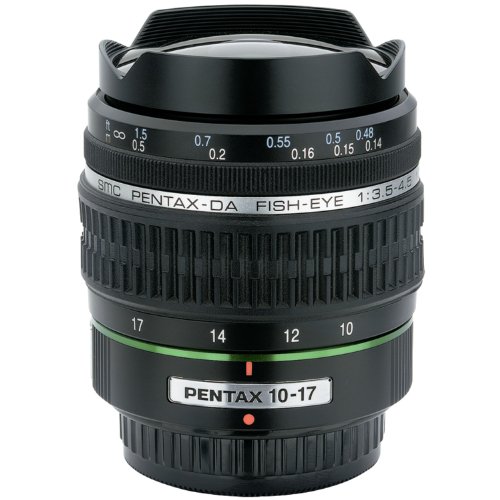
- 180-degree fisheye perspective
- 10-17mm creative zoom range
- Water- and oil-repellent coating
Best For: Pentax K-mount creative effects and dramatic compositions
Best Full-Frame AF Value
Rokinon 14mm F2.8 AF for Canon EF

- 14mm prime with f/2.8 aperture
- Autofocus for Canon EF DSLRs
- 83.6-degree angle of view
Best For: Canon DSLR users seeking an autofocus ultra-wide prime
Best Budget Add-On
Altura Photo 0.43x 49mm Wide Angle Lens

- Screws onto compatible 49mm lenses
- Includes detachable macro element
- Works with listed Canon, Sony, Fujifilm, and Sigma lenses
Best For: Users wanting an affordable wide-angle and macro accessory
Best Manual-Focus Prime

- 14mm f/2.8-to-f/22 ultra-wide prime
- Built-in AE chip for auto metering
- Compatible with full-frame and APS-C Canon DSLRs
Best For: Canon DSLR users comfortable with manual focusing
Best for APS-C Vlogging – Sony E 11mm F1.8
For creators seeking wide-angle camera lenses for Sony APS-C E-mount cameras, the Sony 11mm F1.8 combines an ultra-wide perspective with a bright aperture. Its compact design, close focusing, and video-focused autofocus make it especially practical for handheld content.
Best For: Sony APS-C photographers and video creators, particularly vloggers and Super35 shooters.
Pros:
- Bright F1.8 aperture helps with low-light shooting and background separation.
- Fast, precise, quiet autofocus supports both stills and video.
- Compact 10.56-ounce design keeps smaller cameras balanced.
- Reduced focus breathing and a constant lens length benefit movie recording.
Cons:
- Fixed 11mm focal length offers no zoom flexibility.
- Compatible only with Sony APS-C E-mount cameras.
- Not weather resistant according to the supplied specifications.
This is a strong choice when a wide field of view, bright aperture, and dependable video autofocus matter more than zoom versatility.
Best for Canon DSLR Zooming – Canon EF-S 10-22mm USM
The Canon EF-S 10-22mm is one of the more flexible wide-angle camera lenses for EOS digital SLR users. Its zoom range covers expansive 10mm views through a less extreme 22mm perspective, while full-time manual focus and close focusing add practical control.
Best For: Canon EOS DSLR users who want a versatile ultra-wide zoom for landscapes, interiors, and architectural-style shooting.
Pros:
- 10-22mm range provides useful ultra-wide zoom flexibility.
- USM autofocus offers strong AF performance and speed.
- Full-time manual focus is available by turning the focus ring.
- Close focusing reaches 9.5 inches for near-subject compositions.
Cons:
- Designed for Canon EF-S digital SLR cameras.
- Maximum aperture varies from f/3.5 to f/4.5 and is less bright than a fast prime.
- No optical image stabilization is listed in the supplied specifications.
Choose this lens when framing flexibility is more important than a constant or especially wide aperture, particularly for landscapes and spacious interiors.
Best Two-in-One Add-On – NEEWER 18mm Wide Angle Macro
For Sony users who want compact wide-angle camera lenses with extra close-up capability, the NEEWER LS-30 adds an 18mm-equivalent wide view to compatible lenses and converts into a macro attachment. Its lightweight aluminum build is suited to casual vlogging and detail photography.
Best For: Sony ZV-E10 and ZV-1F users who want a lightweight wide-angle and macro accessory for vlogging, jewelry, or small subjects.
Pros:
- Provides an 18mm-equivalent view with an 84-degree field of view.
- Two-in-one design converts to a 10X macro lens when the wide-angle portion is removed.
- Lightweight 2.5-ounce aluminum construction is easy to carry.
- 52mm front thread supports compatible filters.
Cons:
- Must be used with the specified compatible lens setup rather than as a standalone camera lens.
- Compatibility is focused on Sony ZV-E10, ZV-1F, and related APS-C setups.
- It is an add-on accessory, so optical results depend on the host lens and mounting fit.
This attachment is appealing for creators who value portability and versatility, especially when one accessory needs to cover both wider scenes and small detail subjects.
Best Budget Canon Ultra-Wide – Canon EF-S 10-18mm STM
The Canon EF-S 10-18mm is a practical option among wide-angle camera lenses for Canon EOS cameras. Its ultra-wide zoom range, optical image stabilization, and stepping-motor autofocus make it suited to landscapes, handheld shooting, and quieter video recording.
Best For: Canon EOS users seeking an affordable-feeling ultra-wide zoom with stabilization and video-friendly autofocus.
Pros:
- 10-18mm range covers expansive landscape and interior perspectives.
- Optical image stabilization helps support handheld shooting.
- STM autofocus is designed for quiet video operation.
- Closest focusing distance is 0.72 feet.
Cons:
- Maximum aperture is a modest f/4.5-5.6.
- Shorter 10-18mm range provides less reach than a 10-22mm zoom.
- Not water resistant according to the supplied specifications.
This lens makes sense for Canon shooters who prioritize an ultra-wide perspective, stabilization, and quiet focusing without needing a brighter aperture or longer zoom range.
Best for Nikon DSLR Landscapes – Sigma 10-20mm f/3.5 Wide-Angle Zoom
Sigma 10-20mm f/3.5 EX DC HSM ELD SLD Aspherical Super Wide Angle Lens for Nikon Digital SLR Cameras
Check Price On AmazonThe Sigma 10-20mm f/3.5 is a practical choice for Nikon DSLR users who need wide-angle camera lenses for landscapes, architecture, interiors, and other scenes where fitting more into the frame matters. Its constant f/3.5 maximum aperture, 10mm minimum focal length, and built-in HSM autofocus make it versatile for still photography.
Best For: Nikon DSLR photographers shooting landscapes, architecture, interiors, and wide environmental scenes.
Pros:
- Ultra-wide 10-20mm zoom range with a 102.4-degree real angle of view.
- Constant f/3.5 maximum aperture across the zoom range.
- HSM provides silent, high-speed autofocus and supports compatible Nikon bodies such as the D40, D60, D3000, and D5000.
- Multicoating helps reduce flare and ghosting, while aspherical elements address coma aberration.
Cons:
- Designed for Nikon F-mount DSLR cameras rather than Canon or mirrorless systems.
- At 1.1 pounds, it is less lightweight than some compact mirrorless-oriented options.
- It is not water resistant.
The Sigma stands out when a Nikon DSLR user wants a bright, genuinely ultra-wide zoom instead of a compact travel lens. Its robust feature set favors landscape and architectural work, though its size and DSLR-only compatibility should be considered.
Best for Canon APS-C Vlogging – Canon RF-S 10-18mm IS STM
The Canon RF-S 10-18mm F4.5-6.3 IS STM is a compact option for Canon EOS R-series APS-C users comparing wide-angle camera lenses for travel, vlogging, selfies, and tight indoor spaces. Its 10-18mm range captures both a subject and its surroundings, while optical image stabilization supports handheld shooting.
Best For: Canon RF-S mirrorless users who prioritize vlogging, selfies, travel, and compact wide-angle coverage.
Pros:
- Ultra-wide 10-18mm range, equivalent to approximately 16-29mm on APS-C.
- Optical image stabilization is useful for handheld video and stills.
- Compact 5.28-ounce design suits travel and vlogging setups.
- Offers up to 0.5x magnification in manual-focus mode for close-up subjects.
Cons:
- Maximum aperture varies from f/4.5 to f/6.3, so it is not the brightest option in low light.
- Compatible with RF-mount mirrorless cameras rather than Nikon, Pentax, or DSLR systems.
- It is not water resistant.
This lens is especially appealing for creators who need a lightweight ultra-wide view without carrying a long selfie stick. Its stabilized, mirrorless-optimized design makes it a strong travel and video choice, provided your camera uses the Canon RF-S system.
Best for Creative Pentax Effects – Pentax DA 10-17mm Fisheye Zoom
The Pentax DA 10-17mm f/3.5-4.5 is a specialized choice among wide-angle camera lenses, using a fisheye design to produce an expansive, highly distinctive perspective. It is made for Pentax K-mount digital SLR cameras and combines a 10-17mm zoom range with a 180-degree angle of view.
Best For: Pentax photographers creating fisheye perspectives, dramatic architecture, action images, and experimental compositions.
Pros:
- Fisheye design delivers an expansive 180-degree angle of view.
- 10-17mm zoom range provides some framing flexibility for creative compositions.
- Water- and oil-repellent protective coating makes the front element easier to clean.
- Quick-shift focus system allows an instant move from autofocus to manual focus.
Cons:
- Fisheye rendering creates pronounced distortion that may not suit natural-looking landscapes or interiors.
- Compatible with Pentax K-mount cameras only.
- The supplied specifications identify manual focus, which may limit autofocus-dependent shooting.
The Pentax DA 10-17mm is best viewed as a creative-effects lens rather than a general-purpose ultra-wide zoom. Its distinctive fisheye perspective, protective coating, and quick-shift focusing make it useful for photographers intentionally seeking dramatic distortion.
Best Full-Frame AF Value – Rokinon 14mm F2.8 AF for Canon EF
For photographers comparing wide-angle camera lenses for Canon EF, the Rokinon 14mm F2.8 AF offers a fixed ultra-wide perspective with autofocus and a bright f/2.8 maximum aperture. It is designed for Canon DSLRs and supports both automatic and manual exposure control.
Best For: Canon DSLR users who want an autofocus 14mm prime for broad scenes, architecture, and other wide-angle work.
Pros:
- Autofocus operation for Canon EF cameras
- Bright f/2.8 maximum aperture
- Ultra Multi-Coating and a 83.6-degree real angle of view
- Includes lens caps, pouch, instruction manual, and a one-year warranty
Cons:
- Fixed 14mm focal length provides no zoom flexibility
- At 1.1 pounds, it adds noticeable weight to a camera bag
- Water resistance is listed as limited to a water-resistant level rather than full waterproofing
Its autofocus and full-frame-compatible 14mm design make it the more convenient Rokinon option here for Canon EF users who want an ultra-wide prime without manual-only focusing.
Best Budget Add-On – Altura Photo 0.43x 49mm Wide Angle Lens
Among wide-angle camera lenses, the Altura Photo 49mm model is an inexpensive screw-on accessory that expands the view of a compatible lens rather than replacing it. Its detachable macro element also provides a way to capture high-resolution close-ups.
Best For: Canon and Sony mirrorless users with a compatible 49mm front filter thread who want a simple wide-angle and macro accessory.
Pros:
- 0.43x conversion widens an existing lens’s view
- Detachable macro lens supports close-up photography
- Compatible with several listed Canon, Sony, Fujifilm, and Sigma lenses
- HD coating and manual-focus operation
Cons:
- Compatibility depends on a 49mm front filter thread, not just the camera model
- It is an add-on lens rather than a dedicated wide-angle lens
- Not water resistant
This is the most flexible low-cost choice for users who already own a listed compatible lens, but checking the diameter symbol and 49mm thread size before ordering is essential.
Best Manual-Focus Prime – Rokinon AE14M-C 14mm f/2.8
Rokinon AE14M-C 14mm f/2.8-22 Ultra Wide Angle Lens with Built-in AE Chip for Canon EF Digital SLR
Check Price On AmazonThe Rokinon AE14M-C is a manual-focus option for photographers evaluating wide-angle camera lenses for Canon EF digital SLRs. Its 14mm focal length, f/2.8 aperture, and built-in AE chip provide auto metering while retaining manual focusing control.
Best For: Canon DSLR photographers who prefer manual focus and need a 14mm ultra-wide prime for full-frame or APS-C cameras.
Pros:
- Compatible with full-frame and APS-C cameras
- Built-in AE chip supports auto metering with Canon DSLRs
- 14mm focal length with an f/2.8-to-f/22 aperture range
- Minimum focusing distance of 10.8 inches
Cons:
- Manual focus requires more user involvement
- No image stabilization is specified beyond digital stabilization in the listing
- Not water resistant
Choose this lens when manual focusing is acceptable and Canon DSLR metering support matters. The 14mm prime format is straightforward, while the AE chip adds useful exposure automation.
How We Picked These Wide-Angle Camera Lenses
We selected lenses covering the most common wide-angle use cases and camera systems represented in this roundup. Our evaluation focuses on mount compatibility, sensor coverage, focal length, maximum aperture, autofocus features, size, and practical shooting value. Because an 11mm lens on an APS-C camera does not produce the same field of view as a 14mm full-frame lens, we also considered crop-sensor context rather than comparing focal lengths in isolation.
The selection includes options for landscapes, travel, architecture, vlogging, interiors, astrophotography, and creative distortion. Third-party lenses and inexpensive adapters are included where they offer a clear use case, but buyers should verify fit and camera compatibility before ordering.
Quick Comparison
| Best For | Lens Type | Key Advantage |
|---|---|---|
| APS-C Sony landscapes and video | Ultra-wide prime | Very wide view and bright f/1.8 aperture |
| Canon DSLR flexibility | Ultra-wide zoom | Useful range for architecture and travel |
| Canon RF-S compact setups | Ultra-wide zoom | Small mirrorless-friendly design |
| Creative distortion | Fisheye | Distinctive curved perspective |
| Full-frame Canon EF shooting | Wide prime | 14mm perspective with autofocus or electronic support |
| Budget close-up effects | Add-on wide-angle lens | Affordable wide view with macro capability |
Key Buying Factors for Wide-Angle Camera Lenses
Mount and Sensor Compatibility
Check the exact mount first. Sony E, Canon EF, Canon EF-S, Canon RF-S, Nikon F, Pentax K, and Canon EF-M systems are not interchangeable without the right adapter, and some adapters can affect autofocus or electronic control. Also confirm whether the lens is designed for full-frame or APS-C coverage.
Focal Length and Distortion
Lower numbers provide a wider field of view. Ultra-wide lenses are useful for interiors, dramatic landscapes, and handheld video, but they can stretch faces and objects near the edges. A zoom offers framing flexibility, while a prime may provide a wider aperture, simpler design, or lower weight. Fisheye lenses intentionally create stronger curvature and are best for specialized creative work.
Aperture, Autofocus, and Stabilization
A wider maximum aperture helps in dim conditions and can improve astrophotography or subject separation. Autofocus is valuable for moving subjects and video, while manual-focus lenses can still work well for landscapes and architecture. Lens-based stabilization is less common on ultra-wide models, so check whether your camera supplies in-body stabilization.
Size, Filters, and Everyday Handling
Travel photographers should compare weight, front-element shape, minimum focus distance, and filter compatibility. Bulbous front elements may prevent standard screw-in filters, while compact lenses are easier to carry and balance on small cameras or gimbals.
Who Should Buy Which Wide-Angle Camera Lenses?
Choose a fast APS-C ultra-wide prime if you shoot Sony video, interiors, night scenes, or handheld travel content. A Canon or Sigma ultra-wide zoom is a better fit when you want flexible framing on a compatible DSLR. Canon RF-S users should prioritize the RF-S zoom designed for that mount rather than relying on an adapter.
Pick a full-frame 14mm prime for dramatic landscapes, architecture, or astrophotography when a fixed perspective suits your workflow. A Pentax fisheye is the specialist choice for deliberate curved effects. Finally, an add-on wide-angle lens makes sense for casual experimentation or close-up effects, but it should not be expected to match the optical quality or versatility of a dedicated interchangeable lens.