
Choosing a wireless in-ear monitor system with multiple receivers can make live sound cleaner, simpler, and more consistent for the whole band. The right setup gives each performer a dedicated mix without the clutter of floor wedges.
Below, we focus on practical options for rehearsal, stage, and studio use, with an emphasis on range, latency, audio quality, and ease of setup.
Best 10 Wireless in Ear Monitor System with Multiple Receivers Picks for 2026
Best for Portable 2.4GHz Monitoring
Xvive U4 Wireless In-Ear Monitor System
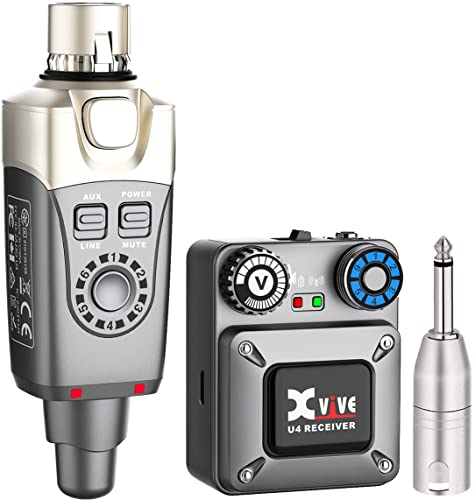
- Low-latency monitoring under 5ms
- 90+ ft range for small venues
- Six channels and rechargeable battery
Best For: Singers and small bands needing a simple portable monitor setup.
Best for Multi-Receiver Rehearsals
LEKATO MS-02 Wireless IEM System

- One transmitter can feed up to 4 receivers
- Low-latency 2.4GHz audio with 24-bit/48kHz sound
- Mono/stereo modes and one-key mute for easy control
Best For: Bands, churches, and small performance teams that need a simple multi-receiver IEM setup.
Best for Multi-Receiver Setups
2-Channel 4-Bodypack IEM System

- Includes 4 bodypack receivers for multiple performers
- 2x40 UHF frequencies help limit interference
- 330-foot open-space range suits stage and rehearsal use
Best For: Bands, churches, and studios needing one transmitter for several performers.
Best for Easy Multi-Receiver Setup
Depusheng T9-2 Wireless In-Ear Monitor System
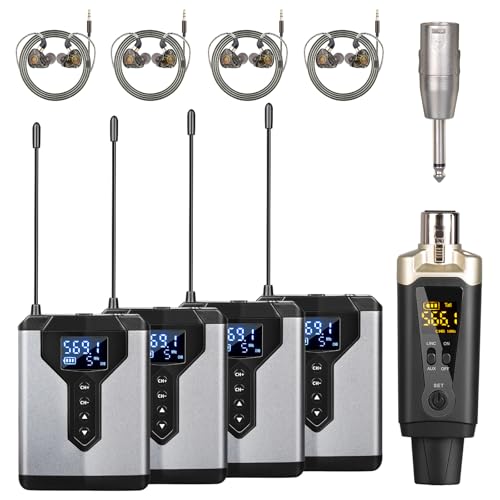
- Automatic pairing speeds up setup
- Low-latency monitoring for live use
- Includes 4 receivers + 1 transmitter
Best For: Musicians and small bands that want a simple multi-receiver wireless monitor kit for practice and live performance.
Best for Crowded RF
UHF Wireless IEM System, 50-Channel
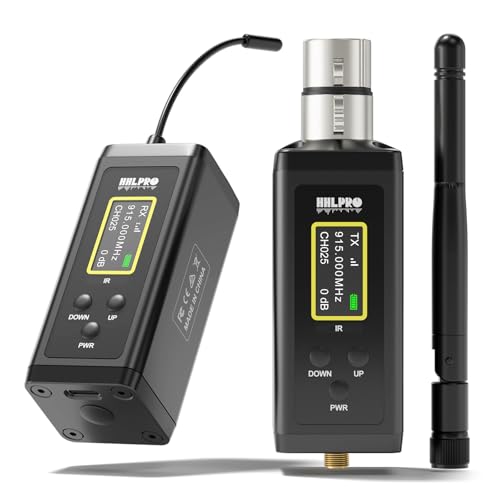
- Dedicated 902-927MHz UHF band helps cut interference
- One transmitter can feed multiple receivers across a band
- <5ms latency and 300-foot range support live performance
Best For: Churches, bars, and bands that need a stable multi-receiver IEM setup in busy wireless environments.
Best for Easy Setup
JOYO JW-07 2.4G Wireless IEM System

- Low-latency monitoring with automatic pairing
- Clear 48kHz/16-bit audio for practice and performance
- Longer battery life and simple 2.4GHz operation
Best For: Guitarists, DJs, and solo performers who want quick, dependable in-ear monitoring.
Best for Multiple Receivers
W IN-MIX 2.4GHz Wireless In-Ear Monitor System

- One transmitter supports multiple bodypack receivers
- Low-latency 24-bit audio keeps performers in sync
- Auto-scan and USB-C charging make setup easy
Best For: Bands, worship teams, and small venues sharing one monitor mix across multiple performers.
Best with Extra Features
Stereo Wireless IEM System M6S

- Automatic pairing for quick setup
- Supports up to 6 receivers per transmitter
- 10-hour rechargeable battery life
Best For: Bands, churches, and rehearsal groups that need simple multi-receiver monitoring.
Best for Easy Channel Setup

- 5.8 GHz true-diversity wireless helps reduce interference.
- Channel Scan mode simplifies finding a clean channel.
- Clear 24-bit/48kHz audio suits rehearsal and live monitoring.
Best For: Bands and solo performers who want quick setup and dependable short-range monitoring.
Best for Clear Monitoring
Donner CV-3 Wireless IEM System

- 192kHz / 24-bit audio with 110dB SNR
- Less than 6ms latency for tight monitoring
- Color screen receiver with up to 10-hour battery life
Best For: Bands, vocalists, and players who want a portable IEM system with clear sound and straightforward operation.
Best for Portable 2.4GHz Monitoring – Xvive U4 Wireless In-Ear Monitor System
If you need a wireless in ear monitor system with multiple receivers for small stages, rehearsal rooms, or compact club gigs, the Xvive U4 keeps setup simple while delivering low-latency monitoring over a reliable 2.4GHz connection. It is a practical choice for performers who want a quick, cable-free monitor solution without a complicated rack setup.
Best For: Singers, small bands, and stage performers who want an easy-to-deploy personal monitor system for live shows.
Pros:
- Less than 5ms latency helps keep monitoring tight and distraction-free.
- 90+ ft wireless range is well suited to small clubs and venues.
- Six selectable channels make it easier to avoid interference.
- Rechargeable transmitter and receiver offer up to 5 hours of runtime.
Cons:
- Battery life may be short for long rehearsals or all-night sets.
- Range is best for small to mid-size stages, not large touring rigs.
- Includes one receiver, so larger groups need additional units.
Overall, the Xvive U4 is a strong fit if you want a wireless in ear monitor system with multiple receivers built around simplicity, low latency, and easy portability. It is especially appealing for players who need dependable monitoring in smaller live environments.
Best for Multi-Receiver Rehearsals – LEKATO MS-02 Wireless IEM System
If you need a wireless in ear monitor system with multiple receivers for rehearsals, church sets, or small live stages, the LEKATO MS-02 is built around one-transmitter-to-many listening. It adds low-latency 2.4GHz audio, simple auto-pairing, and a compact beltpack-style receiver so performers can monitor without cable clutter.
Best For: Bands, churches, and small teams that want a straightforward multi-receiver IEM setup with low latency and easy pairing.
Pros:
- Supports one transmitter to multiple receivers, up to 4 pairs
- Low-latency 2.4GHz monitoring with 24-bit/48kHz audio
- Mono/stereo switching plus one-key mute for quicker control
- Compact receiver with LED battery and volume indicators
Cons:
- Earbuds are not included
- Battery life is solid, but not class-leading for all-day use
- Best suited to small and medium setups rather than larger pro rigs
The MS-02 is a practical pick if you want a wireless in ear monitor system with multiple receivers that’s easy to deploy and simple to expand for a few performers. It focuses on low-latency monitoring, quick setup, and enough flexibility for rehearsals or modest stage use.
Best for Multi-Receiver Setups – 2-Channel 4-Bodypack IEM System
If you need a wireless in ear monitor system with multiple receivers for rehearsals, church gigs, or small-stage monitoring, this IME-4000 package gives you a practical 2-channel setup with four bodypacks right out of the box. It uses UHF PLL tuning, offers 2×40 preset frequencies, and supports IR sync for faster receiver pairing, making it a solid pick when you want straightforward multi-user monitoring without complicated setup.
Best For: Bands, church teams, and studios that need one transmitter feeding several performers.
Pros:
- Includes 4 bodypack receivers, making it ready for multiple performers
- UHF PLL system with 2×40 frequencies helps reduce interference and dropouts
- Mono monitoring is built for low-latency stage and rehearsal use
- 330-foot open-space range offers plenty of freedom on stage
Cons:
- Mono-only monitoring may not suit users who want stereo IEM mixes
- Range can drop around thick walls, glass, or metal obstructions
- Best suited to smaller-to-mid-size monitoring needs rather than large touring rigs
This is a strong fit if your priority is a wireless in ear monitor system with multiple receivers that keeps setup simple and coverage dependable. It’s especially appealing for groups that want an affordable, all-in-one monitor package rather than buying transmitters and bodypacks separately.
Best for Easy Multi-Receiver Setup – Depusheng T9-2 Wireless In-Ear Monitor System
If you want a wireless in ear monitor system with multiple receivers that is quick to pair and simple to run on stage, the Depusheng T9-2 is built for straightforward monitoring in rehearsals, live sets, and practice sessions. Its automatic pairing, low-latency transmission, and multi-device support make it a practical choice for performers who need reliable in-ear audio without a complicated setup.
Best For: Musicians, DJs, and small bands that want an easy-to-use multi-receiver wireless monitor system for live monitoring and practice.
Pros:
- Automatic pairing makes setup fast and beginner-friendly
- Ultra-low latency helps keep monitoring tight and responsive
- Supports multiple receivers for solo or group use
- Over 8 hours of battery life suits rehearsals and gigs
Cons:
- Best suited to monitoring and practice rather than advanced pro-grade touring rigs
- Range and audio performance may vary depending on venue conditions
As a wireless in ear monitor system with multiple receivers, this Depusheng kit stands out most for convenience and flexibility: it gets connected quickly, covers common performance scenarios, and offers enough receiver support to work for individual or small-group monitoring.
Best for Crowded RF – UHF Wireless IEM System, 50-Channel
If you need a wireless in ear monitor system with multiple receivers for loud stages, churches, or bar gigs, this HHLPRO setup is built to stay steady in busy RF environments. The dedicated 902-927MHz band, low-latency monitoring, and 300-foot range make it a practical choice for bands that want one transmitter feeding several beltpack receivers.
Best For: Bands, churches, and gigging musicians who need a stable multi-receiver IEM setup with simple setup and strong range.
Pros:
- Dedicated UHF band helps reduce dropouts in crowded wireless spaces
- Supports up to 50 channels, making it easy to run multiple receivers from one transmitter
- <5ms latency keeps timing tight for drummers and other critical players
- 300-foot range and auto-scan sync make setup and stage movement easier
Cons:
- Mono monitoring only, so it is not ideal for stereo IEM mixes
- Best suited to users comfortable with a more stage-focused, utilitarian feature set
For buyers comparing a wireless in ear monitor system with multiple receivers, this model stands out for its strong RF reliability and straightforward band-ready workflow. It is a smart fit if you care more about stable performance and easy expansion than extra studio-style features.
Best for Easy Setup – JOYO JW-07 2.4G Wireless IEM System
If you want a wireless in ear monitor system with multiple receivers for straightforward practice and small-stage monitoring, the JOYO JW-07 is built around simple pairing, low-latency audio, and a compact 2.4GHz design. It’s a practical fit for players who want clear in-ear feedback without diving into a complicated rack setup.
Best For: Guitarists, DJs, and solo performers who want an easy-to-use wireless monitoring option for practice or live use.
Pros:
- Low latency under 5ms for responsive real-time monitoring
- 48kHz/16-bit audio aims for clear, usable practice sound
- 12 channel banks help reduce interference in busy environments
- Over 8 hours of battery life supports longer sessions
Cons:
- One transmitter does not support multiple receivers
- 40-60 ft range is best suited to smaller spaces
- Not ideal for users needing a full multi-receiver band monitoring rig
The JW-07 makes sense if your priority is a simple, reliable wireless in ear monitor system with multiple receivers only in the broader roundup sense—this model itself is better suited to individual monitoring than a true shared-transmitter setup. For practice rooms, compact stages, and quick setup workflows, it offers a balanced mix of convenience and performance.
Best for Multiple Receivers – W IN-MIX 2.4GHz Wireless In-Ear Monitor System
If you need a wireless in ear monitor system with multiple receivers for band rehearsals, worship teams, or small live shows, the W IN-MIX is built around sharing one mix without the usual cable mess. It offers 2.4GHz transmission, automatic channel scanning, and low-latency audio so players stay locked in without fighting stage clutter.
Best For: Bands, church teams, and small venues that want one transmitter feeding multiple bodypack receivers for shared monitoring.
Pros:
- One transmitter can pair with multiple receivers for shared mixes
- Low latency and 24-bit audio help keep monitoring clear and in sync
- Auto channel scan helps reduce interference in crowded 2.4GHz spaces
- Long battery life supports rehearsals, services, and longer gigs
Cons:
- Earphones/in-ear monitors are not included
- 2.4GHz systems can still be challenged by very congested wireless environments
Overall, this is a practical pick if your priority is a wireless in ear monitor system with multiple receivers that’s easy to set up and simple to share across a small group. It’s less about fancy extras and more about getting reliable monitoring to multiple performers at a workable price point.
Best with Extra Features – Stereo Wireless IEM System M6S
If you need a wireless in ear monitor system with multiple receivers for rehearsals, church services, or live stage use, the M6S is built around simple setup and practical monitoring. It runs on 2.4GHz, supports mono/stereo input switching, and pairs automatically so you can get multiple performers listening from one transmitter with minimal hassle.
Best For: Bands, churches, and performance teams that want an easy-to-run monitoring system with support for several receivers from a single transmitter.
Pros:
- Automatic pairing makes setup fast and beginner-friendly
- Supports up to 6 receivers on one transmitter
- 2.4GHz design with 24-bit/48kHz processing for clear monitoring
- Built-in rechargeable batteries can last up to 10 hours
Cons:
- Only one receiver and one transmitter are included in the box
- 2.4GHz systems can be more environment-dependent than dedicated RF units
- Best suited to small-to-medium monitoring setups rather than large touring rigs
For buyers comparing a wireless in ear monitor system with multiple receivers, the M6S stands out for its easy pairing, stereo/mono flexibility, and ability to scale to several performers without a complicated workflow. It is a solid fit when convenience matters more than advanced pro-rack features.
Best for Easy Channel Setup – Xvive U45 Wireless IEM System
If you want a compact wireless in ear monitor system with multiple receivers support for rehearsal or small-stage use, the Xvive U45 is built around simple setup, reliable 5.8 GHz transmission, and clear monitoring audio. It’s a practical pick for players who need stable personal mixes without a lot of menu diving.
Best For: Bands, home studios, and live performers who want quick setup, clean sound, and dependable short-range monitoring.
Pros:
- 5.8 GHz true-diversity design helps avoid common wireless interference.
- Channel Scan mode makes it easier to find a clean channel quickly.
- Wide 20Hz–20kHz response and 24-bit/48kHz audio keep monitoring detailed.
- USB-C charging and fast top-up battery support rehearsals and gigs.
Cons:
- About 5 hours of battery life may be limiting for longer sets.
- Manual transmitter matching is still required after channel scan.
- Best suited to one transmitter/receiver monitoring setups rather than large systems.
Overall, the U45 stands out as a straightforward option for anyone shopping for a wireless in ear monitor system with multiple receivers across practice rooms, rehearsal spaces, or compact live rigs. It focuses on easy channel selection, solid sound, and dependable wireless performance over flashy extras.
Best for Clear Monitoring – Donner CV-3 Wireless IEM System
If you need a wireless in ear monitor system with multiple receivers for rehearsals, live gigs, or home studio tracking, the Donner CV-3 is built around clean audio, low latency, and flexible monitoring. Its 2.4GHz transmission, stereo/mono switching, and compact beltpack receiver make it a practical fit for musicians who want dependable in-ear monitoring without a lot of setup hassle.
Best For: Bands, vocalists, and players who want a portable IEM system with clear sound and straightforward operation.
Pros:
- 192kHz / 24-bit audio with strong 110dB SNR for detailed monitoring
- Less than 6ms latency helps keep performances tight
- 2.4GHz wireless range up to 100 feet with mono/stereo switching
- Lightweight beltpack receiver with color screen and up to 10 hours of battery life
Cons:
- 2.4GHz systems can be more crowded in busy wireless environments
- Single-receiver package may not suit larger multi-performer setups out of the box
Overall, the Donner CV-3 is a solid choice if you want a wireless in ear monitor system with multiple receivers potential in a compact, easy-to-use format. It stands out for low-latency monitoring, clear sound, and simple compatibility with common mixers and audio gear.
How We Picked the Best Wireless in Ear Monitor System with Multiple Receivers
We prioritized systems that are practical for real-world band use, with enough receiver support for multiple performers, dependable wireless performance, and straightforward operation. We also looked at frequency choices, stereo or mono flexibility, build quality, and how easy each system is to expand or share across a group.
Quick Comparison: What Matters Most
When comparing a wireless in-ear monitor system with multiple receivers, start with receiver count, transmission band, and latency. Then compare battery life, range, and whether the system supports mono, stereo, or mixed monitoring. A simple interface can matter as much as specs if you need fast setup between songs or venues.
Key Buying Factors for Wireless In-Ear Monitor System with Multiple Receivers
Receiver Count and Mix Sharing
Make sure the system supports the number of bodypacks your group needs today, plus a little room for growth. Some setups are best for one transmitter feeding multiple receivers, while others are better when each performer needs more control.
Latency and Wireless Band
Low latency is essential for singers, drummers, and anyone who relies on tight timing. 2.4GHz systems are convenient and often easy to deploy, while UHF options can offer more traditional stage-ready flexibility depending on venue conditions and local interference.
Mono Vs. Stereo Monitoring
Mono systems are often simpler and more stable, especially for basic band monitoring. Stereo systems can provide better separation and spatial cues, which is helpful for keys, click tracks, and detailed mix control.
Range, Reliability, and Interference
Look at real usable range, not just the headline number. In crowded RF environments, channel options and solid sync behavior can make a bigger difference than raw distance claims.
Who Should Buy Which Wireless in Ear Monitor System with Multiple Receivers?
Small bands, worship teams, and rehearsal spaces may be happiest with easy-to-use 2.4GHz systems that are quick to set up and simple to manage. Touring groups, larger stages, and users who want more frequency control may prefer UHF-based options with stronger channel selection. Studio users and bands that want more detail in the mix should lean toward stereo-capable systems with stable bodypack receivers.
If you are choosing a wireless in-ear monitor system with multiple receivers for a shared stage setup, prioritize consistency and usability over extra features you may not use. The best system is the one your whole team can trust every night.