
Kaqiluo High-Density Self-Adhesive Acoustic Foam is a straightforward option for buyers who want basic acoustic treatment without a complicated install.
It targets noise reduction, reflection control, and fast application in rooms, vehicles, studios, and similar spaces.
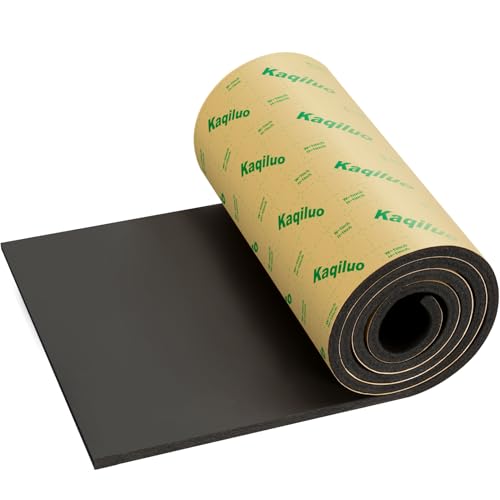
Kaqiluo Acoustic Foam Review Summary
If you want a simple, cut-to-fit acoustic treatment panel with a full adhesive back, this Kaqiluo foam is aimed at exactly that job.
It makes sense for people who need a compact coverage area, want to reduce flutter echoes and reflections, and prefer a foam product that is easier to mount than loose panels or non-adhesive sheets.
The strongest case for buying it is its mix of density, adhesive convenience, and durability-oriented claims.
The listing describes a high-density closed-cell foam with a 50+ kg/m3 density, a 0.4-inch thickness, flame resistance, waterproofing, and a self-adhesive back that covers the entire panel.
That combination points to a product that is less about studio-grade transformation and more about practical, targeted treatment where convenience matters.
Review Scorecard
| Category | Score | Why it lands there |
|---|---|---|
| Installation ease | 9/10 | Full-back self-adhesive design should be much easier to apply than non-adhesive foam. |
| Noise treatment potential | 7/10 | High-density closed-cell construction and 0.4-inch thickness suggest useful reflection control, not dramatic isolation. |
| Durability and handling | 8/10 | Waterproof and fire-resistant claims make it more resilient than basic wedge foam. |
| Coverage value | 6/10 | 5.8 square feet is compact, so it fits targeted jobs more than large-room coverage. |
| Versatility | 8/10 | Listed for automobiles, condos, apartments, studios, classrooms, factories, and more. |
| Precision fit | 8/10 | The material can be cut into different shapes, which helps in custom spaces. |
| Buyer clarity | 7/10 | The use case is clear, but buyers still need realistic expectations about what thin foam can do. |
Key Features and Specifications of Kaqiluo Acoustic Foam
Kaqiluo positions this as a high-density acoustic treatment foam rather than a decorative panel.
The headline specs are specific enough to help with fit decisions: the sheet measures 12 by 71 inches, is 0.4 inches thick, and covers 5.8 square feet.
The listing also describes it as 50+ kg/m3 density, which is a meaningful clue that this is meant to be denser than lightweight hobby foam.
The material is described as closed-cell foam with sound insulation and soundproof padding properties.
In practice, that usually means the product is better suited to reducing flutter echoes, reverberation, and reflections than to stopping heavy outside noise on its own.
That distinction matters because a lot of buyers confuse acoustic treatment with full sound isolation.
The back is fully self-adhesive, which is one of the most useful features in the listing.
Instead of needing spray adhesive, extra tape, or mounting hardware, you can peel and stick it directly to a surface.
That makes it appealing for quick setup in temporary or semi-permanent installs.
The listing also claims B1 class fire resistance and waterproofing.
Those are practical features if you are treating an area where moisture resistance or material durability matters.
The product is also described as easy to cut, which broadens the installation options for vehicles, studio corners, classroom setups, and custom panel shapes.
At-a-glance facts
| Spec | Details |
|---|---|
| Brand | Kaqiluo |
| Type | High-density self-adhesive acoustic foam |
| Material style | Closed-cell foam |
| Thickness | 0.4 in / 10 mm |
| Coverage | 5.8 sq ft |
| Sheet size | 12 in x 71 in |
| Density claim | 50+ kg/m3 |
| Listed properties | Fire-resistant, waterproof, self-adhesive |
Pros and Cons of Kaqiluo Acoustic Foam
Pros
- Easy installation: the full adhesive back is the biggest practical advantage.
- Dense, compact format: the 50+ kg/m3 claim and closed-cell construction suggest a more purposeful acoustic material than bargain foam.
- Flexible shaping: it can be cut to fit irregular areas.
- Resilience-focused claims: waterproof and fire-resistant labeling may matter in tougher environments.
- Broad use cases: the listing points to home, automotive, and light commercial settings.
Cons
- Small coverage area: 5.8 square feet is enough for targeted treatment, not a full room.
- Thin profile: at 0.4 inches, it is not the kind of foam that should be expected to solve major isolation problems.
- Acoustic limits: buyers wanting deep bass control or serious noise blocking will need more than a single foam layer.
- Adhesive dependence: once installed, repositioning may be limited compared with removable panels.
Who Should Buy Kaqiluo Acoustic Foam?
This product fits buyers who want a practical, adhesive-backed treatment for a specific area rather than a full acoustic overhaul.
If you are lining a small studio section, improving a work area, reducing reflections in a vehicle, or treating a compact wall section in a home setup, the format is convenient.
It also makes sense for people who value easy installation more than modular flexibility.
The self-adhesive back removes a common friction point, especially for users who do not want to buy extra mounting materials or deal with loose sheets.
You should probably skip it if your main goal is sound isolation.
The listing language is centered on acoustic treatment and insulation support, but the thickness and coverage point to reflection control and light noise mitigation rather than serious blocking.
It is also a poor fit if you need to cover a large surface area on one purchase.
How Kaqiluo Acoustic Foam Performs in Real-World Use
Adhesive Backing and Installation
The self-adhesive layer across the entire back is the feature that changes the buying decision most.
In real use, that means less setup time and fewer materials.
For renters, DIY users, and anyone doing a fast install, this can be the difference between a project that gets finished and one that stays in the box.
Thickness and Acoustic Behavior
At 0.4 inches thick, this foam is better thought of as a treatment layer than a heavy-duty barrier.
That usually works best for taming hard-surface reflections, flutter echoes, and some tonal harshness.
It is not a substitute for mass-loaded soundproofing materials, but it can still improve how a room or enclosure feels acoustically.
Density, Closed-Cell Build, and Durability
The listing’s high-density claim and closed-cell description suggest a firmer, more structured material.
That tends to be useful when you want a panel that holds shape and withstands handling better than softer foam.
The waterproof and fire-resistant claims also make it more appealing in settings where ordinary sponge-style panels would feel too delicate.
Best-Fit Applications
The listed use cases are broad, but the product is most convincing in small, focused applications.
Think partial wall treatment, vehicle interiors, practice spaces, compact studios, or work areas where you want a cleaner surface and some acoustic correction without a complex install.
Alternatives to Kaqiluo Acoustic Foam
If you want a more familiar acoustic panel brand, look at Auralex acoustic foam, especially for studio-focused treatment.
If you prefer a higher-profile household and studio option, Foamily acoustic panels are a common comparison point.
If your priority is more coverage and visual consistency, Art3d acoustic wall panels may be a better fit for larger wall areas.
If you need an automotive-oriented alternative, Dynamat sound deadening material is the more obvious route for vehicle-focused damping work.
Is Kaqiluo Acoustic Foam Worth It?
Kaqiluo High-Density Self-Adhesive Acoustic Foam is worth considering if you want easy installation, compact coverage, and a durable-feeling treatment material for light acoustic correction.
Its strengths are convenience and versatility, not dramatic noise blocking.
If your project is small, targeted, and you value a peel-and-stick format, this is a sensible buy.
If you need full-room coverage or real sound isolation, look for a heavier solution instead.