
Choosing the right digital stage box for recording can make a big difference in setup speed, cable runs, and overall signal quality. Whether you are expanding a live rig or building a more streamlined studio workflow, the right box keeps things clean and controllable.
Below, we focus on the models that balance remote preamps, network compatibility, and practical I/O for modern recording needs.
Best 10 Digital Stage Box for Recording Picks for 2026
Large-Format AES50 Stage Box
Behringer S32 32-Channel Stage Box

- 32 Midas-designed mic preamps
- 16 balanced XLR outputs
- AES50 and Ultranet connectivity
Best For: Large recording or live setups that need many inputs and networked monitoring.
Compact 16-Channel Snake
Behringer S16 16-Channel Digital Snake Black

- 16 MIDAS-designed mic preamps
- 8 balanced XLR outputs
- AES50 and ULTRANET support
Best For: Compact recording setups that need 16 channels and personal monitoring.
Premium Expandable Stage Box

- 32 Midas PRO mic preamps
- 16 balanced low-impedance outputs
- Dual AES50 plus ADAT and ULTRANET
Best For: Expandable recording systems that prioritize premium preamps and routing flexibility.
Dante Rack I/O for Yamaha Systems
Yamaha Tio1608-D2 Dante-Enabled Stage Box Audio I/O Rack

- 16 inputs and 8 outputs
- Dante Ethernet with 96kHz support
- Recallable D-PRE preamps and QUICK CONFIG
Best For: Yamaha/Dante rigs needing compact remote I/O for recording or live use.
Compact Digital Stage Box for Flexible Live Recording

- 16 remote-controllable MIDAS-designed mic preamps
- 8 servo-balanced XLR outputs
- AES50 networking with ULTRANET hub
Best For: Live recording rigs needing remote preamps and networked monitoring
Reliable 16-Input Digital Stage Box for Recording
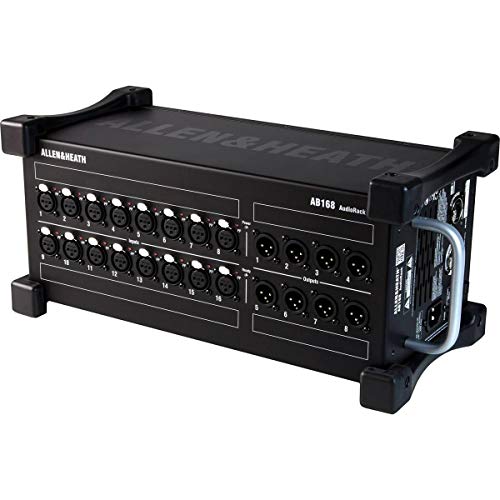
- 16 XLR mic preamps and 8 XLR line outputs
- dSNAKE connection with locking Ethercon
- Compatible with GLD and Qu systems
Best For: GLD and Qu users needing secure remote I/O for recording
Expanded Networked Stage Box for Recording Workflows
Behringer SD16 Remote Preamp Box

- 16-channel digital snake with remote-controllable MIDAS mic pres
- AES50 networking with SuperMac technology
- ULTRANET integration plus 8 outputs
Best For: Networked recording setups using AES50 and P16 monitoring
AVB-ready 16-channel option
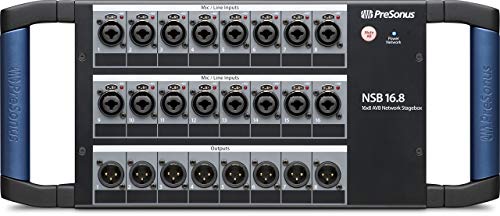
- 16 mic/line inputs and 8 XLR outputs
- Remote-controllable XMAX preamps with gain compensation
- AVB networking with easy Series III/UC Surface setup
Best For: PreSonus-based recording and monitoring rigs
Dante-connected recording box

- 16 mic preamps with 8 line outputs
- Dante digital connectivity over Ethernet
- Stage box layout for networked audio
Best For: Dante recording systems needing straightforward I/O expansion
High-capacity AVB rack stage box

- 32 combo mic/line inputs and 16 XLR outputs
- 32 remote-controllable XMAX preamps
- 3U rackmount AVB design with gain compensation
Best For: Large PreSonus recording setups needing high channel count
Large-Format AES50 Stage Box – Behringer S32 32-Channel Stage Box
If you need a digital stage box for recording a bigger band or a full live setup, the Behringer S32 gives you 32 Midas-designed mic preamps and 16 balanced XLR outputs over AES50 networking. It’s built for clean digital audio and control transport with low latency, and the Ultranet port adds personal monitoring support for in-ear workflows.
Best For: Recording engineers and live teams needing a 32-input stage box with monitoring and networked expansion.
Pros:
- 32 fully programmable, Midas-designed mic preamps
- 16 servo-balanced XLR outputs for flexible routing
- AES50 SuperMAC networking for low-jitter, low-latency operation
- Ultranet support for personal monitoring systems
Cons:
- Designed around AES50 workflows, so compatibility depends on your mixer setup
- May be more stage box than smaller recording rigs need
The S32 is a strong fit when you want a high-channel-count digital stage box for recording with networked signal distribution and monitoring features. Its value is in the combination of 32 preamps, 16 outputs, and expansion-friendly connectivity.
Compact 16-Channel Snake – Behringer S16 16-Channel Digital Snake Black
The Behringer S16 is a practical digital stage box for recording when you want 16 Midas-designed preamps in a smaller footprint than a larger rack unit. With AES50 network ports, 8 balanced XLR outputs, and ULTRANET support, it covers core input, output, and monitor routing needs for compact rigs.
Best For: Smaller studios, bands, and mobile recordists who need a straightforward 16-channel digital snake.
Pros:
- 16 MIDAS-designed, fully programmable mic preamps
- 8 servo-balanced XLR outputs
- AES50 networking with low-latency SuperMAC capability
- ULTRANET connectivity for P16 personal monitoring
Cons:
- Fewer channels than 32-input stage boxes
- Built for AES50-based systems, so setup depends on compatible gear
If your priority is a simpler digital stage box for recording rather than maximum channel count, the S16 hits a useful middle ground. It keeps the feature set focused on clean preamps, monitoring support, and stable networked audio.
Premium Expandable Stage Box – Midas DL32 32 Input, 16 Output Stage Box with 32 Midas Microphone Preamplifiers, ULTRANET and ADAT Interfaces
For a digital stage box for recording that leans into premium preamp quality, the Midas DL32 brings 32 Midas PRO microphone preamps and 16 balanced line outputs into a compact rack format. It also includes ULTRANET, ADAT, and dual AES50 SuperMAC ports, making it a flexible hub for larger tracking and monitoring systems.
Best For: Recording workflows that want 32 inputs, premium preamps, and multiple digital integration options.
Pros:
- 32 Midas PRO microphone preamplifiers with 48 V phantom power
- 16 electronically balanced low-impedance line outputs
- Dual AES50 ports for cascading additional stage boxes
- ULTRANET and ADAT interfaces for broader system integration
Cons:
- More complex than a basic standalone I/O box
- May exceed the needs of smaller recording projects
The DL32 stands out when you want a recording-focused stage box with high channel count and strong routing flexibility. Its dual AES50 and ADAT support make it especially appealing for expandable studio or live recording systems.
Dante Rack I/O for Yamaha Systems – Yamaha Tio1608-D2 Dante-Enabled Stage Box Audio I/O Rack
The Yamaha Tio1608-D2 is a digital stage box for recording built around Dante Ethernet, with 16 inputs, 8 outputs, and a 96kHz sample rate. Its recallable D-PRE preamps and QUICK CONFIG support for DM3 and TF series mixers make it a practical option for Yamaha-based recording and live workflows.
Best For: Yamaha users who need a Dante stage box with recallable preamps and 96kHz operation.
Pros:
- 16 inputs and 8 outputs in a 3U rack size
- 96kHz sample rate for high-resolution operation
- Recallable D-PRE preamplifiers
- QUICK CONFIG support for DM3 and TF series mixers
Cons:
- Best suited to Dante-based Yamaha systems
- Smaller channel count than 32-input stage boxes
If your recording setup already uses Yamaha and Dante, the Tio1608-D2 is an efficient way to add remote I/O with solid integration. It focuses on clean connectivity and mixer compatibility rather than maximum expansion.
Compact Digital Stage Box for Flexible Live Recording – Behringer SD16 I/O Stage Box
If you need a digital stage box for recording that keeps mic preamps close to the source and sends audio over a single networked connection, the Behringer SD16 is built for that job. It pairs 16 remote-controllable MIDAS-designed preamps with 8 servo-balanced XLR outputs and AES50 networking for low-jitter, low-latency operation.
Best For: Live recording setups that need plenty of remote-controlled inputs, monitoring support, and simple networked stage connectivity.
Pros:
- 16 MIDAS-designed programmable mic preamps for detailed input handling.
- 8 analog, servo-balanced XLR outputs for flexible routing.
- AES50 networking with KLARK TEKNIK SuperMAC capability for low jitter and latency.
- 4-port ULTRANET hub supports BEHRINGER P16-M personal monitoring mixers.
Cons:
- Designed around AES50 and ULTRANET workflows, so it fits specific digital systems.
- Weighs 5 pounds, but still requires a corded power source and networked setup.
This is a practical stage box for recording when you want remote control over preamps and integrated monitoring distribution in a compact unit. The SD16 is especially appealing if your setup already uses AES50 or ULTRANET and you want to simplify stage cabling.
Reliable 16-Input Digital Stage Box for Recording – Allen & Heath AB168 Stage Box
The Allen & Heath AB168 is a straightforward digital stage box for recording when you need a clean 16-in/8-out expander for a compatible system. It offers 16 XLR mic preamps, 8 XLR line outputs, and dSNAKE connectivity with a locking Ethercon port for secure stage-to-console linking.
Best For: GLD and Qu systems that need a dependable remote I/O box for multichannel recording.
Pros:
- 16 mic preamps on XLR inputs for capturing multiple sources.
- 8 XLR line outputs for flexible output routing.
- dSNAKE connection with locking Ethercon port for secure networking.
- Additional locking Ethercon port supports daisy chaining and ME personal mixing.
Cons:
- Built for GLD and Qu compatibility, so it is system-specific.
- At 15 pounds, it is heavier than some compact stage boxes.
If you already work inside Allen & Heath’s compatible ecosystem, the AB168 is an efficient way to move inputs and outputs to the stage for recording. Its simple 16-by-8 layout keeps the focus on practical connectivity rather than extra features.
Expanded Networked Stage Box for Recording Workflows – Behringer SD16 Remote Preamp Box
The Behringer SD16 is a digital stage box for recording that focuses on getting 16 remote-controllable, MIDAS-designed mic preamps onto an AES50 network. With 8 outputs and ULTRANET integration for Powerplay P16 systems, it is aimed at setups that need both stage inputs and personal monitoring support.
Best For: Recording setups that want a 16-channel digital snake with networked monitoring integration.
Pros:
- 16-channel digital snake with remote-controllable MIDAS-designed mic pres.
- AES50 network port with Klark Teknik SuperMac technology.
- ULTRANET integration for Powerplay P16 monitoring systems.
- 8 outputs for additional routing flexibility.
Cons:
- Functionality is centered on AES50 and ULTRANET-based systems.
- The notes emphasize core I/O and networking rather than advanced onboard extras.
For recording-oriented users who want a clean digital snake with integrated monitoring support, the SD16 covers the essentials well. It is best when paired with compatible networked gear and used as part of a streamlined stage-to-record workflow.
AVB-ready 16-channel option – PreSonus NSB 16.8
If you need a digital stage box for recording that integrates cleanly with a Series III workflow, the PreSonus NSB 16.8 is built around 16 mic/line inputs and 8 locking XLR outputs. Its AVB networking, remote-controllable XMAX preamps, and gain compensation make it a practical choice for straightforward multichannel capture and monitoring.
Best For: Recording rigs built around PreSonus Series III mixers and UC Surface control.
Pros:
- 16 locking mic/line inputs plus 8 locking XLR outputs
- 16 remote-controllable XMAX preamps with gain compensation
- 2 AVB ports with locking XLR Ethernet jacks
- Easy setup with Series III mixers and UC Surface software
Cons:
- Designed around AVB rather than Dante networks
- Best fit for PreSonus ecosystems, so compatibility is more specific
Overall, the NSB 16.8 is a focused stage box for users who want AVB networking, remote preamp control, and a compact 16-in/8-out layout. It keeps the signal path simple while offering the control features that matter in a recording setup.
Dante-connected recording box – Yamaha Tio1608-D
The Yamaha Tio1608-D is a digital stage box for recording when you want 16 microphone preamps, 8 line outputs, and Dante connectivity in one unit. Its Ethernet-based connection makes it a practical fit for networked audio setups that need clean input expansion without adding clutter at the stage position.
Best For: Dante-based recording systems that need reliable input expansion.
Pros:
- 16 inputs with 16 microphone preamplifiers
- 8 line outputs for flexible routing
- Dante digital connectivity over Ethernet
- Compact stage box format for networked setups
Cons:
- No extra feature details beyond core I/O and Dante support
- Not a universal choice if your system is built around a different network standard
For users already working in Dante environments, the Tio1608-D keeps the stage box role simple and direct. It is mainly about dependable networked multichannel I/O, which is exactly what many recording workflows need.
High-capacity AVB rack stage box – PreSonus NSB32.16
When your digital stage box for recording needs more channels, the PreSonus NSB32.16 offers 32 combo mic/line inputs and 16 XLR line outputs in a rackmount design. With AVB networking, remote-controllable XMAX preamps, and gain compensation, it is built for larger multichannel capture and flexible routing from compatible PreSonus systems.
Best For: Larger PreSonus recording rigs that need many inputs and networked control.
Pros:
- 32 combo mic/line inputs and 16 XLR line outputs
- 32 remote-controllable XMAX preamps
- AVB networking with 2 locking XLR Ethernet ports
- Rackmount 3U design with multi-position rack ears
Cons:
- More hardware than smaller studios need
- AVB-focused, so it is not the best match for every networked setup
The NSB32.16 is a strong pick if you need substantial input count without giving up network control and tidy rack installation. It is especially appealing when your recording setup is already centered on PreSonus AVB tools.
How We Picked the Best Digital Stage Box for Recording
We focused on stage boxes that make recording easier, not just bigger. That means reliable remote preamps, stable networking, enough inputs and outputs for real sessions, and compatibility with common digital audio workflows such as AES50, Dante, AVB, ADAT, and ULTRANET where relevant.
We also considered how well each Digital Stage Box for Recording fits different users, from compact band rigs to larger multi-channel tracking setups.
Quick Comparison
For larger channel counts, 32-input models are better suited to full drum kits, live bands, and multi-mic sessions. 16-input boxes work well for smaller ensembles, rehearsal rooms, churches, and home studios. If your existing ecosystem is already built around Dante, AVB, or AES50, matching that network standard is usually the smartest move.
Key Buying Factors for a Digital Stage Box for Recording
Channel Count
Choose based on your largest typical session, not your smallest. A 16-channel box may be enough for vocals, keys, and a modest drum setup, while 32 channels provide more headroom for expanding recording needs.
Network Compatibility
Make sure the box works with your mixer, interface, or recorder. AES50, Dante, and AVB are not interchangeable, so the best choice is often the one that matches your current system.
Preamps and Remote Control
Remote-controllable mic preamps are a major advantage in recording because they let you place the stage box closer to the performers and still manage gain from the console or software.
Outputs and Personal Monitoring
Additional outputs can be useful for monitor sends, cue mixes, or split duties between live sound and recording. Features like ULTRANET can simplify personal monitoring for musicians.
Expansion and Workflow
If you may add more channels later, choose a box with room to grow. A Digital Stage Box for Recording should support your current workflow without forcing a full replacement later.
Who Should Buy Which Digital Stage Box for Recording?
If you need maximum flexibility for bands, drums, or larger live sessions, choose a 32-channel option. If you want a simpler, more affordable setup for smaller groups or project studios, a 16-channel model is usually the best fit. Dante users should prioritize Dante-enabled units, while AVB users should stick with AVB-networked boxes for the smoothest integration.
For most buyers, the best choice is the model that matches your mixer ecosystem first, then offers the channel count and outputs your recording workflow actually needs.