
Choosing among the best 360-degree cameras for interviews means balancing image quality, audio performance, framing flexibility, and setup time. The right camera can capture a conversation from multiple angles while giving you more options in post-production.
This roundup includes dedicated meeting-room cameras and portable 360-degree models, so you can match your purchase to studio interviews, remote conversations, field production, or hybrid events.
Best 10 360-Degree Cameras for Interviews Picks for 2026
Best for Hybrid Meetings

- 4K 360-degree video with 360-degree audio
- Automatically focuses on active in-room speakers
- Works with major conferencing platforms
Best For: Hybrid interviews in meeting rooms
Best for High-Resolution Field Interviews

- Native 8K50fps 360 video
- Dual 1/1.1-inch sensors and 10-bit color
- Wind-protected microphones and up to 140-minute runtime
Best For: Mobile interviews and documentary-style shooting
Best Budget Meeting Webcam
j5create 360 Degree All Around Meeting Webcam
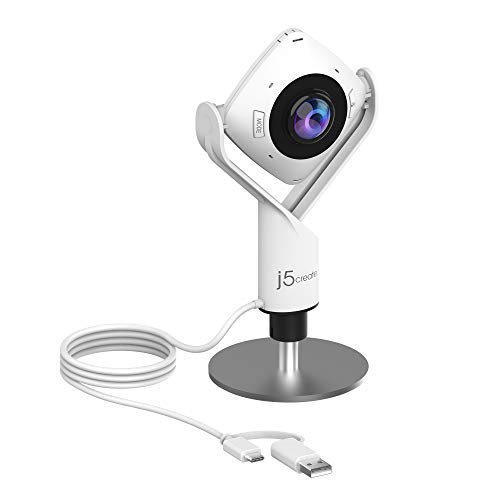
- 360-degree 1080p video coverage
- Built-in omnidirectional microphone
- Plug-and-play support for major meeting apps
Best For: Affordable online interviews and group calls
Best Lightweight 360 Camera
Insta360 X4 Air Starter Bundle

- 165g body with 8K30 360 video
- Shoot first and reframe later in the app
- Includes extra battery and invisible selfie stick
Best For: Portable creator interviews and outdoor shoots
Best Plug-and-Play Pick
TOUCAN SC360 Conference Camera
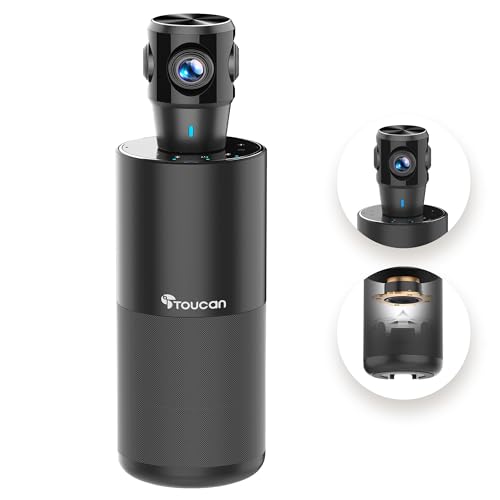
- 360-degree 1080p video coverage
- Four noise-reduction microphones
- USB plug-and-play with major meeting platforms
Best For: Office interviews and routine conference calls
Best for Everyday Use

- 8K30fps 360-degree video
- AI reframing and InstaFrame modes
- Waterproof design with stabilization and wind guard
Best For: Mobile, outdoor, and documentary-style interviews
Best for Hybrid Interview Rooms

- AI-driven speaker tracking
- 360-degree audio pickup up to 18 feet
- Certified for Teams and compatible with major platforms
Best For: Hybrid interviews and conference-room discussions
Best Reframing Flexibility

- 5.7K 360 Active HDR video
- AI reframing after recording
- FlowState Stabilization and Horizon Lock
Best For: Solo creators and mobile interviewers
Best All-in-One Meeting Setup
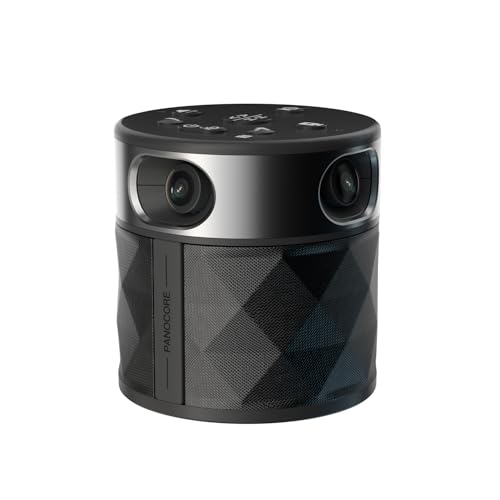
- Integrated 360 cameras, speaker, and microphones
- Auto-speaker focus with dual 180-degree modes
- Plug-and-play support for major meeting platforms
Best For: Remote interviews and hybrid meetings
Best for Moving Interviews
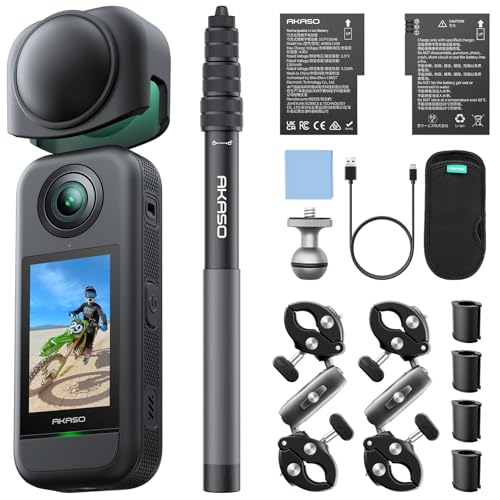
- 5.7K 360 video with shoot-first framing
- Supersmooth stabilization and Horizon Lock
- AI tracking and included invisible selfie stick
Best For: Outdoor and walk-and-talk interview footage
Best for Hybrid Meetings – Meeting Owl 4+
For interviews conducted in conference rooms or hybrid settings, the Meeting Owl 4+ combines 4K 360-degree video with room-filling audio. Its automatic speaker focus is designed to keep remote participants oriented as different people talk.
Best For: Hybrid interviews and collaborative discussions in small to large meeting rooms.
Pros:
- Captures 360-degree video in 4K and 360-degree audio up to 18 feet.
- Automatically focuses on in-room speakers using visual and audio cues.
- Plug-and-play USB setup and compatibility with platforms including Teams, Zoom, Google Meet, and Webex.
- Can expand coverage by pairing Owls or adding an Expansion Mic.
Cons:
- Its compact, room-oriented design is less suited to mobile or on-location interviews.
- Enterprise-focused features may be more than a solo interviewer needs.
The Meeting Owl 4+ is a strong choice when an interview includes several people around a table and remote viewers need a clear sense of the room. Choose it over an action camera when automatic speaker framing and integrated conferencing audio matter most.
Best for High-Resolution Field Interviews – Insta360 X6
The Insta360 X6 is a flexible option among 360-degree cameras for interviews when you want to record first and decide on framing later. Its native 8K capture, 10-bit color, and portable action-camera design suit mobile productions and varied viewpoints.
Best For: On-location interviews, documentary work, and creators who want extensive reframing options.
Pros:
- Records native 8K 360 video at up to 50 frames per second.
- Dual 1/1.1-inch sensors and 10-bit color support detailed, flexible footage.
- AI Director, Auto Edit 2.0, and InstaFrame features can simplify reframing and editing.
- Includes wind-protected 360 microphones and an Xtreme Battery rated for up to 140 minutes at 8K30.
Cons:
- Action-camera operation and post-capture reframing may require more editing than a dedicated conferencing camera.
- The supplied warranty is one year.
The X6 offers the most production flexibility here for interviewers who need to move beyond a fixed room setup. It is particularly appealing when high-resolution reframing, portable shooting, and directional perspective options are more important than plug-and-play conferencing.
Best Budget Meeting Webcam – j5create 360 Degree All Around Meeting Webcam
The j5create JVCU360 is a straightforward USB webcam for interviews held through video-conferencing software. It provides 360-degree coverage, a built-in omnidirectional microphone, and multiple display modes without requiring a more complex action-camera workflow.
Best For: Budget-conscious online interviews, group calls, and small collaborative sessions.
Pros:
- Offers 360-degree video with six display modes, including full view, host, dual host, and single view.
- Includes a built-in omnidirectional microphone.
- USB UVC/UAC plug-and-play design supports Skype, Teams, Google Meet, Zoom, Webex, and other platforms.
- Provides Full HD 1080p video at 30 Hz.
Cons:
- 1080p resolution is lower than the 4K and 8K options in this roundup.
- Fixed focus and digital zoom offer less flexibility for close-up interview framing.
- Firmware updates or app permissions may be needed for optimal functionality.
For simple remote interviews and group conversations, the JVCU360 keeps setup uncomplicated and coverage broad. Its 1080p output and fixed-focus design make it better suited to practical conferencing than cinematic interview production.
Best Lightweight 360 Camera – Insta360 X4 Air Starter Bundle
The Insta360 X4 Air Starter Bundle is a lightweight choice among 360-degree cameras for interviews when portability and later reframing are priorities. It records 8K30 video, includes stabilization, and comes with an extra battery and a 114 cm selfie stick for flexible positioning.
Best For: Portable interviews, creator-led shoots, and outdoor conversations where compact equipment is useful.
Pros:
- Weighs 165g and captures 8K30 360 video.
- Lets you shoot first and select angles later with reframing tools in the Insta360 app.
- FlowState stabilization and 360-degree Horizon Lock help keep footage smooth and level.
- Starter bundle includes an extra battery, invisible selfie stick, and lens cap.
Cons:
- It is an action camera rather than a dedicated conferencing webcam.
- Interview footage may require app-based editing or reframing before publishing.
- The supplied warranty is one year.
The X4 Air makes sense for interviewers who work on the move and want creative control over the final viewpoint. Its light weight and bundled accessories are convenient, while the shoot-first, frame-later workflow adds flexibility compared with conventional cameras.
Best Plug-and-Play Pick – TOUCAN SC360 Conference Camera
For interview setups centered on straightforward communication, the TOUCAN SC360 is a practical choice among 360-degree cameras for interviews. It combines 1080p video, 360-degree coverage, four noise-reduction microphones, and a built-in speaker in a compact USB device.
Best For: Office interviews, remote meetings, and small-to-large conference rooms where simple setup and broad software compatibility matter.
Pros:
- 360-degree video coverage helps include everyone in the room.
- Four microphones are designed to capture voices clearly with noise reduction.
- Plug-and-play USB connectivity works with PCs, Macs, tablets, Zoom, and Microsoft Teams.
- Includes a Type-C Male to USB-A Female OTG adapter for PC compatibility.
Cons:
- Video resolution is limited to 1080p rather than higher-resolution capture.
- Its conference-room design is less suited to mobile or outdoor interview production.
The SC360 makes the most sense when convenience and room-wide coverage take priority over cinematic image quality. Its integrated audio and speaker reduce the amount of equipment needed for routine interview calls.
Best for Everyday Use – Insta360 X5
The Insta360 X5 is a flexible option among 360-degree cameras for interviews when you need high-resolution footage, reframing flexibility, and portability. Its 8K capture, low-light processing, stabilization, and waterproof construction suit interviews recorded beyond a fixed conference room.
Best For: Mobile, travel, outdoor, and documentary-style interviews where footage may need to be reframed after recording.
Pros:
- Captures 360-degree video at up to 8K30fps using dual 1/1.28-inch sensors.
- AI-assisted reframing and InstaFrame mode support quick angle selection and ready-to-share flat video.
- Triple AI chip processing is designed to improve image quality in low light.
- Waterproof body, stabilization, and a built-in wind guard support outdoor recording.
Cons:
- It is an action camera rather than an all-in-one video-conferencing device.
- Interview workflows may require separate microphone or meeting equipment depending on the setup.
- High-resolution 360-degree files can require more storage and editing time.
The X5 is the strongest fit when an interview needs creative framing or must be captured in challenging environments. It offers considerably more recording flexibility than a typical conference camera, though it may require a more involved production workflow.
Best for Hybrid Interview Rooms – Owl Labs Meeting Owl 3
The Meeting Owl 3 is purpose-built for shared interview and discussion spaces. Among 360-degree cameras for interviews, it stands out for combining 1080p room coverage, 360-degree audio pickup up to 18 feet, and AI-driven speaker tracking that automatically focuses on the person talking.
Best For: Hybrid interviews, panel discussions, and conference rooms where in-person and remote participants need to stay engaged.
Pros:
- Shows a 360-degree view of the room while focusing on in-room speakers.
- Captures 360-degree audio from up to 18 feet away.
- Plug-and-play USB setup is designed to get meetings running quickly.
- Works with Zoom, Google Meet, GoTo Meeting, Cisco Webex, and Microsoft Teams.
Cons:
- 1080p video does not provide the detail of an 8K 360-degree camera.
- Its 2.6-pound conference-room form factor is less portable for location interviews.
- Expanding coverage with additional Owl devices involves extra equipment.
The Meeting Owl 3 is a strong choice for interviews conducted in collaborative rooms, especially when remote guests need to follow the conversation naturally. Its speaker tracking and integrated audio reduce the need for an operator, while optional expansion supports larger spaces.
Best Reframing Flexibility – Insta360 X3
For creators comparing 360-degree cameras for interviews, the Insta360 X3 is a flexible option when you want to capture the conversation first and choose the framing later. Its 5.7K 360 video, AI-assisted reframing, FlowState Stabilization, and Horizon Lock support polished footage for vlogs, journalism, and mobile interview setups.
Best For: Solo creators and mobile interviewers who want high-resolution 360 capture with flexible post-recording framing.
Pros:
- 5.7K 360 Active HDR video provides detailed footage and lets you select the angle after recording.
- AI-powered reframing in the Insta360 app simplifies editing.
- FlowState Stabilization and Horizon Lock help keep footage smooth and level.
- Waterproof design and a 2.29-inch touchscreen suit portable shooting.
Cons:
- Its action-camera design does not include an integrated microphone array or speaker for conference-room interviews.
- MicroSD storage is required for recording.
The X3 is a strong fit when interview footage needs to be repurposed into multiple angles or social clips. For seated meeting-room interviews where built-in audio and plug-and-play conferencing matter more than action portability, a dedicated conference camera may be more convenient.
Best All-in-One Meeting Setup – PANOCORE360
Among 360-degree cameras for interviews, the PANOCORE360 stands out as a meeting-focused system rather than a standalone action camera. It combines four cameras, a three-microphone array, a speaker, auto-speaker focus, AI voice processing, and USB plug-and-play operation for small to medium interview or conference rooms.
Best For: Remote interviews and hybrid meetings with up to 12 participants who need integrated video and audio.
Pros:
- Four-camera capture creates a 360-degree view with dual 180-degree widescreen viewing.
- Auto-focus can highlight the active speaker while retaining room context.
- Built-in speaker and omnidirectional three-mic array offer up to a 10-foot pickup range.
- Works without drivers with Zoom, Microsoft Teams, Webex, and Google Meet.
Cons:
- 1080p output is lower resolution than the device’s internally merged 4K 360 capture.
- It is not water resistant and is designed for desktop or meeting-room use.
- USB power requirements may require the included splitter and adapter on lower-power computers.
The PANOCORE360 is the most purpose-built choice here for sit-down interviews conducted through a computer. Its integrated audio, speaker tracking, and local MicroSD recording reduce setup complexity, although creators seeking cinematic, high-resolution footage may prefer an action camera.
Best for Moving Interviews – AKASO 360 Motorcycle Combo
For creators considering 360-degree cameras for interviews in active or on-location environments, the AKASO 360 offers high-resolution capture and strong stabilization features. Its 5.7K 360 video, 360-degree Horizon Lock, AI subject tracking, and included invisible selfie stick make it useful for dynamic walk-and-talk or field interview footage.
Best For: Outdoor interviewers and creators who need stabilized, reframable footage while moving.
Pros:
- 5.7K 360 video supports reframing after recording.
- 360 Supersmooth stabilization and Horizon Lock help reduce shake and tilted footage.
- AI subject tracking can keep the interview subject centered.
- Included invisible selfie stick enables third-person shooting without a separate operator.
Cons:
- The motorcycle combo does not include a MicroSD card.
- Fixed-focus fisheye lenses and digital stabilization are less suited to controlled studio interview work.
- The supplied notes do not indicate an integrated interview microphone system.
The AKASO 360 is a compelling mobile option when movement, stabilization, and flexible framing are priorities. Plan on handling audio separately for professional interviews, and remember to add a compatible MicroSD card before recording.
How We Picked the Best 360-Degree Cameras for Interviews
We evaluated these cameras by focusing on the needs that matter most during interviews: reliable audio, usable video resolution, automatic subject or speaker tracking, reframing options, portability, and compatibility with common video platforms. Conference cameras were considered for hands-free room coverage and remote meetings, while action cameras were assessed for image quality, stabilization, battery life, lens durability, and flexible capture.
Because interview workflows vary, there is no single best design for everyone. A camera with excellent 360-degree footage may still need a separate microphone, while an all-in-one conference unit may prioritize clear speech and automatic framing over cinematic detail.
Quick Comparison
- Best for conference rooms: Meeting Owl 4+ and Meeting Owl 3 offer automatic speaker focus and integrated audio.
- Best for high-resolution reframing: Insta360 X6, X5, and X4 Air provide detailed 360-degree footage for flexible editing.
- Best compact action options: Insta360 X3 and the AKASO 360 Action Camera suit mobile or outdoor interviews.
- Best simple meeting setups: j5create, TOUCAN, and PANOCORE360 combine cameras, microphones, and speakers in one unit.
Key Buying Factors for 360-Degree Cameras for Interviews
Video Resolution and Reframing
Higher resolution gives you more room to crop, straighten, and reframe a speaker after recording. For polished interview production, 8K models are especially useful when the final video will be delivered in 4K. Lower-resolution conference cameras can still work well for video calls and documentation, where clear composition matters more than cinematic detail.
Audio Pickup
Audio quality often matters more than extra pixels. Look for multiple microphones, noise reduction, echo control, and a pickup range suitable for your room. Built-in microphones are convenient, but a separate lavalier or boom microphone may produce better results for one-on-one interviews, particularly in noisy environments.
Tracking and Automatic Framing
Speaker tracking can keep a remote participant or in-room interviewee visible without a camera operator. Check whether tracking follows a single speaker, switches between participants, or simply provides a wide view. Automatic framing is most valuable for live interviews and meetings; recorded productions may benefit more from manual reframing in editing software.
Workflow, Power, and Compatibility
Confirm compatibility with your computer, operating system, conferencing software, memory cards, and preferred editing tools. Also consider battery runtime, USB connectivity, heat management, and whether the camera can remain powered for long sessions. Waterproofing and replaceable lenses are useful advantages for field interviews but may be unnecessary in a controlled studio.
Who Should Buy Which 360-Degree Cameras for Interviews?
Choose a Meeting Owl or another all-in-one conference camera if you need fast setup, automatic speaker focus, and integrated sound for remote or room-based interviews.
Choose an Insta360 X-series camera if you want high-resolution footage, creative angles, stabilization, and the ability to decide framing after the interview. Plan on adding a dedicated microphone when professional dialogue is the priority.
Choose the j5create, TOUCAN, or PANOCORE360 for straightforward video calls, small meeting spaces, or budget-conscious setups where integrated audio and plug-and-play operation are more important than maximum resolution.
Choose the AKASO or a compact action-oriented model for travel, outdoor interviews, or moving subjects. Before recording, test wind protection, battery life, and audio placement so portability does not compromise speech clarity.