
Choosing among audio cable testers for beginners can be difficult when product listings use different connector counts, test modes, and feature names. The right tester should make basic continuity checks easy while matching the cables and connectors you actually use.
This roundup compares 10 practical options, from compact switch-based testers to broader pro-audio and lighting checkers. Use the guide below to narrow your choice by compatibility, workflow, portability, and troubleshooting needs.
Best 10 Audio Cable Testers for Beginners Picks for 2026
Rugged All-Rounder

- Five-way switch for pin checks
- Tests many common audio connectors
- Steel chassis with LED readout
Best For: Beginners needing a durable, broad-coverage tester
Connector Coverage Pick
Hosa CBT-500 Audio Cable Tester
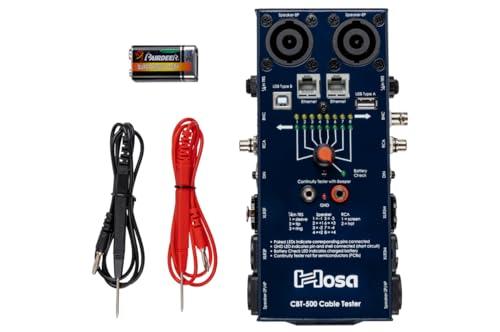
- Supports XLR, BNC, Ethernet, and SpeakON
- Battery-powered ohmmeter testing
- Includes a limited lifetime warranty
Best For: Beginners checking varied audio and related cables
Speaker-System Specialist
Elite Core OSP CT-04C Cable Tester

- Tests multiple SpeakON pole configurations
- Covers audio, DMX, and RJ45 connections
- Offers ohmmeter and continuity testing
Best For: Beginners working with speaker and stage cabling
High-Capacity Budget Option
MFL 15-Plug Audio Cable Tester

- LED indicators show conductor connections
- Supports up to 13 cables at once
- Metal casing with a 10-way switch
Best For: Beginners wanting visual, multi-cable testing
Best All-in-One Starter
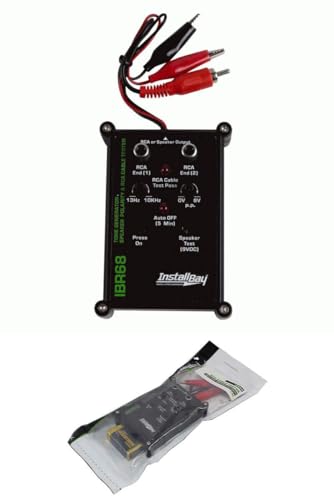
- Tests RCA cables and speaker wiring
- Includes tone-generator functionality
- Simple knobs with auto-off
Best For: Beginners troubleshooting basic RCA and speaker connections
Best for Quick Pass/Fail Checks
Galaxy Audio JIB/CT Cable Tester

- Tests six common cable types
- Displays simple pass/fail results
- Checks for intermittent problems quickly
Best For: Beginners handling mixed audio cables in live-sound settings
Best Advanced Option

- Tests cables up to eight pins
- Supports many audio and data connectors
- Includes installed-cable testing and a tone generator
Best For: Beginners planning to work with varied or complex cable setups
Most Versatile
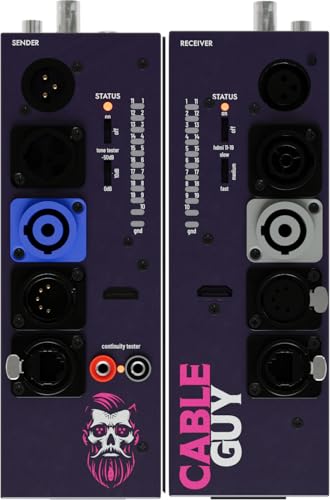
- Tests audio, lighting, networking, and video cables
- LED indicators provide quick continuity feedback
- Split design supports through-wall testing
Best For: Beginners needing broad connector coverage
Best for Simple Audio Testing

- 13-in-1 design covers common audio connections
- LEDs indicate conductor continuity
- 8-way switch simplifies test selection
Best For: Recording and live-performance cable checks
Best for Installed Cables
Detachable Advanced Cable Tester

- Separate sender and receiver test long cable runs
- Supports audio, network, video, and control connectors
- LEDs and a 10-way switch aid fault checking
Best For: Preinstalled and hard-to-reach cable testing
Rugged All-Rounder – Mackie Cable Tester
For beginners comparing audio cable testers, the Mackie Cable Tester offers a straightforward way to check common live-sound and studio connectors. Its five-way switch, LED readout, and supplied probes support quick pin checks and manual continuity testing.
Best For: Beginners who want a sturdy tester for common audio connectors and hands-on continuity checks.
Pros:
- Tests TRS, TS, XLR, RCA, Speakon, 3.5mm TRS, MIDI, and banana-jack connections.
- Five-way switch helps verify individual pins quickly.
- Steel chassis and built-like-a-tank construction.
- Runs on one 9V battery and includes signal probes.
Cons:
- It weighs 1.4 pounds, so it is less lightweight than a basic pocket tester.
- Requires a 9V battery for operation.
The Mackie is a practical choice when durability and broad connector coverage matter more than minimum size. The included probes also make it useful for beginners learning how continuity testing works.
Connector Coverage Pick – Hosa CBT-500 Audio Cable Tester
The Hosa CBT-500 is a practical option among audio cable testers for beginners who want to check a range of cable formats with a battery-powered ohmmeter. Its listed compatibility includes XLR, 75-ohm BNC, Ethernet, and SpeakON connections.
Best For: Beginners building a versatile cable-checking kit for audio and related connection types.
Pros:
- Supports XLR, 75-ohm BNC, Ethernet, and SpeakON cables.
- Battery-powered operation is convenient for bench or field checks.
- Uses ohmmeter-based testing to evaluate cable connections.
- Includes a limited lifetime warranty.
Cons:
- At 2 pounds, it is the heaviest option in this selection.
- The supplied notes do not specify a detailed switch layout or included probes.
The CBT-500 stands out for users who need more than standard microphone and instrument-cable compatibility. Its broad listed connector support and limited lifetime warranty may appeal to beginners assembling a longer-term troubleshooting setup.
Speaker-System Specialist – Elite Core OSP CT-04C Cable Tester
For beginners working with speaker and stage connections, the Elite Core OSP CT-04C provides continuity and ohmmeter testing across an especially wide connector selection. Its compatibility includes multiple SpeakON configurations along with common audio, networking, and DMX connections.
Best For: Beginners testing speaker cables, stage wiring, and mixed audio-system connections.
Pros:
- Tests 2-, 4-, and 8-pole SpeakON connections.
- Supports 1/4-inch TRS, male and female XLR, RCA, MIDI, DIN, and 3.5mm mini stereo.
- Also lists RJ45 CAT5e and 3-pin and 5-pin DMX compatibility.
- Provides both ohmmeter and continuity-tester functions.
Cons:
- Its 1.8-pound weight may be more than casual users need.
- Runs on battery power, and the supplied notes do not identify the battery type.
The CT-04C is a strong fit when a beginner’s setup includes speaker cabling as well as conventional audio leads. Its broad connector list is particularly useful for small live-sound systems with varied wiring.
High-Capacity Budget Option – MFL 15-Plug Audio Cable Tester
The MFL 15-Plug Audio Cable Tester is designed for beginners who want LED-guided checks across many cable types. Its 10-way switch and capacity to support up to 13 cables at once can help identify continuity problems in recording or live-performance setups.
Best For: Beginners who want a compact, multi-connector tester with visual LED indicators.
Pros:
- LED indicators help confirm conductor connections.
- Supports up to 13 cables at the same time, according to the supplied notes.
- Accepts TRS, XLR, RCA, DIN, SpeakON, and other compatible cable types.
- Compact metal casing and a 10-way selector switch.
Cons:
- The required battery is not included.
- The supplied notes do not specify the battery type beyond a 9V minimum operating voltage.
The MFL offers a beginner-friendly visual approach to cable troubleshooting while covering a broad range of connectors. Its multi-cable capacity may be useful for users checking several leads during setup or repair.
Best All-in-One Starter – RCA IBR68 Cable Tester
Install Bay RCA AIO 9V Cable Wire Tester Tone Generator Speaker Polarity / IBR68
Check Price On AmazonFor beginners comparing audio cable testers, the Install Bay IBR68 is a straightforward option for checking RCA cables, speaker wiring, and basic tone-generator functions. Its control knobs and auto-off feature keep the setup simple for occasional troubleshooting.
Best For: Beginners testing RCA cables, speaker connections, and wiring in basic audio systems.
Pros:
- Combines RCA cable testing, speaker testing, and a tone generator.
- Uses a 9V battery-powered design.
- Simple control knobs and an auto-off function.
Cons:
- Its listed compatibility is centered on RCA cables and speakers rather than a broad range of connector types.
- It does not offer the expanded cable-format coverage of more advanced testers.
The IBR68 is a practical entry point when your main goal is finding common RCA or speaker-wire problems without navigating a more complex tester.
Best for Quick Pass/Fail Checks – Galaxy Audio JIB/CT Cable Tester
The Galaxy Audio JIB/CT is a beginner-friendly choice for audio cable testers when you need fast, uncomplicated checks across several common formats. It provides a simple pass/fail indicator and is designed to identify intermittent cable problems quickly.
Best For: Musicians, schools, churches, contractors, and beginners working with several common audio cable types.
Pros:
- Tests XLR, 1/4-inch, RCA, 1/8-inch, Speakon, and DIN/MIDI cables.
- Uses a clear pass/fail indicator for simple results.
- Microprocessor checks cables up to 200 times per second to detect intermittent problems.
- Includes a one-year warranty.
Cons:
- Its pass/fail-focused design provides less detail than a more advanced cable tester.
- The supplied notes do not list speaker-polarity or tone-generation functions.
Choose the JIB/CT if broad compatibility and quick status checks matter more to you than detailed diagnostics or advanced signal-routing features.
Best Advanced Option – dbx CT-3 Cable Tester
The dbx CT-3 is suited to beginners who want room to grow into more involved audio troubleshooting. It supports cables up to eight pins, includes a tone generator, and uses a two-piece chassis for testing installed cables.
Best For: Beginners and technicians who need broad connector compatibility, installed-cable testing, and more advanced capabilities.
Pros:
- Tests cables with up to eight pins.
- Two-piece chassis supports testing installed cables.
- Includes a tone generator.
- Supports formats including BNC, DIN, DMX, MIDI, RCA, RJ11, RJ45, TRS, TS, XLR, and banana connectors.
Cons:
- Its advanced feature set may be more than needed for simple beginner checks.
- At 2.2 pounds, it is heavier than the other listed testers.
- It uses corded electric power rather than a battery-powered design.
The CT-3 makes the most sense when your cable collection extends beyond basic audio connectors and you want one tester capable of handling a wider range of formats and installed connections.
Most Versatile – Multi-Function Cable Tester
For beginners comparing audio cable testers for beginners, the Cable Guy Multi-Function Cable Tester is a practical choice when one tool needs to cover more than standard audio leads. It checks XLR, HDMI, RJ45, powerCON, TRS, RCA, and BNC cables, with LED indicators that provide quick continuity feedback.
Best For: Beginners who need broad cable compatibility for audio, lighting, networking, and permanent installations.
Pros:
- Supports numerous cable types, including 3-pin and 5-pin XLR, TRS, RCA, HDMI, RJ45, and BNC.
- Matching LED indicators make continuity results easy to read.
- Separate sender and receiver units support through-wall testing.
- Durable steel housing is suited to frequent professional use.
Cons:
- Two 9V batteries are required and are not included.
- Its wide feature set may be more than needed for simple audio-only testing.
Choose this model if versatility and installation testing matter as much as basic continuity checks. Its steel construction and broad connector support make it a strong all-purpose option.
Best for Simple Audio Testing – 13-Plug Audio Cable Tester
The MFL 13-Plug Audio Cable Tester is a straightforward option for beginners seeking audio cable testers for beginners. Its 13-in-1 design, LED indicators, and 8-way switch help users check conductor connections across cables commonly used in recording and live-performance setups.
Best For: Beginners testing a range of everyday audio cables in recording or live-performance environments.
Pros:
- 13-plug design accommodates multiple cable types.
- LED indicators help confirm conductor connections and identify faults.
- Compact metal casing is designed for durability.
- 8-way switch selects the connection to be tested.
Cons:
- Battery is required but not included.
- The supplied notes do not specify a detachable sender-and-receiver design for installed cables.
This tester keeps the process focused on selecting a connection and reading the LED results. It is a sensible fit for beginners who want broad audio-cable coverage without prioritizing through-wall testing.
Best for Installed Cables – Detachable Advanced Cable Tester
For beginners looking at audio cable testers for beginners and needing to check long or preinstalled runs, the MFL Detachable Advanced Cable Tester offers a useful two-piece design. The sender and receiver can be separated, while the 10-way switch and LED indicators help identify conductor-connection problems.
Best For: Beginners testing long, preinstalled, or hard-to-reach cables across audio, networking, and installation setups.
Pros:
- Split sender-and-receiver design is intended for installed and long cables.
- Supports a broad selection, including RJ45, HDMI, Speakon, XLR, RCA, BNC, DIN, TRS, DMX, and banana connections.
- LED indicators help identify connection problems.
- Compact metal casing is built for durability.
Cons:
- Battery is required but not included.
- The 10-way switch may require more setup than a basic single-cable tester.
This is the most installation-oriented choice in the group. Select it when detachable testing and wide connector coverage are more important than keeping the tester as simple as possible.
How We Picked the Best Audio Cable Testers for Beginners
We focused on testers that are approachable for first-time users while still covering common cables found in home studios, rehearsal spaces, live sound rigs, and small installations. The selection includes models designed for XLR, TRS, RCA, speaker, MIDI, RJ45, HDMI, power, and other connections, depending on the unit.
We also considered practical details: clear LED indicators, selectable test positions, battery operation, tone or line-finding functions, connector coverage, portability, and whether the tester is better suited to simple continuity checks or broader professional troubleshooting.
Quick Comparison
| What to Compare | Why It Matters |
|---|---|
| Connector coverage | Determines which cables and adapters you can test. |
| Test controls | Switches and selectable positions help isolate individual conductors. |
| Indicators | LEDs make open, shorted, or miswired connections easier to identify. |
| Tone or line finding | Useful for tracing cables in racks, walls, stages, and installations. |
| Power and size | Battery-powered compact models are convenient for mobile work. |
Key Buying Factors for Audio Cable Testers for Beginners
Match the Connectors You Own
Start with your actual cable collection. A tester with several XLR, TRS, and RCA connections may be ideal for a basic audio setup, while installation work can justify support for speaker, RJ45, HDMI, or power-related connectors. More ports are not automatically better if they add cost without helping your workflow.
Choose Clear, Simple Feedback
Beginners generally benefit from visible LED indicators and straightforward switch positions. A tester should show enough information to identify continuity and wiring problems without requiring complicated procedures. Look for readable labels and a layout that makes both cable ends easy to connect.
Consider Tone-Generation Features
A tone generator or line finder is valuable when cables disappear behind equipment, through walls, or into stage looms. If you only test loose patch cables at a desk, this feature may be less important than compact size and quick continuity checks.
Think About Portability and Durability
For gigging or field work, prioritize a rugged enclosure, battery operation, and a compact form. For a fixed repair bench, a larger multi-function unit may offer more useful connector access and easier testing.
Who Should Buy Which Audio Cable Testers for Beginners?
Home-studio beginners: Choose a compact tester covering the XLR, TRS, and RCA cables in your setup, with clear LEDs and uncomplicated controls.
Live-sound users: A durable multi-connector tester is worthwhile for checking microphone, speaker, instrument, and patch cables before a show.
Installers and system technicians: Favor models with tone generation, line finding, or wider connector support for tracing unfamiliar runs.
Repair benches and small production teams: Advanced testers with more test positions can save time when diagnosing recurring wiring faults across many cable types.
Whichever model you choose, test known-good cables first so you understand the indicator pattern. Then inspect questionable cables at both ends, move the connectors gently during testing, and label confirmed cables to prevent repeat troubleshooting.