
A crowded studio floor can make setup changes slower, create trip hazards, and put unnecessary strain on power and audio cables. The right organizer keeps frequently used cords accessible while giving longer or spare cables a defined storage place.
This roundup compares 10 practical options, from under-desk trays and wall-mounted racks to flexible sleeves and desktop cable boxes, so you can match the organizer to your equipment, cable sizes, and available space.
Best 10 Power Cable Organizers for Studios Picks for 2026
Heavy-Duty Under-Desk Pick
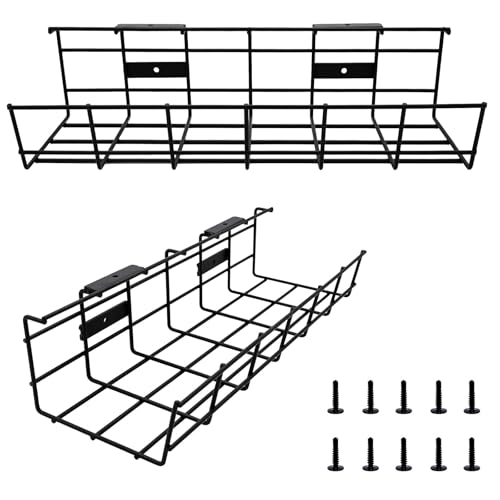
- Two-pack metal trays for under-desk storage
- Holds up to 15 pounds when properly installed
- Fits power strips, adapters, Ethernet, and HDMI cables
Best For: Studios needing sturdy hidden cable storage
Portable Wrap Organizer

- Holds up to 12 cords, cables, ropes, or hoses
- Lightweight design suits portable studio setups
- Works with audio, instrument, extension, and A/V cables
Best For: Mobile studios and frequently changed cable setups
Wall-Mounted Studio Rack

- Offers 19 wall-mounted cable slots
- Fits cable widths from 5.5 to 9.5 mm
- Steel construction suits studio and office storage
Best For: Permanent, visible organization of studio cables
Flexible Concealment Pick

- Four 19-to-20-inch neoprene sleeves
- Each sleeve holds about 8 to 10 cables
- Zips around bundles for a cleaner equipment area
Best For: Concealing grouped cables behind studio gear
Best Wall-Mount Cable Rack

- 19 slots organize a large cable collection
- Heavy-gauge steel resists rust and corrosion
- Fits cable tops from 5.5 to 9.5 mm
Best For: Studios needing high-capacity wall storage for audio and instrument cables
Best Two-Pack Cable Hangers

- Two racks provide 38 total slots
- Carbon steel construction suits demanding storage
- Alternating slots fit 0.2- to 0.35-inch cables
Best For: Studios needing multiple wall-mounted racks for mixed cable types
Best Clear Cable Case

- Eight deeper compartments for separated storage
- Includes 10 rubber ties for bundling
- Lidded, transparent case for portable organization
Best For: Small cords, chargers, data cables, and accessories
Best Heavy-Duty Rack

- Stores up to 19 cables per rack
- Coated steel resists rust and bending
- Mounts vertically or horizontally
Best For: Wall-mounted storage of XLR, guitar, USB, and audio cables
Best Customizable Hanger

- Two 19-slot racks for high cable capacity
- Heavy-gauge coated steel construction
- Slot fingers can be modified for narrower cables
Best For: DIY-friendly studio and workshop cable storage
Heavy-Duty Under-Desk Pick – Metal Cable Management Trays
For studios that need to clear power strips, adapters, Ethernet lines, and USB hubs from the floor, this two-pack of metal trays is a practical choice among power cable organizers for studios. The screw-in design mounts beneath compatible wood or wood-composite desks and supports up to 15 pounds when properly installed.
Best For: Studio desks needing sturdy under-table storage for power cables, strips, and accessories.
Pros:
- Two metal trays provide separate storage zones.
- Supports up to 15 pounds when installed properly.
- Works with power cables, Ethernet, HDMI, USB hubs, and power strips.
- Includes screws for installation.
Cons:
- Requires drilling four holes per tray.
- Designed primarily for wood or wood-composite desks.
- Desk clearance should be measured before purchase.
Choose this set when sturdiness and concealed under-desk storage matter more than tool-free installation. Its 14.5-by-5-by-3.4-inch size offers useful capacity without occupying desktop space.
Portable Wrap Organizer – Cable Wrangler Cord Holder
This Cable Wrangler is a compact option for power cable organizers for studios, especially when cords need to be gathered, moved, or stored between setups. It holds up to 12 cords, cables, ropes, or hoses and organizes them by winding the items into the holder.
Best For: Portable studio setups, audio cables, extension cords, and quick cord bundling.
Pros:
- Designed to hold up to 12 cords or similar items.
- Lightweight and portable for studios or on-the-go use.
- Supports audio, musical instrument, extension, and A/V cables.
- Can hold up to 100 pounds with the brand’s custom Bungee Balls.
Cons:
- The heavier-duty 100-pound capacity requires custom Bungee Balls.
- It organizes wound cables rather than concealing them along a desk.
- Supplied listing describes one organizer.
Unlike a fixed tray or wall rack, this organizer suits changing studio layouts and cable transport. It is a useful pick when fast, portable bundling is the priority.
Wall-Mounted Studio Rack – 19-Slot Steel Cable Hanger
For studios with a dedicated storage wall, this 19-slot steel rack is one of the more structured power cable organizers for studios. Its slots accommodate cable diameters from 5.5 to 9.5 mm, making it suitable for sorting USB, patch, charging, guitar, computer music, Eurorack, and XLR cables.
Best For: Permanent wall storage and organized access to frequently used studio cables.
Pros:
- Provides 19 dedicated cable slots.
- Powder-coated, 15-gauge cold-rolled steel construction.
- Supports several studio cable types, including XLR and Eurorack cables.
- Includes screws for wall installation.
Cons:
- Requires wall mounting.
- Slot widths limit compatibility with cables outside the 5.5-to-9.5 mm range.
- One rack may not provide enough capacity for a large cable collection.
This rack is best when visibility and repeatable cable placement are more important than hiding wires. Measure cable diameters first, then use the wall-mounted layout to keep studio connections easier to identify.
Flexible Concealment Pick – JOTO Zipper Cable Sleeves
These four neoprene sleeves offer a clean way to bundle and conceal cables behind studio monitors, computers, and entertainment equipment. Each 19-to-20-inch sleeve zips around a group of wires and can hold approximately 8 to 10 cables, making it a flexible choice among power cable organizers for studios.
Best For: Concealing grouped power and signal cables behind desks, monitors, and equipment.
Pros:
- Four sleeves provide coverage for multiple cable groups.
- Each sleeve holds approximately 8 to 10 cables.
- Stretchy neoprene accommodates flexible cable bundles.
- Zippered design allows access to the grouped wires.
Cons:
- Each sleeve is limited to about 19 to 20 inches in length.
- Best suited to grouped cables rather than loose individual cords.
- The supplied listing does not specify heavy-duty load support.
Select these sleeves when the main goal is a tidier visual finish behind studio equipment. They do not provide a wall rack or under-desk shelf, but they make bundled wires less exposed and easier to manage.
Best Wall-Mount Cable Rack – 19-Slot Studio Cable Hanger
For studios that need a dedicated home for frequently used cords, this wall-mounted rack is a practical choice among power cable organizers for studios. Its 19 slots accommodate a range of audio, video, computer, and guitar cables while moving storage off the floor and out of bins.
Best For: Studios, workshops, and music spaces storing multiple audio, instrument, and computer cables.
Pros:
- Provides 19 slots for sorting and accessing cables.
- Heavy-gauge steel construction with an electrophoresis black finish resists rust and corrosion.
- Slot widths from 5.5 to 9.5 mm support many XLR, RCA, guitar, Eurorack, and computer cables.
- Includes mounting screws for straightforward screw-in installation.
Cons:
- Slot sizing should be checked against each cable’s top width before purchase.
- Narrower USB-C-style cables may require added heat-shrink tubing or tape for a tighter fit.
This is a strong fit when wall storage and high capacity matter most. Verify cable dimensions first, especially if your studio collection includes very thin charging leads.
Best Desktop Cable Storage Box – Clear 7-Compartment Cable Organizer
This clear storage box offers a compact desktop approach to power cable organizers for studios, with seven compartments for separating cords, chargers, headphones, and other small accessories. Its freestanding, stackable design suits workstations where wall mounting is not practical.
Best For: Desks, studio workstations, offices, and drawers holding smaller cables, chargers, and accessories.
Pros:
- Seven compartments help keep cables separated and reduce tangling.
- Clear plastic makes stored items easy to identify.
- Stackable design helps conserve desktop and drawer space.
- Includes seven wire ties for securing cables in place.
Cons:
- Its plastic, freestanding format is better for desktop storage than heavy-duty wall organization.
- The compartmented box may be less suitable for bulky studio or instrument cables.
Choose this organizer when visibility and small-item sorting are priorities. It works particularly well for chargers, headphones, and loose desk cables rather than large cable runs.
Best Two-Pack Cable Hangers – Heavy-Duty 19-Slot Organizers
For larger studios or multiple work areas, this two-pack provides a practical wall-storage solution among power cable organizers for studios. Each carbon-steel hanger has 19 alternating-width slots, giving you two racks for separating cable types or covering more than one workspace.
Best For: Studios and workshops that need two wall-mounted racks for mixed audio, instrument, charging, and power cables.
Pros:
- Two organizers provide 38 total cable slots.
- Rust-resistant carbon steel offers a durable, heavy-duty construction.
- Alternating 0.2- to 0.35-inch slot widths accommodate varied cable sizes.
- Mounting screws support quick screw-in installation on walls, desks, or panels.
Cons:
- Requires suitable mounting surfaces and installation space.
- There is no warranty listed in the supplied product details.
This two-pack is a useful value-oriented option when one rack is not enough. Its wider slot range makes it flexible for mixed studio cables, including thicker power and instrument cords.
Best Clear Cable Case – Acrylic Cord Storage Box
For power cable organizers for studios that prioritize portable, enclosed storage, this clear acrylic case keeps smaller cords and accessories sorted. Its eight deeper compartments, lid, and included rubber ties make it useful for organizing desk or travel essentials rather than hanging full-size studio cables.
Best For: Studio users who need a compact case for small power cords, chargers, data cables, and accessories.
Pros:
- Eight deeper compartments provide separated storage and quick visibility.
- Includes 10 rubber ties for bundling cables.
- Lidded design helps protect contents from dust and water.
- Transparent acrylic construction makes stored items easy to identify.
Cons:
- The 10.24-by-3.74-by-2.28-inch format may not accommodate bulky studio leads.
- Freestanding storage does not provide wall-mounted access.
This is a practical choice for keeping small cords and accessories contained, especially at a workstation or while traveling. For numerous thick audio cables, a rack-style hanger will be more suitable.
Best Heavy-Duty Rack – 19-Slot Studio Cable Hanger
This 19-slot wall rack is a strong fit for power cable organizers for studios where accessible, vertical storage matters. Its coated steel construction and 5.5-to-9.5mm slots are designed for organizing XLR, guitar, USB, and other audio-related cables off the floor or desk.
Best For: Studios, offices, and home theaters that need wall-mounted storage for multiple cables.
Pros:
- Each rack holds up to 19 cables in individual slots.
- Heavy-gauge, corrosion-resistant coated steel supports durable use.
- Can be mounted vertically or horizontally in compact spaces.
- Two racks and mounting screws are included.
Cons:
- Slot widths are limited to 5.5-9.5mm, so cable ends should be checked first.
- Screw-in installation requires a suitable mounting surface and screwdriver.
Choose this rack when you want cables visible and ready to grab rather than packed into a box. Its 19-slot layout is particularly useful for active studios with several frequently used leads.
Best Customizable Hanger – Simple 19-Slot Cable Rack
For power cable organizers for studios with a DIY-minded setup, this two-pack provides 19-slot steel hangers for sorting cables on a wall. The 5.5-to-9.5mm slot range covers many guitar, XLR, RCA, computer, and music cables, while the slot fingers can be modified with heat-shrink tubing or tape.
Best For: Music and workshop users who want affordable wall storage with the option to adjust slot fit.
Pros:
- Two 19-slot hangers provide substantial cable capacity.
- Heavy-gauge alloy steel with electrophoresis coating helps resist corrosion.
- Supports a broad selection of audio, video, computer, and guitar cables.
- Slot fingers can be modified for narrower cables.
Cons:
- Mounting hardware and installation details are more limited than some comparable racks.
- Very narrow USB-C-style cables may require a DIY modification.
- Slot compatibility depends on cable-end width.
This option makes sense when you need two compact racks and appreciate the ability to tune the slots for your cable collection. Measure cable connectors before installation, especially if your studio uses many narrow leads.
How We Picked These Power Cable Organizers for Studios
We focused on organizers suited to real studio constraints: limited floor space, mixed cable types, frequent equipment changes, and the need for dependable access. The selection includes products made for routing cables under desks, hanging cords on walls, bundling cables, and hiding power strips or adapters in desktop boxes.
We also considered construction, mounting style, slot or compartment capacity, included hardware, portability, and compatibility with common power, instrument, XLR, and computer cables. Because cable thickness varies, check each listing’s stated dimensions before buying.
Quick Comparison
| Organizer type | Best for | Key advantage |
|---|---|---|
| Under-desk tray | Workstations and recording desks | Keeps power strips and slack off the floor |
| Wall-mounted hanger | Studios with spare wall space | Fast visual access to multiple cables |
| Cable sleeve | Grouped runs between equipment | Reduces tangles and improves appearance |
| Storage box | Power strips, adapters, and loose cords | Conceals clutter on or beneath a desk |
Key Buying Factors for Power Cable Organizers for Studios
Mounting and Placement
Under-desk trays work well for permanent workstations, while wall racks are better for storing cables near a patch bay, amplifier area, or instrument cabinet. Confirm that the mounting surface can support the organizer and its loaded cables.
Capacity and Cable Fit
Count the cables you need to store and measure their approximate diameter. Narrow slots may suit standard cords but reject thicker bundled power cables, XLR leads, or guitar cables. A sleeve is more forgiving for grouped runs, but it is less convenient when you need to remove one cable frequently.
Material and Durability
Steel trays and hangers are appropriate for heavier cable collections and repeated use. Plastic boxes and sleeves are lighter and often easier to reposition. Look for smooth edges, secure fasteners, and enough ventilation around power strips and adapters.
Access and Cable Safety
Choose a layout that prevents sharp bends, dangling loops, and cables crossing walkways. Do not overload a power strip or seal heat-producing adapters inside a box without adequate ventilation. Organize signal and power cables so troubleshooting remains straightforward.
Who Should Buy Which Power Cable Organizers for Studios?
Choose an under-desk tray if your main problem is a power strip, charger bundle, or loose slack beneath a studio desk. Select a wall-mounted hanger if you regularly swap cables and want each lead visible and easy to grab. A cable sleeve suits setups with several cables traveling together between a desk, rack, computer, or monitor position.
A storage box is the better choice when you want to conceal a power strip and small adapters in a desktop or home-studio environment. For larger studios, combining a wall hanger for active cable inventory with a tray or box for power distribution can provide the best balance of access, safety, and cleanliness.