
If you’re looking to elevate your streaming game in 2025, understanding the best hardware video encoders is essential. These devices can greatly impact your broadcast quality, whether you’re gaming or presenting live events. With a variety of options available, from compact encoders to feature-rich capture cards, you’ll want to know which ones stand out. Let’s explore the top ten encoders that can help you achieve the quality you desire.
ZowieBox 4K HDMI Video Encoder/Decoder (NDI HX3 Certified)

If you’re a gamer looking to stream your console gameplay with zero lag, the ZowieBox 4K HDMI Video Encoder/Decoder is your go-to choice for 2025. This compact device packs impressive features, including 4K capture and a user-friendly plug-and-play setup that doesn’t impact your gaming experience. With NDI|HX3 certification, it streams seamlessly to global e-sports platforms like OBS and vMix. You can easily control it through a web UI, adjusting video settings from any device. Plus, it supports both PoE and USB-C power options, making it versatile for any setup. Get ready for high-quality streaming!
Best For: Gamers looking for a compact and efficient device to stream console gameplay in 4K without lag.
Pros:
- Compact design allows for easy transport and setup, fitting in your pocket.
- Plug-and-play functionality means no additional software or PC is required, preserving the gaming experience.
- Supports PoE and USB-C power options, providing flexibility in various setups.
Cons:
- Can only function as either an encoder or decoder, limiting its versatility during simultaneous operations.
- Does not support full NDI signals, which may restrict some advanced streaming capabilities.
- Streaming quality is capped at 1080p60 when looping out 4Kp60, potentially disappointing those expecting full 4K streaming.
Elgato 4K S External Capture Card for Gaming Consoles and PC

The Elgato 4K S External Capture Card stands out as an exceptional choice for gamers seeking to elevate their streaming and recording experience. With its 4K60 capture capabilities, you’ll enjoy cinematic quality that showcases every detail and vibrant color. Plus, it supports high frame rates, letting you play and capture in 1440p120 or 1080p240. Its HDR10 support guarantees brilliant content with accurate tone mapping on Windows. This card is cross-platform compatible, working seamlessly with PS5, Xbox Series X/S, and Switch 2. With USB-C connectivity and near-zero latency, you’ll never miss a moment of your gameplay.
Best For: Gamers and content creators looking to enhance their streaming and recording quality with high-resolution capture capabilities.
Pros:
- 4K60 Capture: Provides cinematic quality with exceptional detail and vibrant colors.
- Cross-Platform Compatibility: Works seamlessly with multiple gaming consoles, including PS5, Xbox Series X/S, and Switch 2.
- Near-Zero Latency: Ensures a smooth gaming experience without interruptions during gameplay or recording.
Cons:
- Price Point: May be considered expensive compared to lower-end capture cards.
- Limited to USB-C: Requires a compatible port, which may not be available on all devices.
- Setup Complexity: Initial setup might be challenging for beginners unfamiliar with capture card installations.
Elgato HD60 X Game Capture Card for 1080p60 HDR10 and 4K30
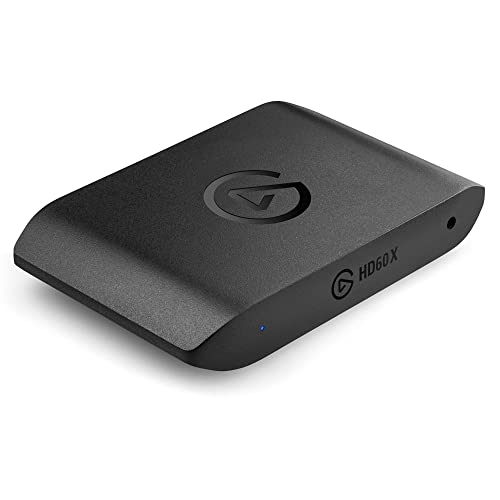
Streamline your gaming and content creation with the Elgato HD60 X Game Capture Card, designed for serious gamers and streamers who demand high-quality visuals. Capture and record stunning 1080p60 HDR10 or 4K30 with ultra-low latency, ensuring your gameplay looks amazing. This versatile card works seamlessly with consoles like PS5, Xbox Series X, and Nintendo Switch, as well as PCs and Macs. Plug and play setup means you’re ready to stream in no time. With support for popular software like OBS and Streamlabs, you can share your gaming moments effortlessly. Enjoy the quality and performance you deserve!
Best For: Serious gamers and content creators looking for high-quality streaming and recording capabilities.
Pros:
- Supports stunning 1080p60 HDR10 and 4K30 capture with ultra-low latency.
- Easy plug and play setup, compatible with various consoles and computers.
- Works seamlessly with popular streaming software like OBS and Streamlabs.
Cons:
- HDR capture at 1080p60 is only available on Windows systems.
- Requires a relatively powerful PC setup to meet system specifications.
- Limited return policy conditions may apply for non-defective products.
H265 MPEG4 HD Video Encoder for HDMI

For content creators looking to elevate their live broadcasts, the H265 MPEG4 HD Video Encoder for HDMI stands out with its support for multiple streaming protocols. You can stream simultaneously across four different outputs, including HTTP, RTSP, and RTMP(S). With customizable features, you can add static or scrolling text, logos, and adjust video parameters like resolution and bitrate. This encoder not only enhances image quality but also reduces bandwidth consumption, making it ideal for IPTV and diverse streaming platforms like YouTube and Twitch. Plus, you’ll benefit from free lifetime technical support and development resources for ongoing enhancements.
Best For: Content creators and broadcasters who need a versatile and high-quality video encoder for live streaming across multiple platforms.
Pros:
- Supports multiple streaming protocols, allowing simultaneous output of four video streams for diverse broadcasting needs.
- Customizable features enable the addition of text, logos, and adjustments to video parameters, enhancing the overall presentation.
- Includes free lifetime technical support and development resources, ensuring ongoing assistance and potential for enhancements.
Cons:
- Complexity of setup may require a learning curve for users unfamiliar with video encoding technology.
- Limited to HDMI input, which may not cater to all types of video sources depending on user needs.
- Potentially high cost compared to simpler streaming solutions, which might not be justified for casual users.
1080P60 HDMI Encoder for Live Streaming

Looking to elevate your live streaming game? The UNISHEEN 1080P60 HDMI Encoder is your go-to solution. This compact device supports various streaming protocols like SRT, RTMP, and HLS, making it perfect for platforms like YouTube and Twitch. With a maximum resolution of 1080P at 60fps, it offers crystal-clear video quality. You can enjoy dual video streams without needing a computer, and its customizable web-based interface simplifies setup. Plus, with a three-year warranty and 24/7 tech support, you’re covered. It’s no wonder it boasts a solid 4.3 out of 5-star rating from users. Why wait? Start streaming!
Best For: Streamers and content creators looking for a reliable, high-quality HDMI encoder for platforms like YouTube, Facebook, and Twitch.
Pros:
- Supports multiple streaming protocols including SRT, RTMP, and HLS for versatile live streaming options.
- Dual video stream capability allows for efficient broadcasting without the need for a computer.
- Compact design and customizable web interface make setup quick and user-friendly.
Cons:
- Prohibited from capturing DRM-protected video, limiting some content options.
- Weight may be slightly heavier than other portable encoders in the market.
- Limited to a maximum resolution of 1080P at 60fps, which may not satisfy users wanting higher resolutions.
4 Channel 4K Video Encoder for Live Broadcast

When it comes to live broadcasting, the ORIVISION 4 Channel 4K H.265 264 MJPEG HDMI Video Encoder stands out as an exceptional choice for content creators and professionals alike. With four HDMI input interfaces and support for simultaneous broadcasting to up to 16 platforms, you’ll reach a wide audience effortlessly. This encoder delivers stunning video quality, encoding up to 4K@30Hz on two channels and 1080P@60Hz on the others. It’s compatible with popular software like OBS and VLC, making setup a breeze. Plus, enjoy peace of mind with a three-year warranty and responsive technical support. Your live broadcasts will never look better!
Best For: Content creators and professionals seeking high-quality live broadcasting solutions with multi-platform support.
Pros:
- Supports simultaneous broadcasting to up to 16 platforms, expanding audience reach.
- Encodes stunning video quality with 4K@30Hz on two channels and 1080P@60Hz on two channels.
- Compatible with popular software like OBS and VLC, facilitating easy setup and integration.
Cons:
- Limited to 4 HDMI inputs, which may be restrictive for larger setups.
- Requires a stable internet connection for optimal performance across multiple platforms.
- Some users may find the configuration process complex if unfamiliar with video encoding technology.
Elgato Game Capture Neo – USB Portable Capture Card 4K60 HDR
The Elgato Game Capture Neo stands out as the ultimate choice for gamers who crave seamless 4K60 HDR passthrough while capturing gameplay in stunning 1080p60. You’ll effortlessly connect your console, gaming screen, and computer or iPad, ensuring broad compatibility with PS5, Xbox, and Nintendo Switch. Enjoy ultra-low latency sessions without any lag, so your gameplay remains smooth and responsive. The plug-and-play functionality makes setup a breeze, and you won’t face any watermarks or subscription fees. Plus, Elgato’s commitment to sustainability means the Neo Line is crafted responsibly, packaged with zero plastic, making it a smart choice for eco-conscious gamers.
Best For: Gamers looking for a high-quality capture card that offers 4K60 HDR passthrough and 1080p60 recording without lag or subscription fees.
Pros:
- Ultra-low latency for smooth and responsive gameplay sessions.
- Easy plug-and-play setup compatible with various consoles and applications.
- Eco-friendly design with zero plastic packaging, reflecting a commitment to sustainability.
Cons:
- Limited to 1080p60 recording, which may not satisfy those seeking higher resolution recording.
- May require additional software for advanced features and customization.
- USB connection may limit mobility compared to other capture card options.
H.265/264/MJPEG Ultra Mini HDMI 1080P Video Encoder

For content creators and live broadcasters seeking a compact and efficient solution, the H.265/264/MJPEG Ultra Mini HDMI 1080P Video Encoder stands out with its ultra mini design and impressive capabilities. Weighing just 200g and measuring 125x72x25mm, it’s perfect for tight setups. The upgraded EH1211 model adds USB and TF card ports for recording, plus custom cropping options. It supports multiple protocols like RTSP and RTMP, and works seamlessly with popular streaming platforms. With OSD settings for overlays and a 3-year warranty, you’ve got a reliable tool for high-quality streaming and broadcasting.
Best For: Content creators and live broadcasters looking for a compact and versatile video encoding solution for high-quality streaming.
Pros:
- Ultra mini design makes it suitable for limited installation spaces.
- Supports multiple streaming protocols ensuring compatibility with various platforms.
- Custom OSD settings allow for personalized overlays, enhancing branding and viewer engagement.
Cons:
- Only one channel can reach 1080P output at a time, limiting simultaneous streaming options.
- Previous model EH1201 cannot be upgraded via firmware, potentially leading to obsolescence.
- Limited to 1080P@30Hz maximum output resolution, which may not meet the needs of high-resolution content creators.
DDMALL Mini HDMI Video Encoder for Live Streaming

If you’re looking for a compact and efficient solution for live streaming, the DDMALL Mini HDMI Video Encoder stands out with its ultra-mini size and lightweight design, making it perfect for on-the-go content creators. Supporting up to 1080P60 HD input and 1080P30 output, it guarantees high-quality video across various devices like cameras and drones. With low power consumption and the ability to draw from HDMI sources or power banks, you can stream for hours without interruption. Plus, DDMALL LinkCloud allows remote control and dual-stream capabilities, letting you broadcast simultaneously on platforms like YouTube and Twitch effortlessly.
Best For: Content creators and live streamers who need a portable and efficient solution for high-quality video broadcasting.
Pros:
- Compact and lightweight design (75x32x22mm, 32g) for easy portability.
- Supports dual-stream output for simultaneous broadcasting on multiple platforms like YouTube and Twitch.
- Low power consumption (2.4W) allows for extended streaming without the need for frequent recharging.
Cons:
- Limited to 1080P30 output, which may not meet the needs of users seeking higher resolution streaming.
- Requires a stable HDMI source for optimal functionality, which may not always be available.
- Remote control and monitoring features may require an internet connection, limiting usability in offline scenarios.
HDMI H.265 H.264 Video Encoder for Live Broadcast

Designed for live broadcasters seeking a reliable solution, the HDMI H.265 H.264 Video Encoder excels with its ability to stream directly to popular platforms like YouTube and Facebook without needing a computer. It supports resolutions up to 1080P at 60FPS, though it outputs at 30FPS. With IP encoding and various protocols like RTMP and HLS, you can easily connect and configure your network. Weighing just 4.4 ounces and measuring 3.3 x 2.26 x 1 inches, it’s portable too. Plus, you’ll enjoy a 2-year warranty and lifelong technical support, ensuring you’re never left in the lurch.
Best For: Live broadcasters looking for an easy-to-use encoder that streams directly to major platforms without the need for a computer.
Pros:
- Supports multiple streaming protocols including RTMP and HLS for versatile connectivity.
- Compact and lightweight design makes it portable and easy to set up anywhere.
- Comes with a 2-year warranty and lifelong technical support for peace of mind.
Cons:
- Outputs at a maximum of 30 FPS despite supporting up to 60 FPS resolution.
- Customer rating of 3.5 out of 5 stars may indicate mixed satisfaction among users.
- May require network configuration adjustments for optimal performance.
Factors to Consider When Choosing a Hardware Video Encoder
When choosing a hardware video encoder, you should consider several key factors. Video quality standards, supported encoding formats, and compatibility with streaming protocols will greatly impact your results. Additionally, pay attention to input/output resolutions and overall latency for ideal performance.
Video Quality Standards
Choosing the right hardware video encoder hinges on understanding video quality standards, which directly influence the clarity and impact of your content. Start with resolution; 720p, 1080p, and 4K each offer different levels of detail. Frame rates are another critical factor; while 30fps provides smooth playback, 60fps enhances clarity in fast-paced scenes like gaming or sports. High Dynamic Range (HDR) is essential for richer colors and brightness, elevating your visuals beyond standard dynamic range (SDR). Additionally, consider bitrate—higher bitrates generally mean better quality, but they require more bandwidth. Finally, keep in mind encoding formats; H.265 (HEVC) is preferable for high-res streaming due to its superior compression and quality at lower bitrates.
Encoding Formats Supported
As you evaluate hardware video encoders, it’s essential to take into account the encoding formats they support, since this can greatly impact your content’s quality and compatibility. Look for encoders that support widely used formats like H.264, H.265, and MPEG4; these provide a great balance of quality and compression efficiency. It’s also important to guarantee the encoder can handle both standard and high-definition resolutions, with capabilities for 1080p and 4K encoding. If you aim to broadcast across multiple platforms, check for simultaneous output of multiple streams. Additionally, consider features like customizable overlays and text, which can enhance your branding and overall presentation. These factors will help you choose an encoder that meets your streaming needs effectively.
Streaming Protocols Compatibility
Selecting the right hardware video encoder goes beyond just encoding formats; it also hinges on streaming protocols compatibility. You’ll want an encoder that supports various protocols like RTMP, RTSP, SRT, and HLS to guarantee broader compatibility across platforms. Check if it can handle simultaneous output streams using different protocols; this flexibility allows for effective multi-platform streaming. It’s also crucial to take into account support for both traditional broadcasting protocols like UDP and modern streaming protocols for improved performance. Ensure your encoder integrates seamlessly with popular streaming services, which often require specific protocols for peak user experience. Finally, look for encoders that let you customize streaming protocols and settings to meet your unique broadcasting needs.
Input/Output Resolutions
When it comes to hardware video encoders, the maximum input and output resolutions play a crucial role in determining video quality. You’ll want an encoder that supports high input resolutions, like 4K@30fps, to capture the best possible video. However, if it only outputs at lower resolutions like 1080p60, your viewers might miss out on that quality. Some encoders allow for multiple resolution outputs simultaneously, making them perfect for multi-platform broadcasting. Confirm the encoder supports passthrough capabilities at your desired resolution to keep the original video quality intact during streaming. Finally, align your encoder choice with the specific resolution needs of the platforms you plan to stream to, as each has different video quality requirements.
Latency and Performance
Choosing the right hardware video encoder means considering both latency and performance, especially if you’re aiming for real-time streaming. Latency refers to the delay between capturing video and output, and for applications like gaming or live broadcasting, you’ll want options that provide sub-100ms delays. Performance also hinges on encoding formats—H.265 offers better compression and quality at lower bitrates than H.264, which can enhance streaming quality and reduce latency. Additionally, make sure the encoder supports high frame rates, such as 1080p at 60fps, for smooth playback. Hardware encoders typically deliver lower latency than software solutions due to dedicated processing. Finally, don’t overlook your network configuration, as bandwidth and protocols like RTMP or SRT can greatly impact overall performance.
Power and Connectivity Options
A variety of power and connectivity options can greatly impact your experience with hardware video encoders. When making your choice, consider the power options available, like Power over Ethernet (PoE), USB-C charging, or DC power adapters, to ascertain seamless compatibility with your setup. Opt for encoders that support long-distance power delivery, as some can operate effectively over distances of up to 100 meters with PoE. Also, evaluate connectivity options, including HDMI input and output, to guarantee compatibility with your video sources. It’s beneficial if the encoder can power external devices, such as PTZ cameras, through DC outputs, reducing the number of power supplies needed in your setup.
Size and Portability
Size and portability play essential roles in selecting a hardware video encoder, especially for those who frequently move their equipment. Compact models, often around 75x32x22mm and weighing as little as 32g, make live streaming on the go a breeze. If you need to set up in various locations, ultra-mini designs are perfect for tight spaces. A lightweight encoder can typically be powered by HDMI sources or mobile power banks, which adds to its convenience in remote setups. Plus, many encoders now offer cloud management features, allowing you to control and monitor your device from anywhere. This flexibility is invaluable for managing live streams seamlessly, ensuring you’re always ready to go, no matter where your next event takes you.
User Interface and Control
When selecting a hardware video encoder, the user interface and control options can greatly impact your streaming experience. A user-friendly web UI makes it easy to configure video settings, stream modes, and network parameters from any device, whether it’s a PC, tablet, or smartphone. With the ability to preview video and access a dashboard, you’ll get real-time feedback on your streaming status. Integration with popular software like OBS simplifies setup and stream management. Customizable settings, including overlays and audio controls, let you personalize your streams effectively. Plus, remote control and monitoring via cloud management systems enhance accessibility, allowing you to manage your streams conveniently from different locations. Prioritize these features to guarantee a smooth streaming experience.