
If you’re looking to elevate your live streaming game, the right encoder can make all the difference. With advancements in technology, 2025 promises a selection of encoders that deliver unmatched performance and reliability. From 4K UHD support to user-friendly interfaces, each option caters to various needs and environments. But how do you choose the perfect one? Let’s explore the top contenders that could redefine your broadcasting experience.
ZowieBox 4K HDMI Video Encoder/Decoder (NDI HX3 Certified)

If you’re a gamer looking to elevate your streaming game without the hassle of a complex setup, the ZowieBox 4K HDMI Video Encoder/Decoder (NDI HX3 Certified) is your ideal choice. This compact device streams console gameplay in stunning 4K with zero-lag passthrough, ensuring a seamless experience. It functions as either an encoder or decoder, delivering outstanding video quality with support for resolutions up to 4K@30fps. Plus, its web UI allows easy configuration from any device. With PoE and USB-C power options, you can keep your setup flexible and efficient. Say goodbye to complicated systems and hello to effortless streaming!
Best For: Gamers seeking an easy-to-use streaming solution that delivers high-quality video without the need for a complex setup.
Pros:
- Compact design with no impact on gameplay experience.
- Supports resolutions up to 4K@30fps and 1080p@60fps for exceptional video quality.
- Easy configuration and control via web UI from multiple devices.
Cons:
- Can only function as either an encoder or decoder, not both at the same time.
- Does not support full NDI signals, limiting some streaming capabilities.
- Requires external power sources, which may complicate setup for some users.
1080P HDMI Encoder for Live Streaming

The UNISHEEN 1080P60 HDMI Encoder is an excellent choice for content creators looking to deliver high-quality live streams on platforms like YouTube, Facebook, and Twitch. With its maximum resolution of 1080P at 60 frames per second, you’ll enjoy sharp visuals. It supports multiple encoding formats, including H.265 and H.264, ensuring versatility for your streaming needs. You can broadcast dual video streams without needing a computer, making it incredibly convenient. Plus, with a customizable IP address and 24/7 tech support, you’re covered. Overall, the UNISHEEN encoder combines performance and ease of use, perfect for any live streaming enthusiast.
Best For: Content creators and live streamers looking for a high-quality, user-friendly HDMI encoder for platforms like YouTube, Facebook, and Twitch.
Pros:
- Supports multiple encoding formats (H.265 and H.264) for versatile streaming options.
- Can broadcast dual video streams without the need for a computer, enhancing convenience.
- Comes with 24/7 tech support and a 3-year limited warranty, ensuring peace of mind for users.
Cons:
- Limited to 1080P resolution, which may not satisfy those seeking higher resolutions.
- Prohibited from capturing DRM-protected video, which limits content options for some users.
- Relatively small customer base with only 31 reviews, making it harder to gauge long-term reliability.
YoloLiv YoloBox Ultra Live Streaming Equipment

For content creators looking for versatility in their live streaming setup, the YoloLiv YoloBox Ultra stands out with its ability to switch between horizontal and vertical streaming modes. Weighing just 2.2 pounds, this compact device supports up to three horizontal and two vertical destinations simultaneously. With 4K HD broadcasting capabilities and robust connectivity options like 4G LTE and WiFi, you’ll enjoy high-quality streams on platforms like Facebook, YouTube, and TikTok. Advanced features like NDI integration and cellular bonding guarantee minimal latency and uninterrupted streaming. Plus, ISO recordings give you control over post-production, making it a top choice for creators.
Best For: Content creators seeking a versatile live streaming solution that supports both horizontal and vertical formats.
Pros:
- Supports simultaneous streaming to multiple platforms, enhancing audience reach.
- Features high-quality 4K HD broadcasting for professional-grade streams.
- Advanced connectivity options, including cellular bonding, ensure reliable streaming in various conditions.
Cons:
- Additional charges may apply for advanced features like NDI integration and cellular bonding.
- Simultaneous streaming in both horizontal and vertical modes is not supported.
- Some users may find the price point higher compared to basic streaming equipment.
Solo Wireless Live Video Streaming Encoder

Looking to elevate your live streaming game? The Solo Wireless Live Video Streaming Encoder’s got you covered. This portable device streams HD video seamlessly to platforms like Facebook Live, YouTube, and Twitch. With H.264 AVC support, you can choose resolutions up to 1080p at various frame rates. It bonds up to four network links, including two 4G LTE modems, WiFi, and Ethernet, ensuring a stable connection. Plus, its internal rechargeable battery offers three hours of continuous streaming. Just remember, USB modems aren’t included, so check out Solo Connect for your modem and data needs.
Best For: Content creators and live streamers looking for a portable solution to broadcast HD video to various online platforms.
Pros:
- High-quality video streaming with support for multiple resolutions up to 1080p.
- Flexible network connectivity with the ability to bond up to four links for a reliable stream.
- Internal rechargeable battery provides up to three hours of continuous operation.
Cons:
- USB modems are not included, requiring additional purchases for connectivity.
- Limited battery life may restrict longer streaming sessions without external power.
- May require some technical expertise to set up and optimize network bonding.
HEVC H.265 H.264 SD HD to IP Encoder for Live Streaming

If you’re a content creator aiming for high-quality live streams, the URayCoder encoder stands out with its support for HEVC H.265 and H.264 formats. This versatile device lets you stream in SD and HD, compatible with platforms like YouTube, Twitch, and Facebook. You can simultaneously output up to four video streams using various protocols, optimizing bandwidth and enhancing image quality. Customize your streams with text, logos, and timestamps while adjusting resolution and bitrate. Plus, URayCoder offers free lifetime tech support and extensive documentation for development, ensuring you have reliable performance for all your live streaming needs.
Best For: Content creators and live streamers looking for a versatile and high-quality video encoding solution for multiple platforms.
Pros:
- Supports HEVC H.265 and H.264 formats, providing flexibility in streaming.
- Simultaneous output of up to four video streams using various protocols, optimizing bandwidth.
- Customization options for adding text, logos, and adjusting video settings enhance viewer engagement.
Cons:
- The range of customization features may require a learning curve for new users.
- Dependency on internet bandwidth can affect streaming quality, despite optimization features.
- Initial setup may be complex for those unfamiliar with video encoding technology.
H265 H264 4K HDMI Video Streaming Encoder for Live Broadcast
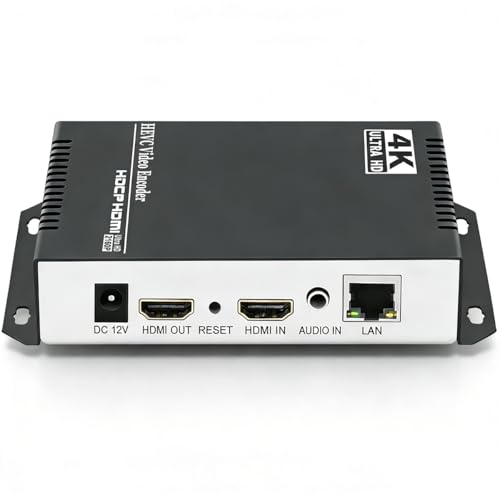
The H265 H264 4K HDMI Video Streaming Encoder is ideal for content creators and broadcasters who demand high-quality video output without sacrificing performance. With support for platforms like YouTube, Twitch, and Vimeo, you can easily reach your audience. This encoder allows four simultaneous video streams using various protocols, ensuring flexibility. Customize your broadcasts by adding logos, text, and adjusting video parameters like resolution and frame rate. You’ll enjoy stunning 4K UHD quality with a maximum resolution of 3840×2160 and 30fps for peak clarity. Plus, you’ll get free lifetime tech support, making it a smart investment for your streaming needs.
Best For: Content creators and broadcasters who require high-quality video output for live streaming on various platforms.
Pros:
- Supports up to four simultaneous video streams with various streaming protocols for flexibility.
- High-quality 4K UHD video output with a maximum resolution of 3840×2160 and adjustable frame rates.
- Customization options available for logos, text, and video parameters, along with free lifetime tech support.
Cons:
- The maximum frame rate is limited to 30fps for 4K resolution, which may not suffice for all applications.
- Requires a stable and high-bandwidth internet connection for optimal performance.
- Initial setup and customization may require technical knowledge for users unfamiliar with streaming technology.
ZowieBox 3G SDI IP Video Streaming Encoder Decoder

For media professionals seeking a seamless solution to enhance their production workflows, the ZowieBox 3G SDI IP Video Streaming Encoder Decoder stands out with its ability to convert SDI to NDI and vice versa. It decodes AVoIP streams like RTMP and RTSP into NDI, integrating various video sources effortlessly. With its compact design, it enables standalone streaming without straining your computer. Plus, you can control everything via the ZowieUI app on your devices. Power options like PoE and USB-C guarantee flexibility, making it perfect for on-the-go setups. Just remember, it can’t work as both an encoder and decoder at the same time.
Best For: Media professionals looking for an efficient and compact solution to enhance their video production workflows with SDI and NDI capabilities.
Pros:
- Supports seamless conversion between SDI and NDI formats, enhancing integration of diverse video sources.
- Compact design allows for standalone streaming without impacting computer performance.
- Flexible power options (PoE and USB-C) make it suitable for mobile setups.
Cons:
- Cannot function as both an encoder and decoder simultaneously.
- Limited to NDI|HX formats; does not support full NDI (NDI|HB).
- Compatibility issues with certain older hardware models, such as ATOMAS SHOGUN and Blackmagic Decklink Quad 2.
H265 HDMI Video Encoder for Live Streaming

Looking to elevate your live broadcasts? The H265 HDMI Video Encoder is your go-to solution. Supporting H.265, H.264, and MPEG4 formats, it delivers stunning HD 1080P quality across platforms like YouTube and Twitch. You can simultaneously stream four video feeds with varying protocols, enhancing your flexibility. Plus, you’ve got customization options—add text, logos, or adjust resolution and bitrate to suit your needs. With free lifetime technical support and development tools available, you’re set for success. This encoder not only improves image quality but also minimizes bandwidth consumption, making it perfect for IPTV and live streaming applications.
Best For: Content creators, broadcasters, and IPTV providers looking for high-quality live streaming solutions with customizable features.
Pros:
- Supports multiple streaming formats and protocols, allowing flexibility in broadcasting.
- High-definition output with options for customization, including text and logo overlays.
- Free lifetime technical support and development tools provided for ease of use and adaptation.
Cons:
- May have a steeper learning curve for users unfamiliar with video encoding technology.
- The need for robust internet bandwidth to fully utilize its capabilities.
- Higher initial investment compared to basic encoders.
15.6″ All-in-One Video Switcher Monitor Encoder Recorder

Experience seamless live broadcasting with the 15.6″ All-in-One Video Switcher Monitor Encoder Recorder, perfect for content creators who demand portability without sacrificing performance. With a vibrant 15.6-inch touchscreen and a 60Hz refresh rate, you’ll enjoy stunning image quality and real-time previews of multiple inputs. It supports up to 10 video inputs, ensuring you’re covered for any event. The powerful CPU enables smooth streaming to platforms like YouTube Live and Facebook Live. Plus, ISO recording options and various editing tools enhance your post-production process. This versatile device is ideal for everything from weddings to sports events, making it a must-have for professionals.
Best For: Content creators and professionals seeking a portable, high-performance solution for live broadcasting and video production.
Pros:
- Supports up to 10 video inputs, offering flexibility for various events.
- High-quality streaming with H.264 & H.265 encoding, ensuring smooth performance on popular platforms.
- Versatile applications, suitable for weddings, sports events, education, and more.
Cons:
- Plug-in use only may limit mobility compared to battery-operated devices.
- Higher upfront cost compared to basic video switchers or monitors.
- Learning curve for users unfamiliar with advanced video production equipment.
YoLoLiv YoloBox Mini Portable Multi-Camera Live Streaming Equipment

The YoLoLiv YoloBox Mini is an ideal choice for solo creators and mobile production teams seeking portable, all-in-one live streaming solutions. This compact device combines an encoder, monitor, switcher, and recorder, making it easy to stream to platforms like Facebook, YouTube, and Twitch. With a 5.5-inch touchscreen interface, you can switch live, add graphics, and monitor audio effortlessly. Plus, its flexibility in connectivity—supporting 4G LTE, WiFi, and Ethernet—ensures reliable streaming. Weighing just 11.3 ounces and with a built-in battery lasting up to 3 hours, it’s perfect for on-the-go productions. Enjoy flawless broadcasts with the YoloBox Mini!
Best For: Solo creators and mobile production teams looking for a portable, all-in-one live streaming solution.
Pros:
- Compact and lightweight design allows for easy transport and setup.
- Multi-platform streaming capability enables broadcasting to various platforms simultaneously.
- User-friendly touchscreen interface simplifies live switching and audio monitoring.
Cons:
- Limited battery life of 3 hours may not be sufficient for longer events.
- Average customer rating of 3.8 out of 5 stars indicates mixed user satisfaction.
- Best Sellers Rank suggests it may not be as widely recognized as other streaming devices.
Factors to Consider When Choosing a Live Streaming Encoder
When choosing a live streaming encoder, you need to think about several key factors. Consider your video quality requirements, supported streaming protocols, and the encoding features that best suit your needs. Don’t forget to evaluate the connectivity options and the portability of the device to guarantee it fits your streaming setup.
Video Quality Requirements
Choosing the right live streaming encoder involves several key video quality requirements that can make or break your broadcast. First, consider the maximum resolution; options range from 1080p to 4K UHD, affecting clarity and detail. Next, pay attention to frame rates—30fps is standard, but 60fps offers smoother playback, especially for fast-paced content. Compression standards like H.264 and H.265 are crucial for balancing quality and file size, with H.265 providing better efficiency at lower bitrates. Additionally, the ability to output multiple video streams enhances versatility, catering to various platforms. Finally, higher bitrate settings yield better quality but demand more bandwidth, so factor in your network capacity to guarantee a seamless streaming experience.
Supported Streaming Protocols
Supported streaming protocols play a pivotal role in guaranteeing your live broadcast reaches its audience without a hitch. When choosing a live streaming encoder, check for compatibility with protocols like RTMP, SRT, RTSP, HLS, and UDP to guarantee seamless integration with your preferred platforms. Some encoders support multiple protocols simultaneously, offering flexible broadcasting options and improved redundancy during network issues. Additionally, customizing streaming protocols can enhance video quality and optimize bandwidth usage, making this feature essential. If you’re focused on real-time applications, look for encoders that include low-latency options like NDI. Understanding the supported protocols helps you determine the encoder’s capability to stream effectively to various platforms, including social media and dedicated streaming services.
Encoding and Decoding Features
Encoding and decoding features are crucial factors that can make or break your live streaming experience. When choosing a live streaming encoder, consider the maximum resolution and frame rate it supports, like 4K at 30fps or 1080p at 60fps, to achieve high-quality output. It’s essential to find encoders that handle multiple formats, such as H.264 and H.265, for flexibility and efficient compression. Evaluate whether the device can encode or decode signals, as some only perform one function, affecting your workflow. Support for various streaming protocols, including RTMP, RTSP, and SRT, enhances compatibility with platforms. Finally, look for customization options, like overlays and dynamic text, to boost viewer engagement and branding during your broadcasts.
Connectivity Options
When selecting a live streaming encoder, it is essential to evaluate the various connectivity options available to guarantee a seamless broadcasting experience. Verify the encoder supports multiple options like Ethernet, WiFi, and 4G LTE for reliable streaming in different environments. Look for devices that allow simultaneous bonding of multiple network links, such as cellular and WiFi, to enhance stability and reduce downtime. Consider encoders with customizable default IP addresses for easier integration within your local network. Additionally, select encoders that support various streaming protocols, like RTMP, SRT, and RTSP, to maximize compatibility with different platforms. Finally, evaluate power supply options, such as internal batteries or Power over Ethernet (PoE), to guarantee flexibility during live streaming events.
Portability and Size
Portability and size play an essential role in the effectiveness of live streaming encoders, especially for creators on the move. If you frequently transport your equipment, you’ll want lightweight designs that fit easily in your bag. Smaller encoders, often palm-sized, are perfect for mobile productions, allowing for quick setup in diverse locations. Consider battery-powered options to stream anywhere without needing a power source, especially in remote areas. Compact encoders also tend to combine multiple functions like switching and recording, reducing the gear you carry. Remember, the weight and dimensions can impact usability during events, so lighter, more compact models will help you stay comfortable during extended use without fatigue. Choose wisely for a seamless streaming experience!
User Interface Ease
Choosing a live streaming encoder with a user-friendly interface can make all the difference in your broadcasting experience. A straightforward design allows you to make quick adjustments and seamless shifts during your streams. Touchscreen interfaces are becoming more common, providing intuitive control and real-time monitoring of multiple input sources with accuracy. Look for customizable dashboards and web-based controls that let you manage video and audio settings from various devices. Integrated features like overlays and instant replay enhance audience engagement and professionalism. Plus, an easy-to-navigate interface reduces the learning curve for new users, letting you focus on creating great content instead of wrestling with complicated technology. Prioritizing user interface ease is essential for a smooth streaming experience.
Power Supply Solutions
While you might focus on features like video quality and user interface, the power supply solutions for your live streaming encoder are equally important. You’ll find options like Power over Ethernet (PoE), USB-C chargers, power banks, or DC adapters, which offer flexibility depending on your environment. Some encoders even come with internal rechargeable batteries, allowing for portable use and several hours of streaming without external power. Additionally, encoders that can power external devices, such as cameras, can enhance your setup. Choosing the right power supply impacts portability and convenience, making it easier for both stationary and mobile applications. By considering your power requirements, you can guarantee uninterrupted streaming quality and operational reliability during your broadcasts.