
Mobile recording works best when everyone who needs to monitor the session can hear a clean, consistent signal. The right splitter can let two listeners share one output, while a powered headphone amplifier can support larger groups without sacrificing volume control.
These 10 options cover simple 3.5mm Y-cables, multi-output amplifiers, and USB-C adapters. Before choosing, confirm your phone’s connector, headphone wiring, microphone requirements, and how many people need to monitor at once.
Best 10 Headphone Splitters for Mobile Recording Picks for 2026
Best Compact Cable
Syncwire 3.5mm Nylon-Braided Y Splitter

- Splits one 3.5mm source to two outputs
- Gold-plated connectors and double shielding
- Nylon braid rated for 15,000+ bends
Best For: Portable two-person listening and basic mobile monitoring
Best for Four-Listener Monitoring
FIFINE N6 4-Channel Headphone Amplifier
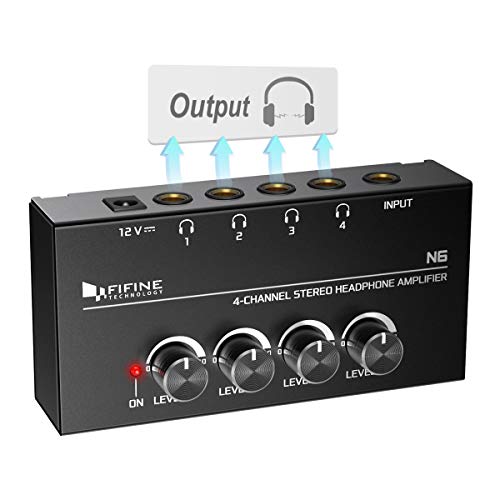
- Drives four headphone outputs from one source
- Independent volume control for each channel
- Metal build with included 12V adapter
Best For: Small recording teams sharing one stereo monitor feed
Best Budget Sharing Cable
JSAUX 3.5mm Two-Headphone Splitter
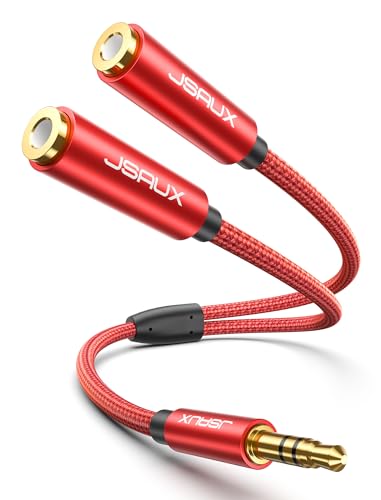
- Splits one 3.5mm jack into two
- Braided cable with 15,000+ bend lifespan
- Compact 0.9-foot travel-friendly design
Best For: Simple two-person listening from a phone or tablet
Best Feature-Rich Amp
LZSIG 4-Channel Headphone Amplifier
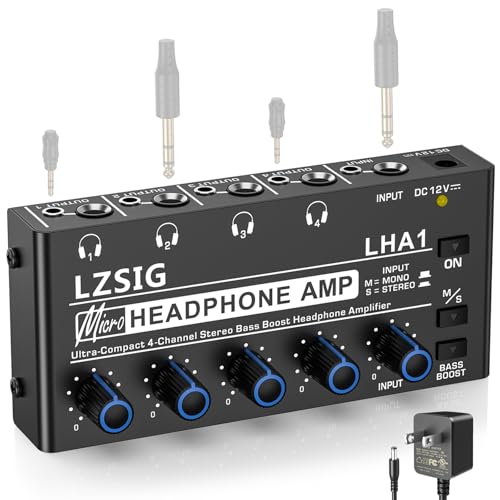
- Four outputs with independent level controls
- Accepts 3.5mm and 6.35mm connections
- Adds bass boost and stereo/mono switching
Best For: Flexible multi-person studio and stage monitoring
Best for Group Sharing
ONXE 1-to-4 Headphone Splitter
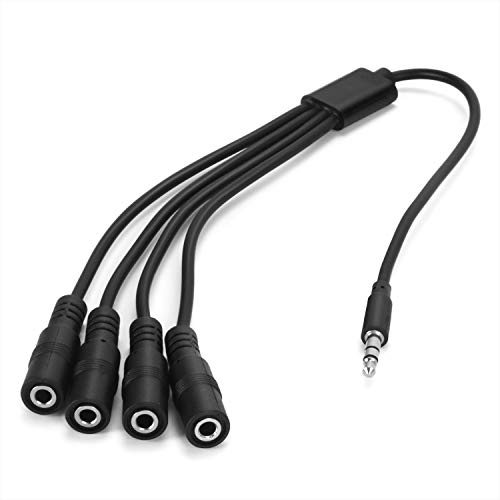
- One 3.5mm input feeds four outputs
- Designed for shared music, movies, and games
- Lightweight, tangle-free cable
Best For: Sharing audio with several listeners
Best for PC Headset Connections
UGREEN TRRS-to-Dual-TRS Splitter
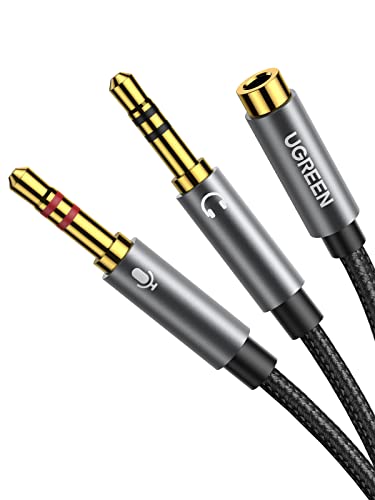
- Separates headset audio and microphone plugs
- Made for compatible CTIA TRRS headsets
- Braided 20 cm cable with alloy housing
Best For: Connecting headsets to separate PC audio and mic jacks
Best Compact Two-Way Option
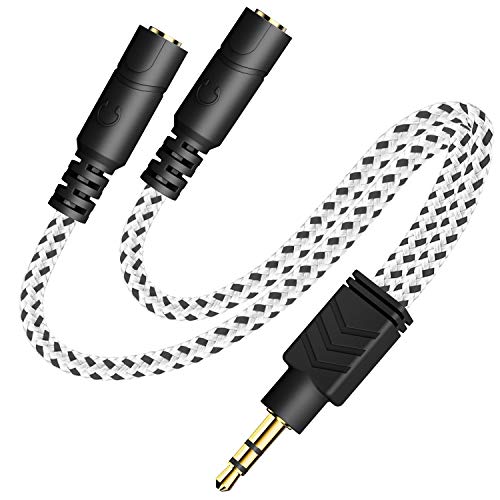
- Splits one stereo jack into two outputs
- Slim 20 cm braided cable fits many cases
- Supports headphones and external speakers
Best For: Portable two-person audio sharing
Simple Audio Sharing
ienza 3.5mm Headphone Splitter

- One 3.5mm input feeds two outputs
- Compact TRS design for travel
- Audio splitting only; mic is not split
Best For: Sharing stereo audio from laptops or smartphones
Studio Multi-User Pick
10-Channel Headphone Amplifier

- Offers 10 individual headphone outputs
- Separate volume control per channel
- Includes cable and 12V power adapter
Best For: Group monitoring in recording studios and stage setups
USB-C Device Choice
Elebase Dual 3.5mm USB-C Adapter

- Creates two 3.5mm ports from USB-C
- Built-in DAC supports shared playback
- TRRS port supports mic and inline controls
Best For: Sharing audio from compatible USB-C mobile devices
Best Compact Cable – Syncwire 3.5mm Nylon-Braided Y Splitter
For simple headphone splitters for mobile recording setups with a standard 3.5mm output, the Syncwire Y cable is a compact, cable-only option. It sends stereo audio from one compatible device to two headphones or speakers, making it useful for shared monitoring and playback.
Best For: Mobile users who need a lightweight 3.5mm splitter for two listening outputs.
Pros:
- Works with compatible phones, tablets, laptops, music players, and other 3.5mm devices.
- Gold-plated connectors and double shielding are designed to support clean stereo transmission.
- Nylon-braided construction is rated for at least 15,000 90-degree bends.
- Compact design and slim connector suit travel and many device cases.
Cons:
- Requires a device with a standard 3.5mm headphone jack.
- Provides two outputs but no independent volume controls or amplification.
- The connector may not fit LifeProof cases.
The Syncwire is a practical choice when portability and cable durability matter more than advanced monitoring controls. It is best for straightforward two-person listening rather than a multi-headphone recording station.
Best for Four-Listener Monitoring – FIFINE N6 4-Channel Headphone Amplifier
For headphone splitters for mobile recording that need to serve more than two listeners, the FIFINE N6 uses an amplified distribution design. It accepts one source and provides four separate 1/4-inch stereo outputs, each with its own volume control.
Best For: Recording teams or studio setups where up to four people need independent headphone levels.
Pros:
- Provides four outputs from one stereo source without reported signal loss when all are connected.
- Independent volume knobs allow each listener to adjust their level.
- Compact metal construction is suited to studio and stage use.
- Includes a 12V DC power adapter and power indicator light.
Cons:
- All input and output ports are 6.35mm, so mobile devices and smaller headphones may require suitable cables or adapters.
- The required TRS/TS connection cables are not included.
- It is a distribution amplifier, not a mixer with four inputs and one output.
The N6 is substantially more capable than a passive Y splitter for group monitoring, but its quarter-inch connections and power requirement make it less grab-and-go for phone-based recording. Confirm your cable and adapter needs before choosing it for a mobile rig.
Best Budget Sharing Cable – JSAUX 3.5mm Two-Headphone Splitter
The JSAUX splitter is a straightforward option for headphone splitters for mobile recording when two people need to hear the same phone, tablet, or music player. Its 3.5mm male-to-dual-female design carries stereo audio to two compatible headphones or speakers.
Best For: Casual two-person audio sharing from smartphones and other 3.5mm devices.
Pros:
- Converts one 3.5mm jack into two 3.5mm headphone connections.
- Gold-plated connectors and oxygen-free copper wire are intended to reduce interference.
- Double-braided nylon exterior supports a stated 15,000-plus bend lifespan.
- Short, lightweight 0.9-foot design is convenient for travel.
Cons:
- Cannot be used with microphones.
- Has no amplification or separate volume controls.
- Requires a compatible 3.5mm audio jack or appropriate adapter.
Choose the JSAUX when you want an inexpensive, compact cable for shared listening and do not need microphone support. For recording workflows involving microphones or multiple controlled monitor feeds, a powered amplifier is a better fit.
Best Feature-Rich Amp – LZSIG 4-Channel Headphone Amplifier
For headphone splitters for mobile recording that need flexible connections and stronger monitoring control, the LZSIG 4-channel amplifier provides one input and four independently controlled outputs. It supports both 3.5mm and 6.35mm plugs and adds a selectable bass-boost function.
Best For: Home-studio or stage monitoring with up to four listeners and mixed-size headphone connections.
Pros:
- Supports 3.5mm and 6.35mm TS/TRS connections for broad device compatibility.
- Four outputs include independent level controls.
- Designed for ultra-low-noise stereo distribution and supports headphones rated from 32 to 100 ohms.
- Metal chassis, bass boost, and stereo/mono switching add flexibility for studio use.
Cons:
- It is a 1-in/4-out headphone amplifier, not a mixer.
- Requires 12V power, making it less convenient than a passive mobile cable.
- The supplied notes do not specify the included input or output cables.
The LZSIG is the most versatile choice here for a shared monitoring setup, especially when users have different connector sizes. Its power requirement and larger feature set make it better suited to a home studio or mobile recording kit than casual phone listening.
Best for Group Sharing – ONXE 1-to-4 Headphone Splitter
For shoppers comparing headphone splitters for mobile recording and casual listening, the ONXE is built around one 3.5mm male plug and four female outputs. It is a practical choice when several listeners need to share audio from a compatible phone, music player, laptop, or other device.
Best For: Sharing music, movies, or games with up to four pairs of headphones or speakers.
Pros:
- Provides one input and four 3.5mm female outputs for group listening.
- Works with MP3 players, portable DVD players, phones, laptops, PCs, and speakers.
- Lightweight at about 20 g and designed for tangle-free use.
- Supports sharing music, movies, and games without requiring software.
Cons:
- Its four-output design is more than needed for two-person listening.
- Compatibility depends on the source device having a suitable 3.5mm audio connection.
The ONXE stands out when the priority is maximum listener capacity in a simple, compact cable. It is less targeted at microphone recording or PC headset conversion than at distributing one audio signal to several listeners.
Best for PC Headset Connections – UGREEN TRRS-to-Dual-TRS Splitter
Among headphone splitters for mobile recording, the UGREEN is a specialized option for connecting a compatible four-pole headset to a computer with separate headphone and microphone jacks. Its short braided cable and CTIA-focused design suit voice chat, online classes, meetings, and gaming setups.
Best For: Connecting a CTIA-compatible TRRS headset to legacy PCs or laptops with separate audio and microphone ports.
Pros:
- Splits a 3.5mm headset connection into separate headphone and microphone plugs.
- Supports compatible CTIA headsets for calls, gaming, classes, and meetings.
- Uses gold-plated connectors, an aluminum-alloy casing, and a braided jacket.
- Compact 20 cm cable is easy to carry.
Cons:
- It is not a standard male-to-two-female headphone-sharing splitter.
- Microphone functionality requires a CTIA-compliant TRRS cable.
- It is incompatible with CTIA-standard Apple Earbuds and Beats headphones according to the supplied notes.
This UGREEN adapter is the most purpose-built choice here for headset microphone connectivity rather than sharing audio between two listeners. Confirm your headset standard and computer jack layout before buying.
Best Compact Two-Way Option – DUKABEL 3.5mm Stereo Splitter
For simple headphone splitters for mobile recording and everyday listening, the DUKABEL provides two outputs from one 3.5mm stereo connection. Its slim 20 cm braided cable is designed to fit around phones and tablets, including many cases, while supporting headphones or external speakers.
Best For: Two-person audio sharing from phones, tablets, MP3 players, computers, TVs, or stereos with a 3.5mm jack.
Pros:
- Connects two pairs of headphones or earphones to one 3.5mm source.
- Also supports connecting two external speakers for shared audio use.
- Slim form fits inside most tablet and cell phone cases.
- Braided cable, oxygen-free copper conductor, and gold-plated jack are designed for durability and audio transmission.
Cons:
- Offers two outputs rather than the four provided by the ONXE splitter.
- Designed for stereo audio sharing, not headset microphone separation.
The DUKABEL is a straightforward pick for two listeners who want a compact cable that is easy to carry with a mobile device. Its case-friendly shape makes it particularly convenient for phones and tablets with standard 3.5mm ports.
Simple Audio Sharing – ienza 3.5mm Headphone Splitter
For straightforward headphone splitters for mobile recording or shared listening, the ienza splitter connects one 3.5mm audio output to two headphones or speakers. Its compact TRS design suits travel and compatible laptops and smartphones.
Best For: Sharing stereo audio from a device with one 3.5mm jack.
Pros:
- Connects two headphones or speakers to one 3.5mm audio jack.
- Uses one male and two female 3.5mm TRS connectors.
- Compact option for travel, laptops, and smartphones.
Cons:
- Splits audio only; it does not split the microphone signal.
- Designed for 3.5mm TRS connections rather than USB-C devices.
This is a basic, travel-friendly choice when you only need to share stereo playback. Recording setups that require microphone or inline-control support should use a different adapter.
Studio Multi-User Pick – 10-Channel Headphone Amplifier
For headphone splitters for mobile recording that need more than two listeners, this powered distributor provides up to 10 individual headphone outputs. It accepts a 3.5mm stereo input, includes a cable and power adapter, and gives each channel its own volume control.
Best For: Recording studios, stage setups, and group monitoring with multiple headphones.
Pros:
- Supports up to 10 individual headphone outputs.
- Provides separate volume control for every output channel.
- Includes a 3.5mm audio cable and 12V DC 1A power adapter.
- Works with 3.5mm headphones and 6.35mm headphones when an adapter is used.
Cons:
- Requires a 12V power supply, so it is less portable than a passive splitter.
- Its larger studio-oriented design is unnecessary for simple two-person listening.
- 6.35mm headphones require an adapter.
This is the most capable option for shared monitoring in a recording or performance environment. Its powered design and per-channel controls are useful for groups, but excessive for a lightweight mobile setup.
USB-C Device Choice – Elebase Dual 3.5mm USB-C Adapter
For headphone splitters for mobile recording on newer devices, the Elebase adapter converts one USB-C port into two 3.5mm audio ports. Its built-in DAC supports audio playback through both ports, while one TRRS port supports a microphone and inline controls.
Best For: Sharing audio from compatible USB-C phones, tablets, and computers.
Pros:
- Converts one USB-C port into two 3.5mm AUX ports.
- Built-in DAC is designed for clear audio playback through both outputs.
- One TRRS port supports microphone and inline controls.
- Nylon braiding, aluminum housing, and reinforced joints support everyday handling.
Cons:
- Only the TRRS port supports microphone and inline controls.
- TRS headphones are not supported in the TRRS port.
- Compatibility depends on a USB-C device supporting digital audio.
This adapter is a practical fit when a mobile recording device lacks a 3.5mm jack but supports USB-C audio. Check the port requirements and headphone type carefully, especially if microphone or button functionality matters.
How We Picked the Best Headphone Splitters for Mobile Recording
We organized this roundup around practical recording needs rather than output count alone. The selection includes passive splitters for quick two-person monitoring, powered headphone amplifiers for interviews or small productions, and a USB-C adapter for phones without a traditional headphone jack. We also considered connector compatibility, stereo support, portability, construction, controls, and whether the design is intended for headphones rather than microphones.
Keep in mind that a passive splitter sends the same signal to every connected listener. It does not independently amplify each output, add separate volume controls, or automatically combine microphone inputs.
Quick Comparison
| Type | Best For | Main Advantage | Watch For |
|---|---|---|---|
| Passive 1-to-2 splitter | Two-person monitoring | Small, inexpensive, no power required | Shared volume and possible level drop |
| Multi-output amplifier | Groups and production teams | More outputs and stronger drive | Requires external power and more setup |
| USB-C audio adapter | Modern phones and tablets | Connects to USB-C devices | Device compatibility and microphone support vary |
Key Buying Factors for Headphone Splitters for Mobile Recording
Connector and Device Compatibility
Check whether your phone uses 3.5mm audio, USB-C, or an adapter. A 3.5mm TRS splitter is generally designed for stereo headphone output. Phones with USB-C may require an adapter that supports audio output, and some devices may not recognize every USB-C accessory.
Number of Listeners and Power
Choose a basic Y-cable for one extra listener. For three or more people, a powered amplifier is usually more practical because it can provide higher output and, on many models, individual volume adjustment. Confirm the amplifier’s input and output format before buying.
Microphone and TRRS Support
Many headphone splitters are audio-only. If your recording setup uses a headset microphone, a standard stereo TRS splitter may not pass the microphone signal correctly. Look for explicit TRRS, microphone, or headset compatibility, and verify the phone’s recording app and adapter requirements.
Portability and Durability
For field recording, prioritize short cables, strain relief, flexible jackets, and compact construction. Braided cables can resist everyday tangles, while desktop amplifiers are better suited to a fixed interview, podcast, or studio setup.
Who Should Buy Which Headphone Splitters for Mobile Recording?
- Solo creators adding one listener: Choose a compact passive 1-to-2 splitter for the simplest setup.
- Two-person interviews: Select a stereo splitter with sturdy connectors, but verify whether both headphones have compatible plugs and whether a microphone is involved.
- Podcasters and small production teams: Use a powered multi-channel headphone amplifier when several people need dependable monitoring.
- Creators with USB-C phones: Choose a compatible USB-C audio adapter, then confirm whether it supports your headphones, microphone, and recording app.
- Traveling mobile recordists: Favor a lightweight, passive cable and carry any required phone adapter separately.