
When you’re looking for superior sound quality, small diaphragm condenser microphones can make a significant difference in your recordings. These compact tools offer clarity and precision, ideal for capturing everything from vocals to acoustic instruments. Each model brings unique features to the table, ensuring there’s something for every recording scenario. Let’s explore the options that stand out in the market and what factors you should consider before making a choice.
Neewer 2-Pack Pencil Stick Condenser Microphone for Acoustic Instruments
If you’re a musician or sound engineer looking for versatility in your recordings, the Neewer 2-Pack Pencil Stick Condenser Microphone is an excellent choice. With interchangeable omni, cardioid, and super cardioid capsules, you can adapt to any recording situation. Whether you’re capturing studio vocals, acoustic instruments, or live performances, these mics deliver clarity and nuance. The included accessories, like the 5/8-inch mic clip and foam windscreen, guarantee secure positioning and minimize air interference. Plus, the durable foam padded aluminum case makes transport and setup a breeze. This microphone set is your go-to for professional sound quality in any environment.
Best For: Musicians, sound engineers, and recording professionals seeking versatile and high-quality microphones for various recording applications.
Pros:
- Versatile with interchangeable capsules for different recording situations (omni, cardioid, super cardioid).
- Ideal for a wide range of applications, including studio vocals, acoustic instruments, and live performances.
- Durable foam padded aluminum case for protection and easy transport.
Cons:
- May require additional equipment for optimal performance in certain settings.
- Foam windscreen may not completely eliminate all air interference in windy conditions.
- The compact design may not be suitable for all users, especially those who prefer larger microphones.
TAKSTAR Condenser Microphone for Recording (CM-60)
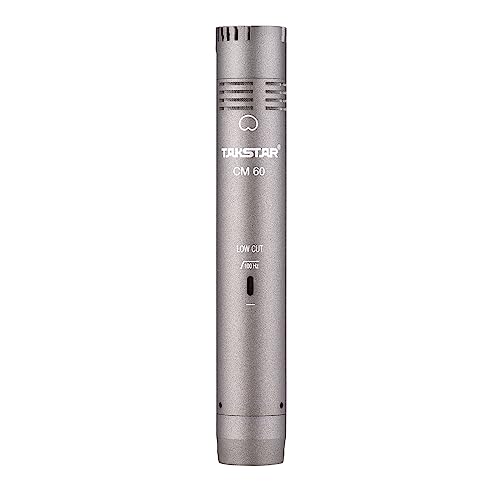
The TAKSTAR CM-60 condenser microphone stands out as an excellent choice for musicians, podcasters, and content creators seeking high-quality recordings. With its gold-plated diaphragm and cardioid design, it captures pure sound, making it perfect for singing, interviews, and broadcasts. You’ll appreciate its impressive sensitivity of -38dB and wide frequency response from 30Hz to 18kHz. The low output impedance enables long-distance connections without interference, while the included windscreen enhances sound quality. Rated 4.7 out of 5 stars, the CM-60 also comes with a one-year warranty and falls under Amazon’s 30-Day Return Guarantee, ensuring your satisfaction.
Best For: Musicians, podcasters, and content creators seeking high-quality recordings with excellent sound clarity.
Pros:
- High sensitivity and wide frequency response for capturing detailed audio.
- Low output impedance allows for long-distance connections without interference.
- Includes a windscreen to enhance sound quality and reduce unwanted noise.
Cons:
- Corded design may limit mobility during use.
- Requires an XLR connection, which may necessitate additional equipment for some users.
- Not as portable as some USB microphones for on-the-go recording.
Rode M5 Compact 1/2″ Condenser Microphone Matched Pair, XLR

For musicians and sound engineers seeking precision and clarity in their recordings, the Rode M5 Compact 1/2″ Condenser Microphone Matched Pair stands out as an exceptional choice. These small-diaphragm cardioid microphones feature 1/2-inch gold-sputtered capsules, offering impressive sensitivity with only a 1dB variation. You’ll appreciate their very low noise and full frequency response, ensuring your recordings capture every detail. The included microphone clips and windshields enhance usability, making them perfect for various applications. Plus, with a generous 10-year warranty, you can trust in their durability and performance for years to come. Elevate your sound with the Rode M5!
Best For: Musicians and sound engineers seeking high-quality, precise recordings in a compact microphone design.
Pros:
- Very low noise ensures clean recordings without unwanted background interference.
- Full frequency response captures a wide range of sound details, enhancing audio quality.
- 10-year warranty provides confidence in durability and long-term performance.
Cons:
- Limited to cardioid pickup pattern, which may not suit all recording environments.
- Small-diaphragm design might not deliver the same low-end response as larger microphones.
- Requires external power source (phantom power) for operation, which may not be available in all setups.
AKG Professional C151 Cardioid Condenser Microphone
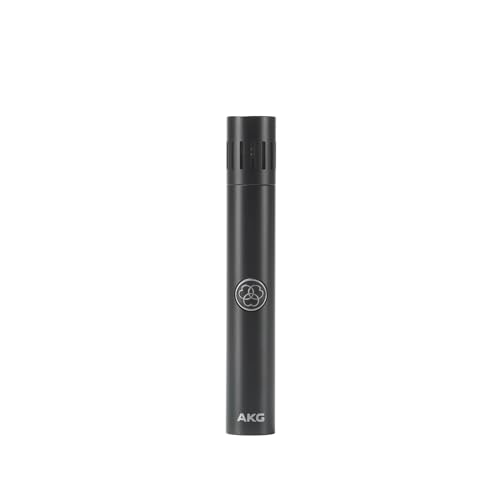
With its crisp and detailed sound, the AKG Professional C151 Cardioid Condenser Microphone stands out as a top choice for podcasters and musicians alike. Designed for various applications like streaming and music recording, it delivers clean, vibrant audio with high SPL handling, making it perfect for loud instruments. Its custom small diaphragm capsule guarantees natural sound and exceptional transient response. Plus, the eco-conscious design, featuring 100% recycled materials, aligns with modern sustainability values. Measuring 5.51 x 0.87 x 0.87 inches, it’s sleek enough for on-camera use. With stellar reviews, it’s a reliable option for quality sound.
Best For: The AKG Professional C151 Cardioid Condenser Microphone is best for podcasters, musicians, and content creators seeking high-quality audio performance in their recordings.
Pros:
- Crisp and detailed sound with excellent transient response for natural audio.
- High SPL handling (up to 143 dB) suitable for loud instruments and dynamic performances.
- Eco-conscious design made from 100% recycled materials, promoting sustainability.
Cons:
- Wired connectivity may limit mobility during recording sessions.
- Limited to one channel, which may not be suitable for multi-microphone setups.
- The small diaphragm design may not capture low frequencies as effectively as larger diaphragm microphones.
sE ELECTRONICS – sE7 Small Diaphragm Cardioid Condenser Microphone

Designed for musicians and audio engineers seeking pristine sound quality, the sE ELECTRONICS – sE7 Small Diaphragm Cardioid Condenser Microphone excels in delivering natural, balanced audio. Its frequency range of 20Hz to 20kHz and high-quality condenser capsule guarantee excellent transient response. You’ll appreciate the quiet operation thanks to its transformerless design. Plus, with a switchable -20dB pre-attenuation pad, it’s perfect for close-miking loud sources. The all-metal housing provides durability, while the gold-plated XLR connector guarantees a reliable connection. With a 2-year warranty and included accessories, the sE7 is a solid choice for any recording setup.
Best For: Musicians and audio engineers seeking high-quality sound capture in a compact and durable microphone design.
Pros:
- High-quality condenser capsule for natural and balanced sound.
- Durable all-metal housing that minimizes electrical interference.
- Switchable pre-attenuation pad allows for close-miking of loud sources.
Cons:
- Requires 48V phantom power, which may not be available on all equipment.
- Limited to cardioid polar pattern, which may not suit all recording scenarios.
- Higher price point compared to some entry-level microphones.
sE Electronics sE7 Small Diaphragm Cardioid Condenser Microphone with Clip (Factory Matched Pair)

The sE Electronics sE7 Small Diaphragm Cardioid Condenser Microphone is an exceptional choice for those seeking clarity and precision in their recordings. This factory-matched pair guarantees consistent performance, making stereo recordings a breeze. Weighing only 9.12 ounces and featuring a rugged stainless steel enclosure, it’s both lightweight and durable. With a frequency range of 20 Hz to 20 kHz and a maximum SPL of 156 dB, it captures sound accurately. Its unidirectional polar pattern minimizes background noise, while the XLR connector offers reliable connectivity. Backed by a two-year warranty, you can trust its quality for professional use.
Best For: Musicians and audio engineers seeking high-quality, reliable microphones for studio or live recordings.
Pros:
- Consistent performance from factory-matched pairs ensures high-quality stereo recordings.
- Durable stainless steel enclosure provides protection and longevity.
- Unidirectional polar pattern effectively reduces background noise, enhancing recording clarity.
Cons:
- Requires XLR connectivity, which may necessitate additional equipment for some users.
- Corded electric power source limits mobility compared to battery-operated options.
- Weight of 9.12 ounces may be considered slightly heavier than other small diaphragm microphones.
happymusic CM2 Pencil Stick Condenser Microphone for Acoustic Instruments

If you’re a musician looking to capture the intricate details of your acoustic instruments, the happymusic CM2 Pencil Stick Condenser Microphone is an excellent choice. This professional stereo microphone set excels in studio vocals, orchestras, and live sound. With interchangeable pickup patterns—omnidirectional, cardioid, and super-cardioid—it adapts to your recording needs. The low-mass diaphragm offers a frequency response of 20-20kHz, ensuring clear and accurate reproduction. Plus, its metal mesh grille and built-in pop filter reduce noise. Packaged with clips and windscreens, this mic delivers outstanding performance and has garnered a solid 4.5-star rating from users.
Best For: Musicians and recording engineers seeking a professional-grade microphone to capture the nuances of acoustic instruments in studio and live settings.
Pros:
- High versatility with interchangeable pickup patterns for various recording scenarios.
- Excellent sound quality with a frequency response of 20-20kHz, capturing fine details accurately.
- Comes with useful accessories, including microphone clips and windscreens, enhancing usability.
Cons:
- Requires a corded power source, limiting mobility during performances.
- The small diaphragm design may not be suitable for all types of vocal recordings.
- Some users may find the initial setup with interchangeable capsules cumbersome.
SAMSON C02 Pencil Condenser Microphones

For musicians and recording professionals seeking precision in sound capture, the SAMSON C02 Pencil Condenser Microphones stand out with their impressive stereo pair matching within ±0.5dB sensitivity. Featuring a cardioid pickup pattern, these microphones excel at isolating your sound source, handling up to 134dB SPL effortlessly. Their gold-plated XLR connectors guarantee a reliable connection. Ideal for both instruments and vocals, the compact and durable design enhances any recording setup. Plus, with included accessories like a protective carry case, shock-mounted mic clips, and windscreens, you’re fully equipped to achieve high-quality sound capture in any professional application.
Best For: Musicians and recording professionals seeking high-quality sound capture for both instruments and vocals.
Pros:
- Exceptional sensitivity matching within ±0.5dB for precise stereo imaging.
- Cardioid pickup pattern effectively isolates sound sources, reducing background noise.
- Included accessories such as shock-mounted clips and windscreens enhance usability and protection.
Cons:
- Compact design may not be suitable for all recording environments, particularly in larger setups.
- Limited to cardioid pickup pattern, which may not fit every application.
- Small diaphragm may not capture low frequencies as effectively as larger microphone options.
sE Electronics sE7 Small-Diaphragm Condenser Microphone Bundle

Ideal for musicians and sound engineers seeking versatility, the sE Electronics sE7 Small-Diaphragm Condenser Microphone Bundle offers a matched stereo pair that shines in capturing overheads, pianos, and more. With a cardioid polar pattern, these microphones minimize background noise, ensuring a clean recording. The bundle includes two 20′ XLR cables, pop filters, and touch fastener straps, enhancing your setup. You’ll appreciate the selectable 20 dB pad and low-cut filter at 80 Hz, letting you tailor the sound to your needs. With a robust metal enclosure and a stellar 5.0-star rating, the sE7 is a reliable choice for professional sound quality.
Best For: Musicians and sound engineers looking for a high-quality, versatile microphone solution for recording overheads and pianos.
Pros:
- Excellent sound quality with a matched stereo pair for improved audio capture.
- Features like a selectable 20 dB pad and low-cut filter allow for sound customization.
- Robust metal enclosure ensures durability and longevity.
Cons:
- Requires XLR connectivity, which may necessitate additional equipment for some users.
- Corded electric power source may limit mobility compared to battery-operated options.
- The small-diaphragm design may not be suitable for all types of recordings, such as deep vocals.
Mackie EM-Series, Large-Diaphragm Condenser Microphone (EM-91C)

The Mackie EM-91C, a large-diaphragm condenser microphone, stands out with its cardioid polar pattern, making it a fantastic choice for musicians and vocalists who want to minimize ambient noise while capturing rich, detailed sound. With an impressive audio sensitivity and signal-to-noise ratio of 78 dB, you can expect immaculate reproduction for both vocals and instruments. The included shock mount stabilizes your recordings, while the XLR cable guarantees easy connectivity. Weighing just 0.2 kg and featuring a durable stainless steel enclosure, this mic is perfect for both studio and home use. Plus, you get a 1-year warranty for peace of mind.
Best For: Musicians and vocalists seeking a high-quality microphone that minimizes ambient noise while delivering rich sound reproduction.
Pros:
- Cardioid polar pattern effectively reduces background noise for clearer recordings.
- Large-diaphragm condenser capsule enhances sound quality, capturing nuances in vocals and instruments.
- Includes accessories like a shock mount and XLR cable for added convenience and stability.
Cons:
- Corded electric power source may limit mobility during recordings.
- Weight of 0.2 kg may be slightly heavier compared to some portable microphones.
- Single color option (black) may not appeal to users looking for variety in aesthetics.
Factors to Consider When Choosing a Small Diaphragm Condenser Microphone
When choosing a small diaphragm condenser microphone, you’ll want to contemplate several key factors. Look at the microphone type and design, frequency response range, and polar pattern options to find the best fit for your needs. Don’t forget about sensitivity, SPL ratings, and build quality, as these can greatly impact your recording experience.
Microphone Type and Design
Choosing the right small diaphragm condenser microphone involves considering several key factors that can greatly impact your recording quality. First, pay attention to the polar pattern; most small diaphragm condensers feature a cardioid or unidirectional design, which helps isolate sound sources and minimize background noise. This is essential for achieving clean recordings.
These microphones are excellent for capturing high-frequency details, making them ideal for instruments like acoustic guitars and strings. You’ll also want to check the sensitivity ratings, as many models offer around 19mV/Pa, allowing you to capture subtle audio nuances. Finally, keep in mind that they typically require 48V phantom power to guarantee peak performance in studio settings. Make sure you have that covered!
Frequency Response Range
Understanding the frequency response range of a small diaphragm condenser microphone is essential for selecting the right model for your needs. Typically spanning from 20Hz to 20kHz, these microphones capture a wide variety of sound frequencies. If you want to record high-frequency sounds like cymbals and strings, look for a microphone with a response that reaches 20kHz. Pay attention to the specific frequency response curve, as variations can affect how accurately the microphone reproduces sound sources. Many models offer a flat frequency response, ensuring natural and uncolored sound. This aspect is vital when choosing a microphone for different applications, whether it’s for vocals or acoustic instruments, as certain frequency ranges may need emphasis or attenuation.
Polar Pattern Options
Three main polar pattern options—cardioid, omnidirectional, and super cardioid—define how small diaphragm condenser microphones capture sound. If you’re focusing on vocals or isolated instruments, cardioid patterns are your best bet; they capture sound primarily from the front while minimizing background noise. On the other hand, if you want to record ambient sound or group performances, consider omnidirectional patterns, as they pick up sound equally from all directions. Super cardioid patterns offer a tighter pickup area than cardioids, providing even more off-axis noise rejection, making them ideal for live settings. Your choice of polar pattern will greatly influence your microphone’s performance, affecting sound clarity and separation based on your recording environment.
Sensitivity and SPL Ratings
When selecting a small diaphragm condenser microphone, sensitivity and SPL ratings play an important role in determining its overall performance. Sensitivity ratings indicate how effectively the mic converts sound pressure into electrical signals. Generally, a sensitivity range of about 19mV/Pa to -38dB is common, with lower values meaning less output for a given sound level. Meanwhile, SPL ratings show the maximum sound level a microphone can handle without distortion, typically ranging from 130dB to 156dB. A higher SPL rating is essential for handling loud sound sources, making it crucial for dynamic performances and instruments. Additionally, consider the signal-to-noise ratio (SNR); a higher SNR means clearer audio capture, which is key for professional sound quality.
Build Quality and Durability
Choosing a small diaphragm condenser microphone means considering its build quality and durability, as these factors greatly impact its performance and longevity. Look for microphones with a metal housing, which enhances durability and minimizes electrical interference. High-quality diaphragms made from gold-sputtered materials or low-mass designs not only improve sound but also resist wear over time. Robust internal components, like shock mounts and reinforced connectors, protect against handling noise and physical damage. Many models come with protective cases, further safeguarding against scratches and environmental factors. Finally, a reliable warranty and solid customer support often reflect the manufacturer’s confidence in their product’s durability, indicating high-quality materials and construction methods.
Included Accessories and Support
While evaluating small diaphragm condenser microphones, it is crucial to pay attention to the included accessories and support, as these elements can enhance your recording experience. Look for items like microphone clips, windscreens, and protective cases, which improve usability and safeguard your equipment during transport. A warranty of one to three years offers peace of mind against manufacturing defects, while a solid return policy—like Amazon’s 30-Day Return Guarantee—lets you test the microphone to confirm it meets your needs. Some models may include specialized accessories, such as pop filters and shock mounts, which greatly boost audio quality by minimizing unwanted noise. Finally, don’t overlook customer reviews; they can provide valuable insights into the performance and reliability of these accessories.