Setting up a home studio can be overwhelming, especially when it comes to choosing the right condenser microphone. With so many options available, it’s essential to find a model that fits your needs and budget. Whether you’re recording vocals, instruments, or podcasts, the right microphone can make a significant difference in sound quality. Let’s explore some of the best condenser microphones tailored for beginners, ensuring you make an informed choice for your audio projects.
FIFINE Studio Condenser USB Microphone Kit (T669)

The FIFINE Studio Condenser USB Microphone Kit (T669) is perfect for beginners looking to elevate their home studio setup. This versatile microphone is designed for PC and laptop use, making it ideal for recording vocals, podcasts, voiceovers, and gaming. With a simple plug-and-play USB output, you’ll enjoy high-quality sound with a wide frequency response of 20Hz-20KHz. The cardioid condenser capsule captures clear audio while minimizing background noise. Plus, the included adjustable boom arm and shock mount enhance your recording experience. With durable construction and a one-year warranty, this kit is a fantastic choice for anyone starting their audio journey.
Best For: Beginners looking to enhance their home studio setup for recording vocals, podcasts, voiceovers, and gaming.
Pros:
- High-quality sound with a wide frequency response (20Hz-20KHz) and effective noise minimization.
- Easy plug-and-play USB setup, making it user-friendly for all skill levels.
- Includes useful accessories like an adjustable boom arm and shock mount for optimal positioning.
Cons:
- Limited to USB connectivity, which may not suit all recording setups.
- The included accessories may require some assembly and adjustment for optimal use.
- Not ideal for professional studio environments where high-end equipment is required.
Audio-Technica AT2020 Cardioid Condenser XLR Microphone
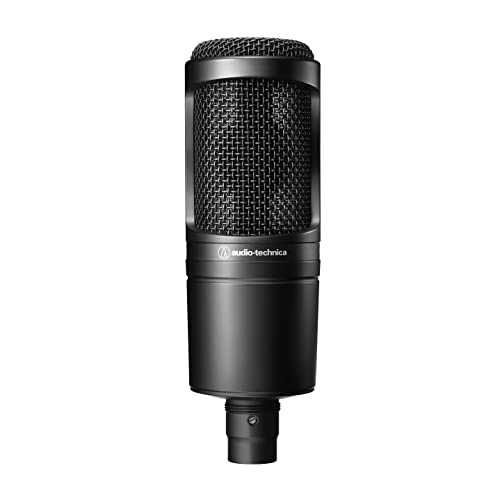
For those just starting their journey in home recording, the Audio-Technica AT2020 Cardioid Condenser XLR Microphone stands out as an exceptional choice. This microphone is perfect for project and home studio applications, offering a remarkable price-to-performance ratio. With a high SPL handling and wide dynamic range, it provides unmatched versatility for various recording scenarios. Its custom-engineered low mass diaphragm guarantees an extended frequency response and superior transient response. The cardioid polar pattern effectively reduces sound pickup from the sides and rear, enhancing isolation of your desired sound source. It connects easily via an integral 3-pin XLRM output.
Best For: Beginners and home studio enthusiasts looking for an affordable and high-quality microphone for recording vocals and instruments.
Pros:
- Excellent price-to-performance ratio, making it accessible for budget-conscious users.
- High SPL handling and wide dynamic range, providing versatility across various recording situations.
- Cardioid polar pattern that enhances sound isolation by reducing pickup from sides and rear.
Cons:
- Requires an external audio interface or mixer with phantom power for operation.
- May not perform as well in professional studio settings compared to higher-end models.
- Durability concerns if not handled carefully, as it is a condenser microphone.
Upgraded Studio Recording Microphone with Isolation Shield & Pop Filter

If you’re a home studio beginner looking to enhance your recording quality, this upgraded studio condenser microphone is a game-changer. With its USB output, you can easily plug it into your PC, smartphone, or laptop. The cardioid polar pattern and 16mm diaphragm deliver exceptional sound, while the foldable isolation shield reduces background noise effectively. Plus, you’ll love the included pop filter for crystal-clear vocals. This compact, lightweight kit is perfect for podcasting, music production, or live broadcasting. With versatile accessories, it’s tailored for your recording needs, making it an essential addition to your home studio setup.
Best For: This upgraded studio recording microphone is best for home studio beginners and content creators seeking to improve their audio quality for podcasts, music production, and live broadcasting.
Pros:
- Exceptional sound quality with a 192kHz/24Bit sampling rate and cardioid polar pattern.
- Compact and lightweight design makes it easy to transport and set up.
- Includes versatile accessories like a pop filter and soundproof shield for enhanced recording.
Cons:
- May require additional software for full functionality on certain devices.
- Limited frequency response range might not suit professional studio needs.
- Shockproof filter may not eliminate all handling noise during recording sessions.
MAONO XLR/USB Condenser Microphone (A04 Gen2)

Designed for aspiring podcasters, musicians, and voiceover artists, the MAONO XLR/USB Condenser Microphone (A04 Gen2) stands out with its impressive 192kHz/24bit audio quality. This plug-and-play microphone offers dual connectivity options, making it compatible with laptops, PCs, and even gaming consoles like PS4/PS5. With a frequency response of 30Hz-16kHz and a cardioid polar pattern, it captures studio-quality sound and strong bass response. You’ll appreciate the included accessories, like the adjustable scissor arm and pop filter, which enhance your setup. Plus, with a 12-month warranty and a 30-day return policy, you can buy with confidence.
Best For: Aspiring podcasters, musicians, and voiceover artists looking for high-quality audio capture and versatile connectivity options.
Pros:
- Dual connectivity options (XLR & USB) make it compatible with various devices, including PCs and gaming consoles.
- Impressive audio quality with a sampling rate of 192kHz/24bit and strong bass response perfect for professional recordings.
- Included accessories such as a scissor arm stand and pop filter enhance usability and setup convenience.
Cons:
- Not compatible with Xbox, limiting its use for gamers on that platform.
- XLR cable not included, which may require an additional purchase for those using the XLR connection.
- Customization features in MAONO Link Software are only available in USB mode, potentially restricting users who prefer XLR.
ALSO GO Podcast Equipment Bundle with BM-800 Microphone and F998 Sound Card

The ALSO GO Podcast Equipment Bundle is perfect for aspiring podcasters and content creators looking to kickstart their audio journey without breaking the bank. This all-in-one package features the BM-800 Microphone and F998 Sound Card, providing everything you need, from XLR cables to pop filters. With cardioid pickup technology and advanced noise reduction, your audio quality will shine. Plus, you’ll enjoy 16 background effects and multiple recording modes. Its universal plug-and-play compatibility makes it easy to use with PCs and smartphones. With a solid customer rating and a 2-year warranty, you can start creating with confidence.
Best For: Aspiring podcasters, content creators, and gamers looking for an all-in-one audio solution that is budget-friendly and user-friendly.
Pros:
- Complete package with all necessary accessories included, making it ideal for beginners.
- High-quality audio with cardioid pickup technology and advanced noise reduction features.
- Universal plug-and-play compatibility with various devices, eliminating the need for converters or drivers.
Cons:
- May not satisfy advanced users seeking professional-grade equipment.
- Limited to the features provided by the F998 Sound Card, which may not cater to all audio needs.
- Customer support experience may vary, as with many budget products.
RØDE NT1 5th Gen Studio Condenser Microphone

For aspiring musicians and podcasters looking to elevate their sound quality without breaking the bank, the RØDE NT1 5th Gen Studio Condenser Microphone stands out as an ideal choice. This large-diaphragm mic features both XLR and USB outputs, offering flexibility for any setup. With its warm, silky sound and extremely low self-noise, it excels in recording vocals, instruments, and voiceovers. The ultra-low-noise Revolution Preamp guarantees crystal-clear digital recordings, while the durable aluminum body withstands daily use. Whether you’re connecting to an audio interface or your computer, the NT1 delivers professional quality at an accessible price.
Best For: Aspiring musicians, podcasters, and content creators seeking professional sound quality on a budget.
Pros:
- Versatile connectivity with both XLR and USB outputs for various recording setups.
- Exceptional sound quality with a warm, silky character and extremely low self-noise.
- Durable build made from high-grade aluminum, ensuring longevity for everyday use.
Cons:
- Requires an audio interface for XLR connection, which may add extra cost.
- Not suitable for high-volume sources without careful gain management due to its sensitivity.
- Limited features compared to higher-end microphones, which may not meet the needs of professional studios.
Shure SM4 Studio Recording Microphone Kit (SM4-K-KIT)

When you’re starting out in home studio recording, the Shure SM4 Studio Recording Microphone Kit (SM4-K-KIT) stands out as an excellent choice for capturing professional-quality sound. Its brass 1-inch dual-diaphragm capsule delivers clean lows and detailed highs, while the cardioid polar pattern guarantees exceptional off-axis noise rejection. You’ll appreciate the internal pop filter that minimizes plosives, making your recordings mix-ready. Built with rugged, all-metal construction, it’s durable for both studio and stage use. Plus, the kit includes a shock mount, pop filter, and carrying case, making it a complete solution for your recording needs.
Best For: The Shure SM4 Studio Recording Microphone Kit is best for home studio enthusiasts and musicians seeking professional-quality audio recordings.
Pros:
- Exceptional sound quality with a brass 1-inch dual-diaphragm capsule for clean lows and detailed highs.
- Durable construction ensures longevity for both studio and live performance settings.
- Comprehensive kit includes essential accessories like a shock mount and pop filter for immediate use.
Cons:
- Higher price point compared to entry-level microphones may be a barrier for beginners.
- Requires proper setup and positioning to maximize its cardioid polar pattern benefits.
- Weight may be an issue for some users when mounted on lightweight stands.
XLR Condenser Microphone Kit for Streaming and Podcasting
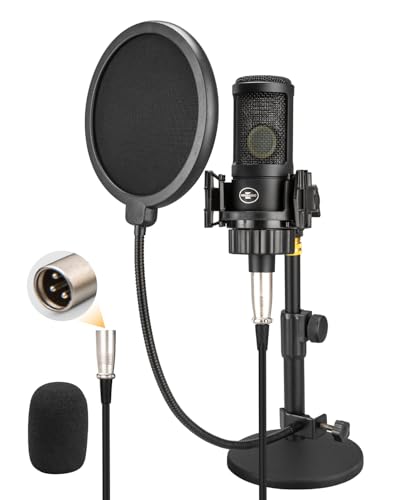
One standout feature of the XLR Condenser Microphone Kit is its 26mm large diaphragm gold condenser capsule, making it an ideal choice for beginners in streaming and podcasting. With a dynamic range of 20Hz to 20kHz, it delivers low noise and high sensitivity. The cardioid polar pattern focuses on capturing your voice while minimizing background noise. You’ll appreciate the included accessories, like the pop filter and shock mount, that enhance sound quality. Plus, its durable metal structure and sleek design elevate your professional image. Just remember, you’ll need an external power source to get started.
Best For: Beginners in streaming and podcasting looking for a high-quality microphone that enhances audio clarity and minimizes background noise.
Pros:
- High-quality sound with a large diaphragm and cardioid polar pattern for focused audio capture.
- Durable construction with a premium metal structure that withstands drops and minimizes electromagnetic interference.
- Comprehensive package with essential accessories like a pop filter, shock mount, and adjustable table stand for easy setup.
Cons:
- Requires external power, necessitating additional equipment like a phantom power source or audio interface.
- Bulkier design may not be suitable for those seeking a more portable microphone solution.
- Price point may be higher compared to basic microphones, which could be a factor for budget-conscious beginners.
Logitech Blue Yeti USB Microphone for PC and Mac

The Logitech Blue Yeti USB Microphone is perfect for beginners looking to elevate their audio game. Designed for PC and Mac, it delivers clear, broadcast-quality sound ideal for gaming, recording, and streaming. With a custom three-capsule array and four pickup patterns—cardioid, omni, bidirectional, and stereo—you’ll capture every nuance. The onboard controls let you adjust headphone volume and mic gain easily. Plus, its plug-and-play functionality means you can set it up in seconds. With a two-year warranty and a fantastic 4.6-star rating, it’s a reliable choice for anyone starting their audio journey.
Best For: Beginners looking to enhance their audio quality for gaming, streaming, and recording.
Pros:
- Clear, broadcast-quality sound with a custom three-capsule array.
- Versatile with four pickup patterns for different recording scenarios.
- Easy plug-and-play setup compatible with both PC and Mac.
Cons:
- May be heavier than some portable microphones.
- Requires Logitech G HUB software for full feature access.
- Some users may find the size bulky for smaller desks.
Podcast Equipment Bundle, BM-800 Recording Studio Package
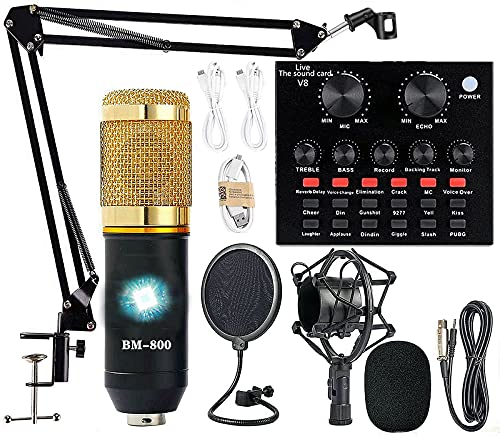
If you’re diving into podcasting or streaming for the first time, the Podcast Equipment Bundle featuring the BM-800 microphone is an excellent choice. This all-encompassing package includes everything you need: a suspension scissor arm stand, shock mount, pop filter, anti-wind foam cap, and a live sound card. With a 2021 professional sound chipset, it captures your voice in rich detail thanks to its cardioid pickup pattern. Plus, it’s compatible with various devices, including smartphones and gaming consoles. Enjoy the added fun of a voice changer with sound effects, making your recordings even more engaging.
Best For: Aspiring podcasters, streamers, and content creators looking for an affordable, all-in-one microphone solution.
Pros:
- Includes all essential accessories like a suspension arm, shock mount, and pop filter for enhanced recording quality.
- High-quality sound capture with a professional chipset and cardioid pickup pattern for clear vocals.
- Versatile compatibility with various devices, making it suitable for use with computers, smartphones, and gaming consoles.
Cons:
- Weight of 1.37 kg may make it less portable for users on the go.
- Limited advanced features compared to higher-end microphones, which might not satisfy professional users.
- Voice changer effects may not appeal to all users and could be seen as a gimmick.
Factors to Consider When Choosing a Condenser Microphone for Home Studio Beginners
When choosing a condenser microphone for your home studio, you’ll want to focus on several key factors. Sound quality, connection types, and polar patterns all play significant roles in how well your recordings will turn out. Plus, considering the included accessories and your budget can help you find the perfect mic for your needs.
Sound Quality Importance
Sound quality plays a pivotal role in home studio recordings, influencing how clear and professional your audio sounds. When choosing a condenser microphone, consider its frequency response; a range of 20Hz-20kHz will capture a broader spectrum of sounds, making it versatile for various applications. The signal-to-noise ratio (SNR) is another critical factor—look for a higher SNR, around 78 dB or more, to guarantee minimal background noise and enhanced vocal clarity. Additionally, a cardioid polar pattern is often ideal, as it focuses on sound from the front while rejecting unwanted noise from the sides and rear. Finally, verify your mic can handle high sound pressure levels (SPL) to maintain audio integrity, even with louder sources.
Connection Type Options
Connection type options are essential for beginners setting up a home studio, as they directly impact your recording experience. USB condenser microphones offer easy plug-and-play functionality, making them perfect for those using computers or laptops. On the other hand, XLR connections are standard in professional audio setups, delivering superior sound quality but requiring additional gear like a preamp or audio interface. If you want versatility, consider microphones with dual connectivity options, allowing you to switch between home recording and professional environments. Some models even feature built-in USB alongside XLR outputs, giving you the flexibility to choose based on your current needs. Just remember to check compatibility with your devices to guarantee smooth operation.
Polar Pattern Selection
Choosing the right polar pattern for your condenser microphone can greatly influence your recording results. For home studio beginners, a cardioid pattern is often the best choice. It captures sound primarily from the front, reducing ambient noise from the sides and rear, which enhances vocal clarity. If you’re recording in a more dynamic environment or need to capture group sounds, an omnidirectional microphone might be suitable, but it can also pick up unwanted background noise. Bidirectional microphones are great for interviews, capturing sound from both front and rear, but they’re less common for solo recordings. Always consider your recording environment and the type of audio you want to capture, as this will markedly impact your overall recording quality.
Included Accessories Value
When you’re picking a condenser microphone for your home studio, the included accessories can greatly enhance your recording experience. Look for shock mounts and pop filters, as they help minimize unwanted noise and improve sound quality. A sturdy scissor arm stand or boom arm can make positioning your microphone easier, allowing for ideal recording angles while reducing desk clutter. Many packages also come with various cables, ensuring compatibility with your devices and simplifying setup. Isolation shields are another valuable addition, offering sound absorption to cut down on background noise. Finally, features like headphone jacks and monitoring capabilities provide real-time audio feedback, making your recording sessions smoother and more professional.
Budget Considerations
Establishing a budget for your condenser microphone is essential if you want to make informed choices that suit your recording needs. Entry-level microphones priced between $50 and $150 can provide the basic functionality you need as a beginner. If you’re looking for better sound quality and features like XLR connectivity, consider mid-range options costing between $150 and $400. For those aiming for professional-grade performance, high-end microphones over $400 may be appealing, but they often exceed what you truly need at this stage. Don’t forget to factor in additional expenses, such as audio interfaces, pop filters, and stands, which can impact your overall budget considerably. Choose wisely to guarantee you get the best value for your investment.
Durability and Build Quality
A durable condenser microphone is essential for beginners setting up a home studio, as it guarantees your investment lasts through frequent use and various conditions. Look for models with rugged materials and a robust construction; this will help ascertain longevity and reliability. Microphones with metal bodies are generally more resistant to physical damage, making them ideal for both studio and live settings. Additionally, consider designs that include protective elements like built-in pop filters or shock mounts to reduce damage from handling and vibrations. Features that offer weather resistance can also protect against moisture and dust. Finally, a warranty of at least one year signals the manufacturer’s confidence in the microphone’s durability, providing you with added peace of mind.