
The best Thunderbolt audio interfaces combine low-latency monitoring, dependable drivers, and high-quality conversion for demanding recording and mixing setups. The right choice depends on your channel count, connectivity needs, software ecosystem, and budget.
We’ve selected 10 standout models for compact studios, mobile production, project rooms, and professional facilities, covering Universal Audio, MOTU, and Zoom options.
Best 10 Thunderbolt Audio Interfaces Picks for 2026
Best for UAD-powered recording

- Unison preamps with classic hardware emulations
- 200+ UAD DSP and Native plug-ins
- Auto-Gain and Sonarworks-powered monitor correction
Best For: Producers seeking realtime UAD processing and premium analog-style tones
Best for large-scale studio routing

- 32x34 I/O with 66 simultaneous audio channels
- 64-channel DSP mixer with effects
- Thunderbolt 4/USB4 and AVB networking
Best For: Studios needing extensive line-level I/O and flexible routing
Best portable UAD interface

- Bus-powered design for portable setups
- Unison preamp and guitar amp emulations
- Includes five Heritage Edition plug-ins
Best For: Solo creators needing compact, realtime UAD processing
Best for mic-equipped hybrid studios
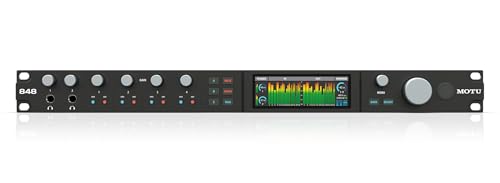
- Four advanced mic/line/instrument channels
- Dedicated inserts on mic channels 3-4
- 60 channels with DSP mixing and AVB networking
Best For: Hybrid studios combining microphones, outboard gear, and digital I/O
Studio Powerhouse

- Eight-channel interface with conversion up to 192 kHz
- Includes access to 200+ UAD DSP and Native plug-ins
- Auto-Gain and bass management support efficient studio workflows
Best For: Professional recording and mixing studios
Expandable Connectivity
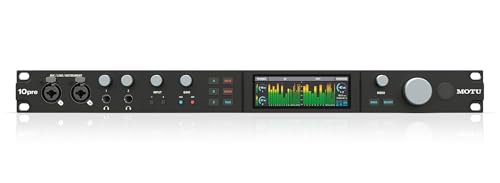
- 10 mic inputs and 54 simultaneous audio channels
- Thunderbolt 4/USB4, USB, and AVB networking support
- Includes low-latency drivers and onboard DSP effects
Best For: Large, expandable studio and AVB systems
Compact UAD Production Hub

- Six-channel Apollo interface for focused studio setups
- Access to 200+ UAD DSP and Native plug-ins
- Auto-Gain and bass management aid recording and monitoring
Best For: UAD-based production with moderate I/O needs
Compact Low-Latency Pick

- Native Thunderbolt with extremely low latency
- 24-bit/192kHz conversion
- Includes MixEfx mixer and LED gain meters
Best For: Small home studios and guitar or microphone recording
Expanded DSP Studio Hub

- Eight-channel recording capability
- Access to 200+ UAD DSP and Native plug-ins
- Auto-Gain and bass-management features
Best For: Larger studios and multi-input production workflows
Six-Channel Mixing Choice

- Six-channel studio interface
- 200+ UAD DSP and Native plug-ins
- Auto-Gain and bass-management support
Best For: Project studios needing flexible inputs and UAD processing
Best for UAD-powered recording – Apollo Twin X DUO Gen 2
Universal Audio Apollo Twin X DUO Gen 2 with UAD Analog Classics Pro Thunderbolt 3 Audio Interface
Check Price On AmazonThe Universal Audio Apollo Twin X DUO Gen 2 is a strong choice among Thunderbolt audio interfaces for producers who want Unison preamps, realtime analog-style processing, and a broad UAD plug-in ecosystem. It supports Thunderbolt 3, up to 192 kHz recording, and major DAWs on Windows and macOS.
Best For: Home and project-studio users who want premium preamp emulations and UAD DSP processing while tracking.
Pros:
- Unison preamps support emulations from Neve, API, Avalon, Manley, Fender, and more.
- Access to 200+ UAD DSP and Native plug-ins, including titles such as Capitol Chambers and EL8 Distressor.
- Includes Auto-Gain, Apollo Monitor Correction powered by Sonarworks, and bass-management features.
- Supports up to 192 kHz and 32 channels with Thunderbolt 3 connectivity.
Cons:
- Thunderbolt 3 connectivity may require compatible computer hardware or an adapter.
- The one-year warranty is shorter than some competing professional interfaces.
The Apollo Twin X DUO Gen 2 is especially compelling when realtime UAD processing and classic hardware-style tones matter more than extensive physical I/O.
Best for large-scale studio routing – MOTU 16A
The MOTU 16A is a high-capacity option among Thunderbolt audio interfaces, combining Thunderbolt 4/USB4, extensive line-level and optical I/O, onboard mixing, effects, and AVB networking. Its 32×34 design and 66 simultaneous channels suit complex studio systems.
Best For: Recording facilities and advanced project studios that need substantial line-level I/O, flexible routing, and network expansion.
Pros:
- Provides 16 TRS analog inputs and outputs plus two banks of eight-channel ADAT optical I/O.
- Offers 64-channel mixing with DSP effects, 32 busses, and 32-bit floating-point processing.
- Supports Thunderbolt 4, USB4, USB 3/2, iPad connection, and AVB networking.
- ESS Sabre32 converters deliver a stated 125 dB dynamic range, with support up to 192 kHz.
Cons:
- Its 19-inch rack-style footprint and 11-pound weight are less convenient for portable setups.
- The extensive routing, mixing, and networking features may be more than a simple recording rig requires.
Choose the 16A when connectivity and routing flexibility are priorities; it is built more as a central studio hub than a compact desktop interface.
Best portable UAD interface – Apollo Solo Heritage Edition
The Universal Audio Apollo Solo Heritage Edition is a compact pick among Thunderbolt audio interfaces for mobile recording and personal studios. It combines a Unison preamp, UAD SOLO Core Processing, a headphone amplifier, and a bundled suite of five plug-ins in a bus-powered design.
Best For: Solo musicians, vocalists, and producers who need portable tracking with realtime vintage-style processing.
Pros:
- Bus-powered operation helps reduce cable clutter for Mac and Windows setups.
- Unison mic preamp and guitar amp emulations include Neve, API, Avalon, Manley, Marshall, and Fender options.
- UAD SOLO Core Processing enables near-zero-latency tracking through compressors, EQs, tape machines, and amp plug-ins.
- Includes five award-winning plug-in titles and a detailed, low-noise headphone amplifier.
Cons:
- Its six-channel design and single XLR input are less suited to multi-microphone recording.
- The supplied details list Windows compatibility, while LUNA is identified as Mac-only.
The Apollo Solo Heritage Edition makes the most sense when portability and UAD tracking features outweigh the need for numerous inputs and outputs.
Best for mic-equipped hybrid studios – MOTU 848
The MOTU 848 is a versatile choice among Thunderbolt audio interfaces, pairing Thunderbolt 4/USB4 with four mic/line/instrument inputs, extensive analog and optical I/O, onboard effects, and AVB networking. It supports 60 simultaneous channels and up to 192 kHz operation.
Best For: Hybrid studios that need transparent microphone preamps, outboard inserts, monitor control, and expandable digital connectivity.
Pros:
- Four mic/line/instrument inputs provide up to 74 dB of gain, 48V phantom power, pad, and phase invert.
- Mic channels 3-4 include dedicated send/return inserts for external processing.
- Offers 28 inputs, 32 outputs, two headphone outputs, and two banks of eight-channel optical I/O.
- Includes a 64-channel DSP mixer, effects, AVB networking, and A/B/C speaker selection.
Cons:
- Its extensive I/O and routing features may be unnecessary for basic two-channel recording.
- The Lightning adapter kit for iPad connection is sold separately.
The 848 stands out for studios that combine microphones, line-level equipment, and outboard processors while still wanting modern Thunderbolt 4/USB4 connectivity.
Studio Powerhouse – Apollo x8 Gen 2
Universal Audio Apollo x8 Gen 2 with UAD Analog Classics Thunderbolt 3 Audio Interface
Check Price On AmazonThe Universal Audio Apollo x8 Gen 2 is a high-end choice among Thunderbolt audio interfaces for producers and engineers who need eight channels, premium conversion, and access to UAD processing. It supports sample rates up to 192 kHz and works with major DAWs including Pro Tools, Logic Pro, Ableton Live, and Cubase.
Best For: Professional recording and mixing setups that need eight channels and extensive UAD plug-in support.
Pros:
- Next-generation conversion with wide dynamic range and low distortion.
- Access to more than 200 UAD DSP and Native plug-ins.
- Auto-Gain simplifies level setting across multiple inputs.
- Bass management supports adding a subwoofer to a monitoring setup.
Cons:
- Limited to eight channels.
- Its 16.9-pound build may be less convenient for portable rigs.
- Some software features depend on the UAD ecosystem.
The Apollo x8 Gen 2 is a strong fit when conversion quality and UAD workflow integration matter more than portability. Its channel count and monitoring features make it especially practical for established studio systems.
Expandable Connectivity – MOTU 10pre 26×28
MOTU 10pre 26x28 Thunderbolt 4/USB4 audio interface for Mac, Windows and iOS with 10 mic inputs
Check Price On AmazonThe MOTU 10pre is a flexible option among Thunderbolt audio interfaces, offering Thunderbolt 4/USB4 connectivity, 10 mic inputs, and 54 simultaneous audio channels. Its 26×28 design, AVB networking, onboard DSP mixing, and support for Mac, Windows, and iOS make it suited to complex recording systems.
Best For: Larger studios and mobile production setups needing many inputs, outputs, networking, and flexible computer connectivity.
Pros:
- Provides 10 mic/line/instrument inputs and 54 simultaneous channels.
- Supports Thunderbolt 4, USB4, USB3, USB2, and AVB Ethernet.
- Includes low-latency drivers and 64-channel DSP mixing with effects.
- Offers control-room features including talkback and A/B/C speaker selection.
Cons:
- Its extensive routing and networking features may be more than small setups need.
- The Lightning adapter kit for iPad use is sold separately.
- Some channel capacity depends on the host computer connection.
The 10pre stands out for expandability rather than simplicity. With multiple connection standards, AVB networking, and onboard mixing, it can serve as the hub of a demanding studio or multi-device system.
Compact UAD Production Hub – Apollo x6 Gen 2
Universal Audio Apollo x6 Gen 2 with UAD Analog Classics Thunderbolt 3 Audio Interface
Check Price On AmazonThe Universal Audio Apollo x6 Gen 2 brings Apollo’s updated conversion and UAD production workflow to a six-channel Thunderbolt audio interface. It supports LUNA, Logic Pro, Pro Tools, Cubase, Ableton Live, and UAD plug-ins, making it a practical fit for computer-based recording and mixing.
Best For: Producers and engineers who want UAD plug-ins and Apollo conversion in a smaller six-channel setup.
Pros:
- Offers next-generation conversion with wide dynamic range and low distortion.
- Includes access to more than 200 UAD DSP and Native plug-ins.
- Auto-Gain helps set levels across multiple inputs quickly.
- Bass management supports subwoofer integration for monitoring.
Cons:
- Six channels provide less expansion than larger Apollo models.
- Its workflow is closely tied to supported UAD software and plug-ins.
- The supplied details list Ethernet connectivity rather than a separate Thunderbolt specification.
The Apollo x6 Gen 2 is best when six channels are sufficient and UAD processing is a priority. It combines Apollo’s studio-oriented feature set with a more focused I/O configuration.
Compact Low-Latency Pick – Zoom TAC-2
The Zoom TAC-2 is a practical choice for musicians and home recordists seeking a compact Thunderbolt audio interface with fast monitoring and straightforward connectivity. It provides two-in/two-out operation, 24-bit/192kHz conversion, and LED gain meters for easy level checks.
Best For: Home studios, electric guitarists, and microphone recording setups that prioritize low latency and a small footprint.
Pros:
- Fully native Thunderbolt design with extremely low latency.
- Supports up to 24-bit/192kHz AD/DA conversion.
- Includes LED gain meters and the MixEfx software mixer.
- Accepts XLR, 1/4-inch TRS, and USB inputs.
Cons:
- Two-in/two-out operation is less suited to larger tracking sessions.
- Supplied operating-system information lists Windows compatibility, so verify your computer setup before buying.
The TAC-2 focuses on essential recording features rather than a large channel count. Its low-latency Thunderbolt connection, high sample-rate support, and included mixer make it a sensible option for smaller setups.
Expanded DSP Studio Hub – Apollo x8p Gen 2
Universal Audio Apollo x8p Gen 2 with UAD Analog Classics Thunderbolt 3 Audio Interface
Check Price On AmazonThe Universal Audio Apollo x8p Gen 2 is built for larger Thunderbolt audio interface setups that need eight channels, premium conversion, and access to an extensive UAD plug-in ecosystem. Its feature set also includes Auto-Gain and bass management for more efficient recording and monitoring workflows.
Best For: Established studios, multi-input recording, and producers working with LUNA, Logic Pro, Pro Tools, Cubase, Ableton Live, and UAD plug-ins.
Pros:
- Provides eight channels for more expansive recording sessions.
- Offers next-generation conversion with wide dynamic range and low distortion.
- Supports access to more than 200 UAD DSP and Native plug-ins.
- Includes Auto-Gain and bass-management features for streamlined setup and monitoring.
Cons:
- Its 16.9-pound weight makes it a less portable option.
- The broad UAD feature set may be more than a basic recording setup requires.
- Supplied connectivity details list Ethernet, so confirm the intended Thunderbolt 3 connection and system requirements before purchase.
With eight channels and a deep UAD software workflow, the Apollo x8p Gen 2 is aimed at serious studio use. It makes the most sense when you will use its multiple inputs, plug-in ecosystem, and monitoring tools.
Six-Channel Mixing Choice – Apollo x6 Gen 2
Universal Audio Apollo x6 Gen 2 with UAD Analog Classics Pro Thunderbolt 3 Audio Interface
Check Price On AmazonThe Universal Audio Apollo x6 Gen 2 suits producers who want a Thunderbolt audio interface with six channels, high-end conversion, and integrated access to UAD processing. It also adds Auto-Gain for quicker level setting and bass management for monitoring systems that include a subwoofer.
Best For: Project and professional studios that need more than a basic interface but do not require the x8p Gen 2’s eight-channel capacity.
Pros:
- Offers six channels for flexible studio recording and routing.
- Features next-generation conversion with wide dynamic range and low distortion.
- Provides access to more than 200 UAD DSP and Native plug-ins.
- Includes Auto-Gain and bass management for efficient recording and monitoring.
Cons:
- Six channels may not be enough for larger ensemble tracking compared with an eight-channel interface.
- The UAD ecosystem can be unnecessary for buyers seeking only basic inputs and outputs.
- Supplied connectivity details list Ethernet, so verify Thunderbolt 3 compatibility and system requirements before buying.
The Apollo x6 Gen 2 occupies a useful middle ground for studios that want substantial channel capacity and UAD-based production tools. Choose it over the x8p when six channels meet your needs and a more streamlined setup is preferable.
How We Picked These Thunderbolt Audio Interfaces
We evaluated the selected models by looking at their I/O configuration, Thunderbolt or USB4 compatibility, monitoring performance, software support, expansion options, and suitability for different studio sizes. We also considered whether each interface is best suited to tracking vocals and instruments, handling large multichannel sessions, or integrating with external mixers, converters, and networked audio systems.
Universal Audio models stand out for their onboard UAD processing and analog-modeled recording workflow. MOTU interfaces emphasize flexible routing, high channel counts, networking, and broad computer compatibility. The Zoom TAC-2 remains a compact option for users who prioritize straightforward Thunderbolt connectivity.
Quick Comparison
| Best For | What to Look For | Recommended Direction |
|---|---|---|
| Portable recording | Small footprint, simple controls, bus power or minimal cabling | Compact Apollo or Zoom models |
| Vocal and instrument tracking | Quality preamps, low-latency monitoring, onboard effects | Universal Audio Apollo Twin, Solo, or x8p |
| Large recording sessions | Many analog inputs, outputs, and expansion connections | MOTU 16A, 848, or 10pre |
| Hybrid mixing | Numerous line outputs, flexible routing, and reliable clocking | MOTU 16A or Universal Audio Apollo x6 |
| Professional studio tracking | Multiple preamps, DSP processing, and expansion | Universal Audio Apollo x8 or x8p |
Key Buying Factors for Thunderbolt Audio Interfaces
Input and Output Count
Count the sources you record at the same time, not just the number of musicians in your typical session. Microphone preamps are essential for vocals, drums, and microphones, while line inputs and outputs suit synthesizers, outboard preamps, compressors, and mixers. Leave room for expansion if your setup is likely to grow.
Thunderbolt, USB4, and Computer Compatibility
Check the exact connector, cable, and operating-system requirements before buying. Thunderbolt 3 and Thunderbolt 4 systems can offer excellent low-latency performance, but compatibility may depend on the computer’s ports and the manufacturer’s current drivers. MOTU’s USB4 support can be particularly useful for users who need Mac, Windows, or iOS flexibility.
Latency, DSP, and Software
Low latency matters when monitoring through a DAW or software instruments. Universal Audio Apollo interfaces add dedicated UAD processing for tracking with modeled preamps, compressors, and effects while reducing reliance on the host computer. Make sure the included software fits your workflow and that future plugin costs are acceptable.
Expansion and Routing
For larger systems, prioritize digital expansion, network audio, flexible internal mixing, and enough outputs for headphones and hardware effects. These features can matter more than headline converter specifications in a complex studio.
Who Should Buy Which Thunderbolt Audio Interfaces?
Choose a compact Apollo or the Zoom TAC-2 if you mainly record one or two sources and value a smaller desktop setup. The Apollo Solo is a sensible personal-studio choice, while the Apollo Twin X DUO Gen 2 adds more flexibility and processing for regular vocal, guitar, or synth tracking.
Choose the Apollo x8p if you need several microphone preamps. The Apollo x8 is better suited to line-level studio integration, and the Apollo x6 models make sense for users who need extensive line I/O and UAD processing without a large preamp count.
Choose MOTU’s 10pre for a versatile mid-sized setup, the 848 for a broad combination of inputs and outputs, or the 16A when extensive line-level connectivity, routing, networking, and hybrid mixing are priorities. Before ordering, verify current driver support, included accessories, and the exact I/O layout against your planned studio system.