
The right wide-angle lens can make interviews feel spacious, polished, and visually engaging without forcing the camera too far from the subject. The best choice depends on your camera mount, sensor size, working distance, and how much background you want in the frame.
Our 2026 roundup covers ultra-wide primes, versatile zooms, fisheye options, and compact lenses for full-frame and crop-sensor cameras. Use the guide below to narrow the list by shooting style, room size, and production priorities.
Best 10 Wide-Angle Camera Lenses for Interviews Picks for 2026
Full-Frame RF Value Pick

- 16mm ultra-wide prime for Canon RF
- Quiet STM autofocus for video recording
- Compact 163-gram design
Best For: Portable Canon EOS R-series interview and vlogging kits
Creative Perspective Pick
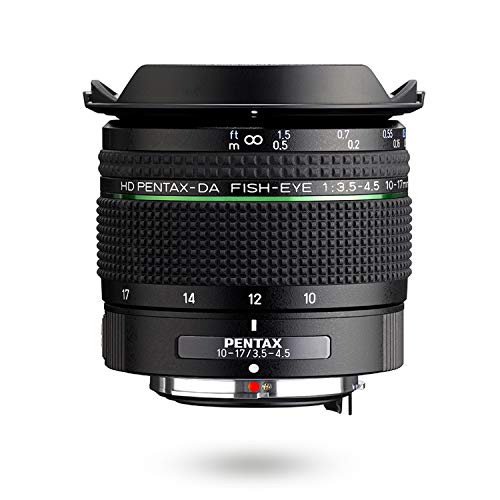
- 180-to-100-degree fish-eye zoom range
- HD coating and ED glass support image quality
- Quick-shift focus for AF/manual changes
Best For: Creative Pentax interviews and immersive room-focused video
Flexible DSLR Zoom Pick

- 10-22mm zoom for flexible interview framing
- USM autofocus with full-time manual focus
- Close-focusing distance of 9.5 inches
Best For: Canon EOS DSLR interview setups needing zoom flexibility
Extreme Perspective Pick

- 190-degree ultra-wide view
- Circular and diagonal fisheye modes
- Fast f/2.8-3.5 aperture
Best For: Stylized interviews and dramatic close-up perspectives
Compact APS-C Interview Pick

- 16-29mm full-frame equivalent range
- Optical image stabilization
- Only 5.28 ounces
Best For: Small-room interviews and handheld Canon APS-C video
Low-Light Manual-Focus Value

- Bright f/2.8 aperture
- 110-degree APS-C coverage
- Manual-focus prime design
Best For: Controlled Canon APS-C DSLR interviews and environmental portraits
Immersive VR Pick
Canon RF-S3.9mm F3.5 STM Dual Fisheye

- 144° field of view for 180° VR
- STM autofocus and manual focus
- Designed for Canon EOS R7
Best For: EOS R7-based 180° VR production
Budget Ultra-Wide Zoom
Canon EF-S 10-18mm f/4.5-5.6 IS STM

- 10-18mm flexible ultra-wide range
- Optical image stabilization
- Quiet STM autofocus for video
Best For: Tight-space interviews on compatible Canon EOS cameras
Lightweight Full-Frame Option

- Compact 59-gram pancake design
- 28mm full-frame coverage
- Quiet STM video autofocus
Best For: Portable interview kits using full-frame EOS R cameras
Compact APS-C Ultra-Wide Pick – Sony E 11mm F1.8
For creators comparing wide-angle camera lenses for interviews, the Sony E 11mm F1.8 is a compact APS-C prime designed for close, spacious framing. Its bright f/1.8 aperture, quiet autofocus, and 104-degree angle of view suit video setups where you want the subject and surrounding environment in the frame.
Best For: APS-C or Super35 Sony E-mount interviews, vlogging, and compact video rigs.
Pros:
- Bright f/1.8 aperture supports low-light shooting and background separation.
- Fast, precise, quiet autofocus uses two linear motors.
- Internal focusing keeps the lens length constant and helps reduce focus breathing.
- Compact 10.56-ounce design pairs well with lightweight cameras.
Cons:
- Compatible with Sony APS-C E-mount cameras rather than full-frame systems.
- The fixed 11mm focal length offers no framing flexibility.
- It is not water resistant.
Choose this lens when a wide, immersive perspective and quiet video autofocus matter more than zoom convenience. The fixed focal length and APS-C compatibility should be confirmed before purchase.
Full-Frame RF Value Pick – Canon RF16mm F2.8 STM
The Canon RF16mm F2.8 STM is a lightweight ultra-wide prime for EOS R-series mirrorless cameras. For wide-angle camera lenses for interviews, its 16mm view can help fit a presenter and environmental context into tighter spaces, while the f/2.8 aperture and quiet STM focusing support video work.
Best For: Canon EOS R-series users who need a small, full-frame-compatible lens for interviews, cinematic video, or vlogging.
Pros:
- Ultra-wide 16mm fixed focal length offers a 108-degree angle of view.
- Bright f/2.8 maximum aperture supports flexible indoor shooting.
- Stepping-motor autofocus is designed for smooth, quiet continuous video focusing.
- Very lightweight at 163 grams, with a close 5.11-inch minimum focusing distance.
Cons:
- Fixed focal length prevents quick reframing without moving the camera.
- Compatible with Canon RF-mount EOS R-series cameras only.
- It is not water resistant.
This is a practical choice for Canon mirrorless interview kits that prioritize portability and a wide perspective. Its compact build is especially useful for small rooms or handheld presentation work.
Creative Perspective Pick – Pentax HD-DA Fish-Eye 10-17mm
The Pentax HD-DA Fish-Eye 10-17mm brings a distinctive 180-to-100-degree perspective to wide-angle camera lenses for interviews. Its zoom range offers more framing control than a fixed prime, but the fish-eye rendering is best suited to creative, stylized, or space-emphasizing interview content rather than natural facial perspective.
Best For: Pentax K-mount creators making creative interviews, room tours, or highly immersive video.
Pros:
- 10-17mm zoom range provides a 180-to-100-degree angle of view.
- Compact, lightweight design is optimized for Pentax APS-C cameras.
- HD coating helps reduce ghosting and flare, while ED glass helps minimize chromatic aberration.
- Quick-shift focus allows seamless switching between autofocus and manual focus.
Cons:
- Fish-eye distortion may look unnatural for conventional talking-head interviews.
- Maximum aperture ranges from f/3.5 to f/4.5, less bright than the prime alternatives.
- Compatibility is limited to Pentax KAF/K-mount DSLR cameras.
The adjustable focal length makes this lens flexible for unusual compositions, and its close focusing can create dramatic results. For standard interviews, evaluate the fish-eye look carefully before choosing it.
Flexible DSLR Zoom Pick – Canon EF-S 10-22mm
The Canon EF-S 10-22mm f/3.5-4.5 USM is a versatile zoom for EOS digital SLR cameras. Among wide-angle camera lenses for interviews, its 10-22mm range is useful when you need to switch between a very broad room view and a tighter environmental composition without changing lenses.
Best For: Canon EOS DSLR users who want zoom flexibility for interview spaces, room scenes, and close environmental coverage.
Pros:
- 10-22mm zoom range offers a 2.2:1 framing range.
- USM autofocus is designed for strong speed and performance.
- Full-time manual focus allows adjustments by turning the focus ring.
- Close focusing reaches 9.5 inches for detailed foreground shots.
Cons:
- Maximum aperture ranges from f/3.5 to f/4.5, limiting low-light brightness compared with faster primes.
- Designed for Canon EOS digital SLR cameras with the EF-S mount.
- It is not water resistant.
This lens is a sensible option when reframing flexibility matters more than a bright aperture. Its zoom range can simplify multi-angle interview coverage, especially when the camera position needs to stay fixed.
Extreme Perspective Pick – Canon RF7-14mm Fisheye
For wide-angle camera lenses for interviews that prioritize dramatic, unconventional framing, the Canon RF7-14mm F2.8-3.5 L Fisheye offers an unusually broad perspective. Its 7-14mm zoom range supports both circular and full-frame diagonal fisheye imagery, making it better suited to stylized interview environments than natural-looking talking-head coverage.
Best For: Creative interview setups, extreme close-ups, and Canon EOS R users seeking distinctive fisheye perspectives.
Pros:
- Ultra-wide 190-degree angle of view.
- 7-14mm zoom provides circular and diagonal fisheye looks.
- Fast f/2.8-3.5 variable aperture range.
- Supports EF-to-EOS R drop-in filters.
Cons:
- Fisheye distortion may not suit natural interview portraits.
- No image stabilization.
- Not water resistant.
This is a specialist choice rather than a conventional interview lens. Choose it when visual impact and exaggerated perspective matter more than distortion-free faces.
Compact APS-C Interview Pick – Canon RF-S10-18mm IS STM
For wide-angle camera lenses for interviews in small rooms, the Canon RF-S10-18mm F4.5-6.3 IS STM gives Canon APS-C mirrorless users a flexible 16-29mm-equivalent range. It can include both the speaker and surroundings in a single frame, while optical image stabilization supports steadier handheld video.
Best For: Compact Canon EOS R-series APS-C cameras, room-revealing interviews, vlogging, and handheld video.
Pros:
- 10-18mm range is useful in tight spaces.
- Optical image stabilization helps with handheld shooting.
- Compact 5.28-ounce design is easy to carry.
- Close-focus capability reaches 0.5x in manual-focus mode.
Cons:
- Relatively slow f/4.5-6.3 aperture.
- Designed for RF-mount mirrorless cameras rather than Canon EF-S DSLRs.
- Not water resistant.
Its light weight and stabilization make it a practical option for mobile interview work. However, plan your lighting carefully in dim interiors because of the variable aperture.
Low-Light Manual-Focus Value – Samyang 10mm F2.8 EF-S
The Samyang 10mm F2.8 is a wide-angle prime for Canon APS-C DSLRs that combines a 110-degree view with a relatively bright f/2.8 aperture. For wide-angle camera lenses for interviews, it can work well when you want a stable ultra-wide composition and are comfortable setting focus manually.
Best For: Manually focused Canon APS-C DSLR interviews, environmental portraits, and wide shots in challenging light.
Pros:
- Bright f/2.8 maximum aperture.
- 110-degree coverage suits environmental interview framing.
- Nano Crystal Coating helps reduce internal reflections.
- Close-focus distance reaches 9.5 inches.
Cons:
- Manual focus only.
- Fixed 10mm focal length offers no framing flexibility.
- Designed for Canon APS-C DSLRs with EF-S compatibility.
This lens is a strong fit for controlled interview setups where the camera remains in a planned position. Its bright aperture is useful, but manual focus requires careful setup and monitoring.
Immersive VR Pick – Canon RF-S3.9mm F3.5 STM Dual Fisheye
For specialized wide-angle camera lenses for interviews and immersive video, the Canon RF-S3.9mm F3.5 STM Dual Fisheye is designed for 180-degree VR capture. Its 144-degree field of view is intended to simplify VR setups, while the compact design works with tripods, gimbals, and microphones without those accessories appearing in the final video.
Best For: Canon EOS R7 users creating 180-degree VR content rather than conventional interview footage.
Pros:
- Captures a 144-degree field of view for a 180-degree viewing format.
- Supports autofocus and manual focus with a leadscrew STM drive.
- Includes two UD elements and Air Sphere Coating to help minimize ghosting.
- Provides a rear screw-on filter thread and filter holder.
Cons:
- At the stated announcement, compatibility was exclusive to the Canon EOS R7.
- Servo AF is not available during video shooting.
- Its fisheye design is specialized for VR and is not a conventional interview lens.
This is a niche but capable choice when immersive VR is the priority. Confirm EOS R7 compatibility and your workflow requirements before choosing it for interview production.
Budget Ultra-Wide Zoom – Canon EF-S 10-18mm f/4.5-5.6 IS STM
The Canon EF-S 10-18mm f/4.5-5.6 IS STM is a practical option among wide-angle camera lenses for interviews when you need flexible framing in tight spaces. Its 10-18mm ultra-wide zoom range, optical image stabilization, and stepping-motor autofocus make it suited to supported Canon EOS setups and video shooting.
Best For: Canon EOS users who need adjustable ultra-wide framing for room-based interviews and video.
Pros:
- Offers a flexible 10-18mm ultra-wide zoom range.
- Includes optical image stabilization.
- Stepping-motor autofocus is designed for quieter video shooting.
- Focuses as close as 0.72 feet or 0.22 meters.
Cons:
- The f/4.5-5.6 maximum aperture is relatively modest for low-light interviews.
- It uses a Canon EF/EF-S mount, so camera compatibility should be checked carefully.
- The supplied details identify it as a lens-only product.
Choose this lens when framing flexibility and stabilization matter more than a bright aperture. It is especially useful for fitting subjects and surroundings into confined interview locations.
Lightweight Full-Frame Option – Canon RF28mm F2.8 STM
Canon RF28mm F2.8 STM Lens, RF Mount, Wide-Angle, for Full-Frame Cameras | Full-Frame Cameras
Check Price On AmazonThe Canon RF28mm F2.8 STM is a compact, lightweight choice among wide-angle camera lenses for interviews with full-frame EOS R cameras. Its 28mm focal length offers everyday coverage, while the f/2.8 aperture and quiet STM focus drive support straightforward stills and video work.
Best For: Full-frame Canon EOS R users who want a small fixed lens for everyday interview video and stills.
Pros:
- Lightweight pancake design weighs approximately 59 grams.
- Provides 28mm coverage on full-frame cameras.
- STM focus drive is suited to smooth, quiet video autofocus.
- Focuses as close as approximately 9 inches with 0.17x magnification.
Cons:
- It is a fixed 28mm lens with no zoom flexibility.
- There is no image stabilization.
- On APS-C cameras, the coverage is approximately 45mm equivalent rather than wide-angle.
This lens makes sense for portable interview kits where a discreet, lightweight setup is more important than zoom range. Full-frame users get the intended wide-angle perspective; APS-C users should account for the narrower equivalent view.
How We Picked the Best Wide-Angle Camera Lenses for Interviews
We focused on lenses that can create useful interview compositions in small rooms, studios, offices, and documentary locations. Selection criteria included focal length, maximum aperture, autofocus behavior, optical design, size, compatibility, and the likelihood of producing natural-looking footage rather than distracting distortion.
Because this list includes full-frame, APS-C, and other crop-sensor options, camera compatibility is especially important. A lens’s stated focal length does not tell the whole story: the effective field of view changes with sensor size and crop factor.
Quick Comparison
| What to Compare | Best Fit |
|---|---|
| Maximum flexibility | Wide-angle zooms with multiple focal lengths |
| Low-light interviews | Brighter primes with wider apertures |
| Small APS-C cameras | Compact crop-sensor lenses |
| Creative or immersive footage | Fisheye lenses, used carefully |
| Simple video operation | Lenses with quiet, dependable autofocus |
Key Buying Factors for Wide-Angle Camera Lenses for Interviews
Focal Length and Distortion
For a conventional interview, moderately wide focal lengths usually keep facial features more natural than extreme ultra-wide or fisheye designs. Very wide lenses are useful when the camera must be close or when the environment is part of the story, but placing them too near the subject can exaggerate noses, foreheads, and room lines.
Aperture and Background Control
A wider maximum aperture helps in dim locations and can provide more subject separation. Slower zooms may still work well with controlled lighting, particularly when you need framing flexibility more than shallow depth of field.
Autofocus, Manual Focus, and Noise
For interviews, quiet autofocus can reduce operational work and help maintain sharpness when the subject moves. If you record production sound near the camera, pay attention to focus-motor noise and consider manual focus when the setup is fixed.
Mount, Sensor Coverage, and Stabilization
Confirm the mount and whether the lens covers your sensor. Also check whether your camera provides stabilization, since many wide lenses do not include optical stabilization. A lightweight lens can make handheld or gimbal work easier, while a zoom can speed up reframing between takes.
Who Should Buy Which Wide-Angle Camera Lenses for Interviews?
Choose a bright prime if you regularly shoot in available light, want a compact setup, or prefer a consistent look. Choose a wide zoom if interview locations vary and you need to adjust composition without moving the tripod. Crop-sensor users should prioritize lenses designed for their format and compare the effective field of view rather than relying only on the printed focal length.
Fisheye models are best for intentional creative work, immersive establishing shots, or unusually tight spaces—not standard head-and-shoulders interviews unless the curved perspective is part of the style. Before buying, verify compatibility with your exact camera body, filter requirements, minimum focus distance, and whether the lens supports the autofocus and video features you use most.